We Sent Our Children to School and Church. We Forgot to Raise Them.
We send our children to good schools and church, pay the fees, say the prayers, and call it parenting. But what happens when the people meant to raise them are too tired to truly know them?
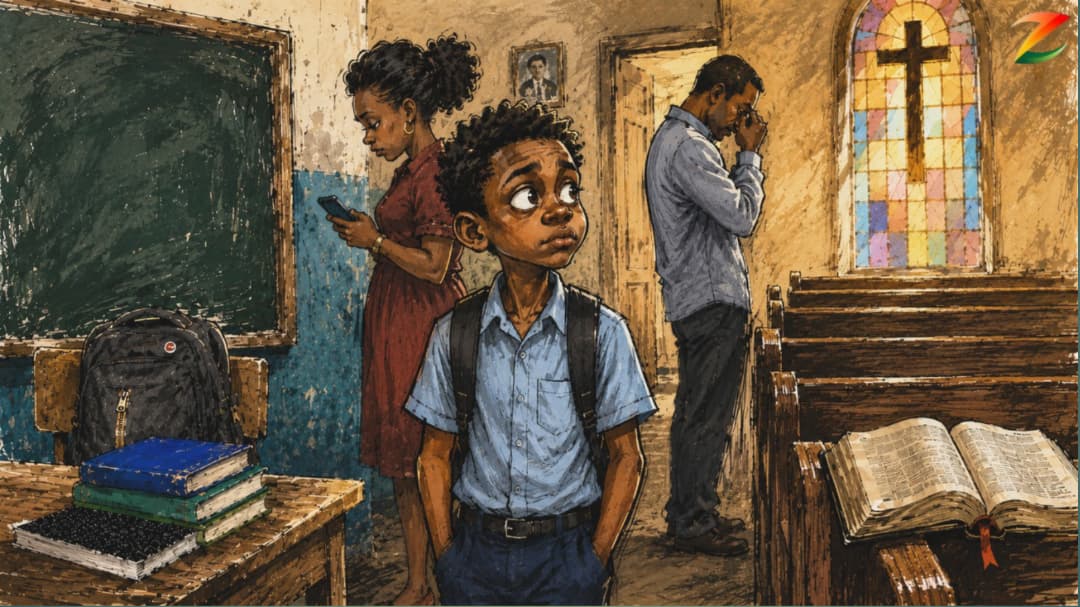
"Children have never been very good at listening to their elders, but they have never failed to imitate them." — James Baldwin
There is a child somewhere who can recite thirty Bible verses from memory, he has never missed Sunday school in years, but he has never once heard his father apologise to his mother.
He does not know how to handle failure, because failure was never discussed at home — only results. He is being shaped, quietly and completely, not by his family, but by whoever is available.
This is not a story about absent parents, as a matter of fact, Nigerian parents are not absent, they are exhausted, sacrificial, and deeply present in every way except the one that matters most.
The system we built
We have constructed a very efficient arrangement.
Monday to Friday, school handles discipline and knowledge. Sunday, church handles morality and the fear of God. Then the child comes home to food, sleep, and parents worn thin by the labour of providing, we call this raising a child but what we have actually done is hire a village of strangers and called it parenting.
The Nigerian parent today will sacrifice enormously to pay fees at the best school they can afford. They will not, however, sit beside that child on a tuesday evening and ask — not about homework but about life, about fear, about what confuses them, about who they are becoming
Why it happens
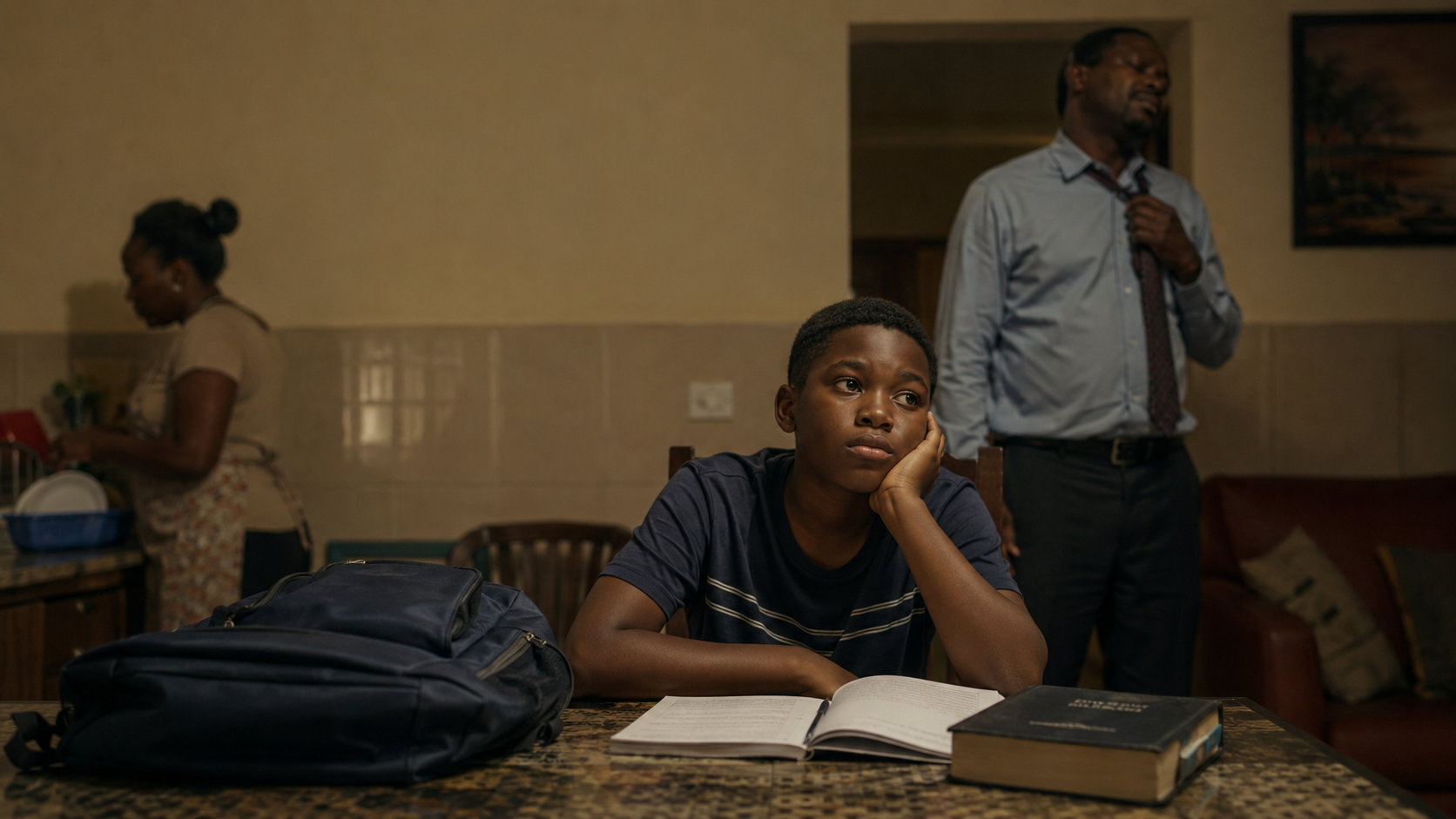
The average Nigerian parent carries financial pressure that never fully lifts, traffic that swallows hours daily, and a society that measures parental worth almost entirely by material provision. You are a good parent if your child attends a good school but whether the child knows your voice in the dark, nobody measures that.
Poverty, both real and feared, has convinced millions of Nigerian parents that provision is love, that school fees are a form of presence. This is the inheritance we have not stopped to question.
What gets lost
No teacher, however gifted, can tell a child who they are. No pastor, however anointed, can give a child the safety of feeling known by their own parents.Research consistently shows that parenting is the primary factor shaping a child's social and emotional development — and that early interactions with parents are critical for how children come to understand themselves, others, and the world.
Character is not formed in classrooms.

It is formed at dinner tables, in arguments watched and resolved, in seeing how a parent treats a subordinate, handles disappointment, or speaks about money when they think no one is listening. These are lessons that last, they can only be taught by being present.
What we are producing instead is a generation that is educated but emotionally brittle. Certificated but without a compass.

Children with emotionally responsive caregivers develop stronger self-esteem, better peer relationships, and greater resilience under stress, while children raised on provision alone often reach adulthood still searching for the thing their parents never knew they needed to give.
The fruits are already visible
We have young adults paralysed by their first real failure, because they were never taught at home that failure is survivable. We have brilliant people who cannot sustain relationships, because they never witnessed what repair between two people who love each other actually looks like.
Nigerian parenting, rooted in a hierarchical culture that prizes obedience over emotional expression, has long produced children skilled at performance but unprepared for intimacy.
We keep blaming social media, bad friends, and Western influence but we rarely ask the simpler question: who was home?
The one thing that cannot be delegated
There is no school that can replace you as a parent.
No church programme, no extracurricular lesson can do what only you can do, by being present in the ordinary moments. Not the graduations and birthdays but the evenings, the car rides, the meals where nothing important is discussed and everything important is communicated.
A child does not need a perfect parent, they need a present one, one who finds them interesting enough to stay in the room, one who makes them feel known, not just provided for.
You cannot outsource what only you can give and the day you hand your child entirely to strangers. However well-meaning those strangers are — is the day your child begins to be raised by someone who does not love them the way you do.