Behind Every Grocery Startup Shutdown Is A Bigger Question About Nigeria's Consumer Economy.
Nigeria's online grocery market has witnessed repeated startup failures despite growing demand for convenience. From consumer spending habits to infrastructure challenges and unit economics, these shutdowns reveal uncomfortable truths about Nigeria's eCommerce ecosystem.
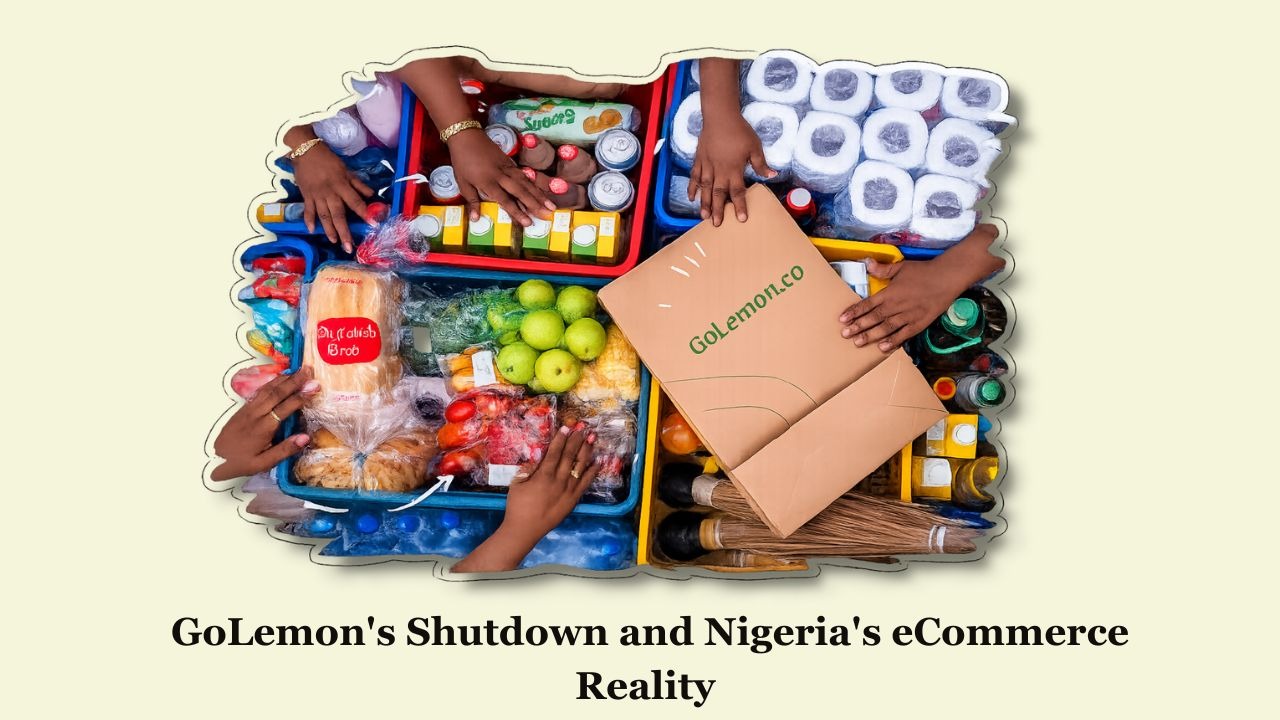
Something is fascinating about how Nigerians consume convenience. We love the idea of it. We simply do not always love paying for it.
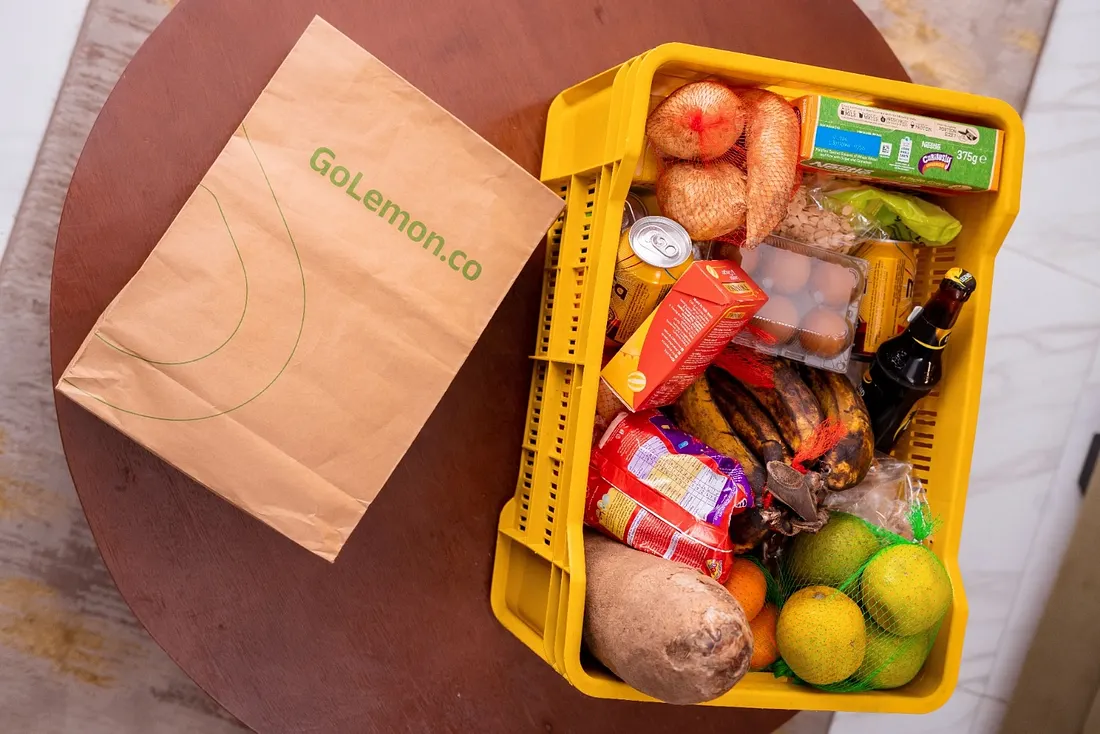
Imagine opening an app on a Saturday morning in Lagos and ordering fresh tomatoes, onions, chicken, fruits, and household essentials without stepping into traffic or bargaining at the local market. An hour later, everything arrives neatly packaged at your doorstep. It feels like the future has finally arrived.
That future has been sold to Nigerians repeatedly over the past decade. Food delivery startups, online grocery businesses and cloud kitchens have all promised to reinvent how Nigerians buy food.
On paper, it should have worked. Nigeria is Africa's largest economy by population, boasts one of the continent's fastest-growing digital economies, and is home to millions of smartphone users increasingly embracing convenience.
Yet somehow, the graveyard of online grocery startups keeps getting bigger.
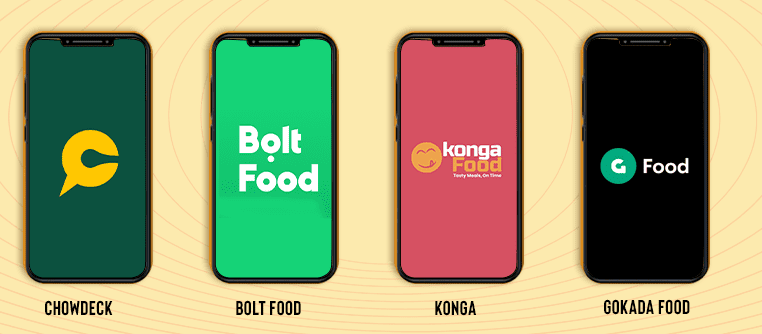
GoLemon is shutting down, a few months after FoodCourt paused operations, and Jumia Food has already been gone from Nigeria for more than two years, alongside Bolt Food, which pulled out of the market in 2023. Eden Life recently paused its consumer business too.
One by one, ambitious startups with funding, technology and talented founders are discovering that selling groceries online in Nigeria is far more difficult than a pitch deck can communicate.
The uncomfortable truth may simply be this: Nigeria's online grocery problem has never really been about groceries. It has always been about the Nigerian market itself.
Nigeria Loves Convenience. It Just Doesn't Buy It The Same Way.
For years, investors have looked at Nigeria's demographics and arrived at the same conclusion. A population of over 200 million people, increasing urbanisation and growing internet adoption should naturally create one of Africa's biggest eCommerce opportunities.
The numbers are impressive until they collide with reality.
The average Nigerian still buys food the same way generations before them have done, through open markets, roadside vendors and neighbourhood stores. Nearly every community has a woman selling fresh vegetables, someone selling pepper and tomatoes, and a trusted local supplier who offers flexible pricing and, sometimes, informal credit.
The local market remains one of Nigeria's most efficient distribution systems.
Online grocery businesses are therefore not merely competing against one another. They are competing against thousands of informal businesses that have spent decades perfecting affordability, convenience and community trust.
That competition is difficult to win when customers are extremely price-sensitive.
Convenience, unfortunately, comes at a cost. Delivery fees, storage costs and operational expenses are ultimately paid for by someone. In many cases, consumers simply are not willing to absorb that additional cost when cheaper alternatives exist within walking distance.
Perhaps Nigeria does not have a grocery delivery problem. Perhaps it simply has a convenience premium problem.
The Economics Rarely Add Up.

The most interesting thing about the repeated collapse of online grocery businesses is that many of them were not necessarily poorly built companies.
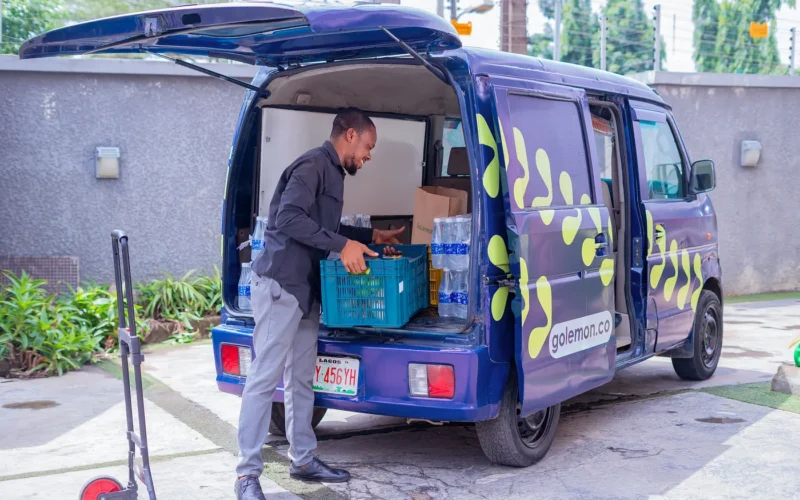
GoLemon earned loyal customers by prioritising quality control and owning its inventory. FoodCourt attempted to solve food logistics through cloud kitchens. Jumia Food operated across multiple African markets. These businesses had capable founders, ambitious models and access to capital.

Their biggest challenge was economics. Running an online grocery business in Nigeria is expensive long before a customer places an order.
Fresh produce requires refrigeration. Warehouses require rent. Logistics require vehicles, riders, and fuel. Staff require salaries. Suppliers require payments. Inventory expires if unsold. Electricity must be supplemented by generators. Transportation costs fluctuate constantly.
Then comes perhaps the most difficult question of all: how much is the average Nigerian willing to pay for convenience?
This is where many startups quietly lose the battle.
Raise prices and customers leave. Lower prices and the business loses money. Maintain affordable prices long enough and venture capital eventually stops subsidising losses.
It becomes a balancing act that few companies have successfully mastered.
The irony is that some of Nigeria's most innovative startups are not necessarily failing because their ideas are bad. They are failing because the economics of executing those ideas remain fundamentally difficult within the Nigerian market.
What GoLemon's Shutdown Says About Nigeria's eCommerce Market.
GoLemon's shutdown tells us something much bigger than the fate of a single startup.
Nigeria's eCommerce market remains one of the continent's most promising sectors, but it is also one of its most misunderstood.
For years, the conversation around startups has largely focused on funding announcements, valuations and expansion plans. Far less attention has been paid to whether Nigerian consumers can sustainably support these businesses beyond their early growth stages.
Market size is not simply about population. It is also about purchasing power. Nigeria may have over 200 million people, but how many people can consistently afford to pay a premium for grocery delivery services every week? How many consumers view convenience as a necessity rather than a luxury?
The shrinking purchasing power of the middle class has quietly become one of the biggest challenges facing consumer-focused startups.
READ ALSO:The Nigerian Middle Class Is Silently Disappearing. Maybe We Need To Start Talking About It
Consumers are increasingly prioritising essentials over convenience. Inflation continues to reshape spending habits. Food prices have risen dramatically in recent years, leaving households with less disposable income for additional service costs.
Perhaps the Nigerian market is not smaller than we think. Perhaps it is simply different from what founders and investors have been expecting.
Maybe The Real Problem Isn't The Startups.
There is a tendency to treat every startup shutdown as a failure of execution. Sometimes that is true. Other times, the environment itself deserves far more scrutiny. Building an online grocery business in Nigeria means building around problems that, ideally, should not exist.
Poor road infrastructure affects deliveries. Inadequate cold-chain systems increase spoilage. Electricity shortages increase operating costs. Rising inflation affects both businesses and consumers simultaneously.
Startups are expected to solve logistical problems, infrastructure problems, and consumer behaviour challenges all at once while remaining profitable.
That expectation may simply be unrealistic.
Nigeria's repeated failures in online grocery are not necessarily evidence that Nigerians do not want convenience. They are reminders that convenience operates differently when economic realities constantly reshape consumer priorities.
The startup ecosystem often celebrates innovation, but innovation alone cannot overcome structural realities indefinitely.
GoLemon's shutdown is not merely another startup obituary. It is another data point telling us that Nigeria's eCommerce story remains unfinished.
Perhaps the question is no longer why online grocery businesses keep failing.
The better question may be this: what kind of eCommerce businesses can realistically survive in Nigeria's current economic realities?
Because if multiple startups continue arriving at the same destination despite taking different routes, perhaps it is time to stop blaming the drivers and start paying closer attention to the road itself.