Swedish Election Drama: Center-Left Holds Slim Lead, Awaits Final Count
Preliminary results in Sweden's general election show the left-led bloc with a narrow lead over the incumbent right-wing alliance, though the final outcome remains unconfirmed. Magdalena Andersson's Social Democrats are poised to lead a new government, despite a historic low in party support.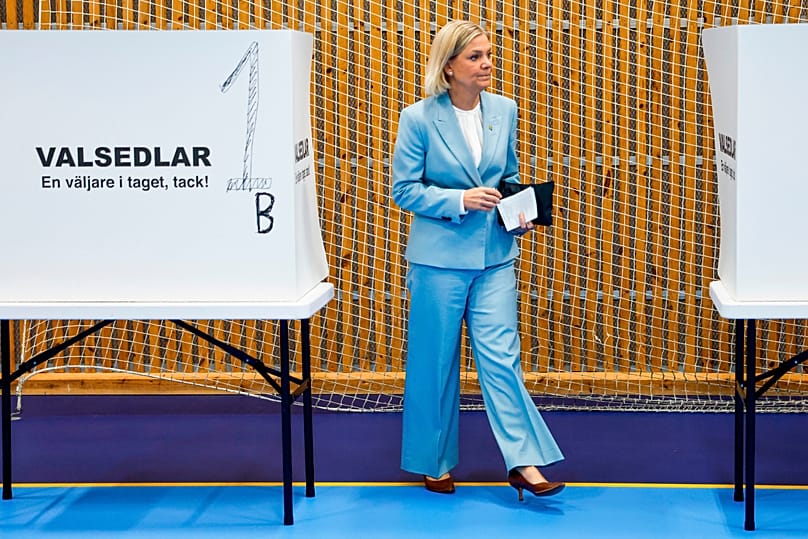
The Swedish general election has concluded with preliminary results indicating a narrow lead for the left-led bloc of opposition parties, holding a three-seat majority over the incumbent right-wing alliance headed by Prime Minister Ulf Kristersson. While the final outcome remains too close to definitively call, exit polls from "Europe Today" reports suggest the red bloc has won the contest, potentially paving the way for socialist Magdalena Andersson to become Sweden’s next prime minister.
Throughout much of the campaign, opinion polls had positioned the left-wing opposition with a comfortable lead, though this gap significantly diminished in the days leading up to the vote. Magdalena Andersson, leader of the Social Democrats, fronts the four opposition parties. Despite her party currently polling around 28% of the vote, which appears to be its poorest performance in over a century, Andersson has expressed her readiness to form a new government should her bloc's lead be confirmed. Her proposed policies include increased taxes on banks and high earners, efforts to reduce healthcare waiting times, and initiatives aimed at enhancing education.
In response, Prime Minister Kristersson, whose Moderate Party secured approximately 19.9% of the counted vote, stated his intention to respect Andersson’s efforts to establish a government if the current results hold. Analyzing individual party performances, both far-left and far-right factions have experienced a decrease in support. Notably, the far-right Sweden Democrats saw their vote share decline from 20.6% in the 2022 election to an initial 17.6%. Despite this drop, party leader Jimmie Akesson asserted that the results signify a growing acceptance of his party within Swedish politics, observing that more citizens are now comfortable identifying as Sweden Democrats.
Kristersson’s government, which has been in power for four years, relied on the parliamentary support of the Sweden Democrats since 2022, granting them considerable influence over policy decisions. Had the right-wing alliance secured a victory, Kristersson had pledged key cabinet positions to the party. A shift to a Social Democrat-led coalition would thus mark the end of four years of right-wing governance, which began amidst escalating concerns over gang shootings and organised crime. However, a change in government would not necessarily signal a reversal of Sweden’s stricter stance on migration, as the Social Democrats have indicated a restrictive migration policy would persist under an Andersson-led administration.
The definitive final result is anticipated to take several days, with late-arriving votes scheduled for counting from Wednesday, and all ballots automatically recounted by regional authorities to ensure accuracy.