How A Nigerian Cloud Kitchen Startup Went From $4.3 Million in Revenue to Suspending Operations
FoodCourt raised money, expanded to two cities, and delivered a million meals. Then it quietly shut every branch down. Is FoodCourt's promise to "come back stronger" worth believing, or have we heard this before?

FoodCourt, a Nigerian cloud kitchen startup backed by Y Combinator, suspended operations across all three of its branches after months of unpaid staff salaries and outstanding vendor debts pushed the business to a breaking point.
Customers first noticed the disruption on March 4, 2026, when the app stopped processing new orders and displayed a message reading, "orders cannot be processed at this time."
Behind that message was a company running out of options. Kitchen staff, delivery riders, and vendors supplying the Lekki branch had gone unpaid for months and had gone on strike, according to internal messages and documents reviewed by TechCabal.
Management switched off the app to stop new orders from coming in while it tried to contain the fallout.
By April 19, the last operating branch had also shut down, following the earlier suspension of a second Lagos location. FoodCourt's finance team was reportedly racing to clear outstanding payments in anticipation of new funding expected before the end of that month.

A Company That Looked Healthy From the Outside
FoodCourt was founded in 2021 by Henry Nneji and Paul Adokiye Iruene, serving as the consumer-facing app for CoKitchen, a Y Combinator-backed foodtech company.
Rather than aggregating other restaurants, CoKitchen prepared its own food under multiple virtual brands and delivered it through FoodCourt, a model built around speed and lower overhead.
By the end of 2024, the company appeared to be thriving. Nneji had shared on LinkedIn that FoodCourt raised $1.7 million, delivered more than a million meals, and reached $4.3 million in annual recurring revenue.
The startup had opened a second branch in Lagos and expanded into Abuja within eighteen months, and Nneji credited Y Combinator with instilling financial discipline that sharpened the company's focus on unit economics and contribution margins.
None of that matched what employees were living through in early 2026. On February 21, the company's HR manager removed several staff members from the WhatsApp group used to coordinate daily operations.
The same day, Nneji addressed employees directly about what he called "the current salary delay," attributing it to a funding facility that was, in his words, in its final stage of completion but had taken longer than expected to close.
Staff across all three branches, two in Lagos and one in Abuja, were owed wages at that point. The company has not disclosed how many employees were affected or the total amount owed.
Strikes, Selective Pay, and a Distributor Threatening Legal Action
By March 2, kitchen staff had stopped working. The head chef overseeing kitchen operations messaged management directly, recommending the app be switched off to avoid a wave of customer complaints while the company figured out its next move.
Two days later, the app went dark for customers.
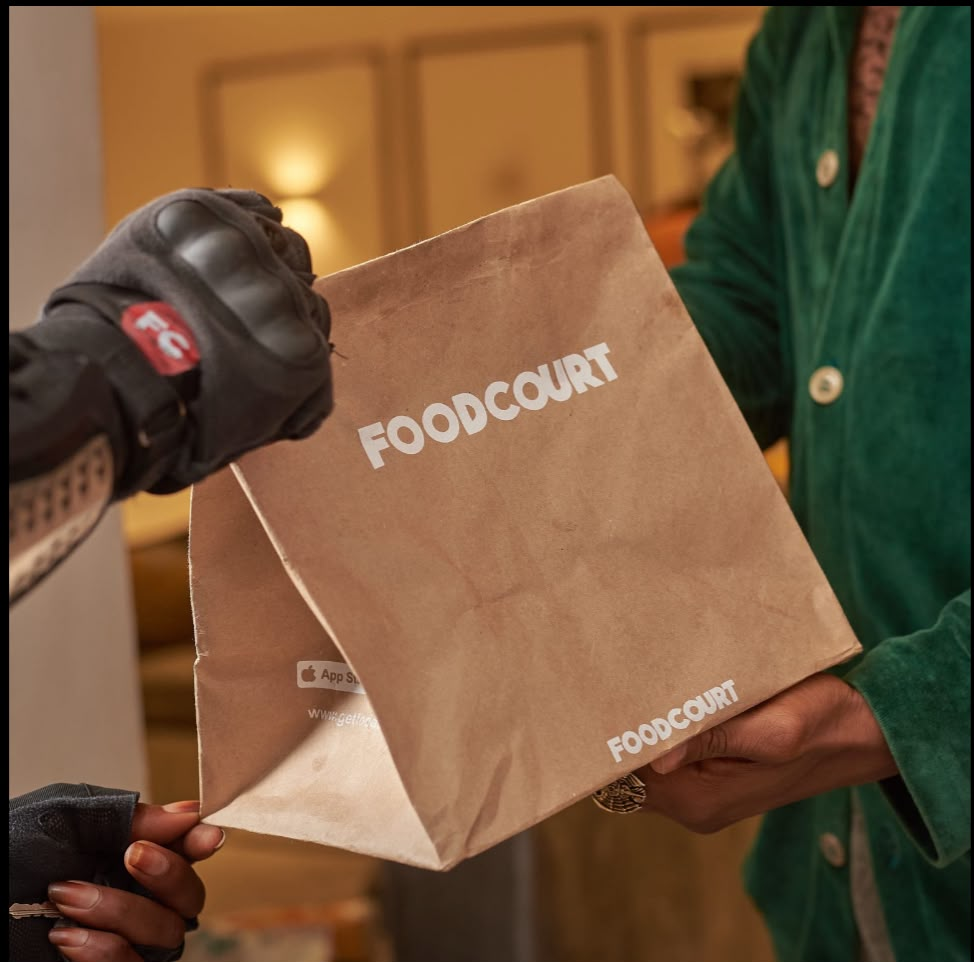
Internal communications reviewed by TechCabal show leadership was simultaneously trying to defuse a standoff at the Lekki kitchen, where staff had walked out over unpaid wages.
The situation escalated quickly. Nneji sent a message to department heads confirming that operations across all three branches, Obanikoro, Lekki, and Abuja, were being suspended immediately, citing mounting financial pressure and unresolved debt to both staff and vendors.
The pain was not distributed evenly. Messages show that heads of department, managers, and select team members kept receiving pay throughout the crisis, while other employees waited months for wages already earned.
One former employee, who asked not to be named for fear of retaliation, told TechCabal they finally received their January salary in the third week of March, calling themselves lucky to have gotten paid at all. Wages for February and March remained outstanding at the time.
Nneji told TechCabal the company prioritized employees in the most financially vulnerable positions where possible, adding that senior leadership absorbed a significant share of the impact during the restructuring period.

The financial strain extended beyond staff. One internal email obtained by TechCabal describes a ₦3 million debt, roughly $2,171, owed to a distributor who was demanding repayment of what they characterized as an excess payment, with legal action threatened if the money wasn't returned.
Nneji declined to discuss that relationship specifically, saying commercial disputes arise periodically and that the company intends to settle legitimate obligations directly with the parties involved.
A Business Model That Has Broken Founders Before
FoodCourt's troubles trace back further than this year. In September 2024, the company laid off 100 employees in what it described as an efficiency drive, even as it funded the launch of a second Lagos branch and its Abuja location. Two former employees told TechCabal that the resulting growth never kept pace with the added costs.
Nneji defended the Abuja expansion as a reasonable bet based on the information available at the time, saying circumstances simply evolved differently than the company had anticipated.
Cloud kitchens depend on razor-thin margins per order once food, packaging, labor, delivery, and marketing are accounted for. The model collapses when those costs rise faster than order volume can offset them, and FoodCourt found itself in exactly that position, with shrinking margins on one side and climbing operating costs on the other.
The company was effectively running four capital-intensive businesses at once, cooking, logistics, marketing, and customer support, under a single roof. Holding all four together without interruption proved to be more than the business could sustain.
FoodCourt is far from the only cloud kitchen operator to hit this wall. Kitchen United, an early pioneer in the ghost-kitchen space, raised $175 million before selling or shutting down every one of its locations in 2023.
CloudKitchens, founded by former Uber CEO Travis Kalanick, laid off staff and closed 41 of its 71 restaurants within a single year. The model requires constant demand growth alongside a steady stream of outside capital, and when either one stalls, the business tends to follow
For FoodCourt, both stalled at once.
Nneji maintains that the suspension reflects a mix of operational and financial pressures rather than one single point of failure, and that pausing to fix the underlying business made more sense than continuing to apply short-term patches.
He confirmed the company owes money to vendors, riders, and service providers in addition to staff, and said it is working toward an orderly resolution with existing investors, including Future Africa, one of its largest backers.
Nneji did not give a timeline for reopening, but said the company intends to relaunch a stronger version of the business. He acknowledged the skepticism that comes with that promise. "We understand that some people may question whether FoodCourt can successfully return," he said. "What gives us confidence is that the underlying demand for our product is real."