Apple's Flagship Product Just Changed for the First Time Since 2007
Apple posted $57 billion in iPhone revenue and has already repositioned the phone as supporting infrastructure for its ambient computing strategy, smart glasses, Vision Pro, and AI wearables are now the flagship.
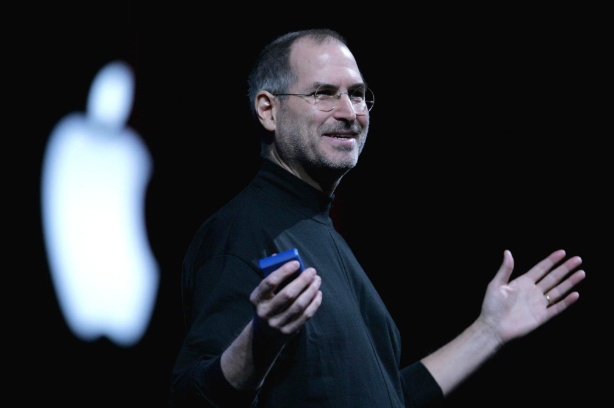
In January 2007, Steve Jobs walked onto a stage and introduced the iPhone. What followed was not just a product launch, it was a nineteen-year reign. The iPhone became Apple's identity, its primary revenue engine, and the lens through which every strategic decision the company made was filtered.
For nearly two decades, if you wanted to understand Apple Inc, you started with the phone, not just any phone, but the iPhone, and how the company has progressively rolled out new variations.
That era seems to be ending, not loudly or with a farewell keynote. But in ways that real strategic pivots actually tend to happen, gradually, then suddenly, while the old product is still doing exceptionally well.
Apple just posted $57 billion in iPhone revenue, up 22% year over year, and Apple has already decided the iPhone is no longer the flagship. The flagship is now something you wear on your face.
The Shift Nobody Announced
Apple's new centre of focus is ambient computing, a category built around head-mounted devices, AI-powered wearables, and the idea that the most important screen is not the one you hold but the one you live inside.
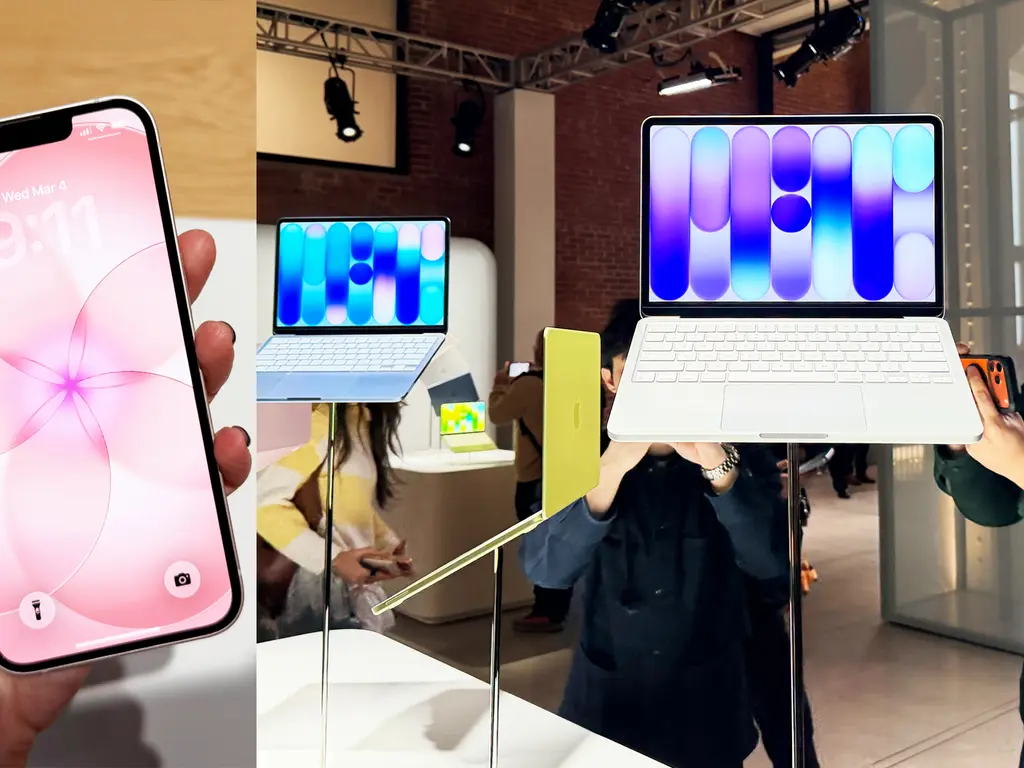
The Vision Pro series and the upcoming Ray-Ban-style Apple smart glasses are the products this strategy is being built around. The iPhone, in this new architecture, becomes the processing engine behind them, a powerful puck that does the heavy lifting so the wearables can stay light.
Tim Cook framed it on a recent earnings call: 'Increasingly, that same foundation is drawing AI researchers to our products as powerful platforms for building and running agentic AI.' That sentence, easy to miss, is Apple telling you where it is actually heading.
The roadmap makes the direction concrete. Vision Pro M5 entered mass production in the third quarter of 2025. AI AirPods with cameras and 1080p video capability are coming in 2026.
Ray-Ban-style Apple smart glasses, no display, built around voice, gesture, audio, and AI sensing, are slated for the second quarter of 2027. Vision Air, roughly 40% lighter than the original Vision Pro, lands in the third quarter of 2027.
While full extended reality display glasses and Vision Pro second generation will follow in the second half of 2028. This is not a product. It is a platform being assembled in stages.
The iPhone's New Role
To get smart glasses under 50 grams, the threshold at which they become something people will actually wear all day, the compute and battery cannot live on your face. They have to live somewhere else.
The iPhone is that somewhere else, it will become the offload engine, handling the processing demands that wearable hardware cannot yet carry on its own.
This is not a demotion in any financial sense. The iPhone is still generating tens of billions of dollars per quarter and is not going anywhere. But its role in Apple's strategic story has changed.
It is now an infrastructure upon which the flagship is kind of built, the moat it provides is distribution: over one billion active iPhone users represent the existing channel through which Apple can push ambient computing into the world.
Latest Tech News
Decode Africa's Digital Transformation
From Startups to Fintech Hubs - We Cover It All.
The industry Apple is entering was projected to grow from six million units in 2025 to 20 million in 2026. Apple does not need to convince people to switch ecosystems. It needs to convince the people already in its ecosystem to add a device.
The Supply Chain Is the Strategy
Apple's financial position is not incidental to this transition, it is what makes the transition possible. The company has secured more than 50% of TSMC's 2-nanometre N2 chip production capacity for 2026, locking in the A20 and M5 chips that will power the next generation of its devices.
The 2nm process delivers up to 30% better power efficiency compared to 3nm, which matters enormously for wearables, where battery life is the constraint that limits everything else.
With memory prices up between 80% and 90% by mid-2026, Apple is deploying its $123 billion cash position to fund multi-year pre-payment deals with suppliers, deals that most competitors simply cannot match.
Google is building a coalition around Project Aura with partners including Xreal, Warby Parker, and Samsung. Apple is shipping a complete, integrated stack. The coalition approach has its advantages in breadth. The integrated approach has its advantages in depth, consistency, and the ability to move faster without coordinating across organisations.
Why This Is Really a Services Story

The hardware ambition is funded by a services business that keeps getting harder to ignore. Apple's Services division posted $31 billion in revenue in the second quarter of 2026, up 16% year over year, at a gross margin of 76.7%. Research and development spending rose 34% in the same period. Apple is not waiting to see if ambient computing works before investing in it.
Wearables, particularly glasses, are also the ultimate retention device. A user who wears Apple glasses all day, runs Apple Intelligence through them, and processes everything through an iPhone is not switching ecosystems.
The switching cost becomes physical, not just digital. Services revenue follows the user, and the user who lives inside Apple's ambient computing environment is the most locked-in user Apple has ever had.
The iPhone made Apple what it is. What comes next is Apple deciding what it wants to become, and for the first time in nineteen years, the answer is not another iPhone.