A Turning Point in Nigeria's Legislative System: Senate Approves Life Sentence for Child Defilement.
The issue of raps, child defilement and other types of sexual assaults have long plagued our nation and left permanent, unrecoverable scars in the lives of young, vulnerable ones. The Nigerian Senate on Tuesday, decided it was enough and made what can be referred to as landmark decision that undoubtedly will change the people's perception of the Legislature.

The Nigerian Senate on Tuesday, October 21, reached a landmark consensus to finally put to bed a recurring national scourge — when they decided that anyone found guilty of defiling child automatically forfeits their right to ever be a free man.
But it doesn't end there, Lawmakers also reached consensus on issues of gender bias and sexual assault among other related cases, marking what many see as a turning point in the Nigeria's legislative system - a new image is being painted, one where real national issues are not just addressed but decisively addressed.
THE CRIMINAL CODE — AS WE KNOW IT
Before the 2025 amendment, Nigeria's legal framework for addressing sexual offences against minors was guided by the Criminal Code Act — a legislation that has repeatedly been criticized for being outrageous, archaic, and gender-biased, and insufficiently adopted to modern realities.
Under Section 218 of this Act, the law states that anyone who has carnal knowledge of a girl under the age of thirteen would face life imprisonment, and those who attempted it are liable to face fourteen years in prison, with or without caning.
This act has on different occasions been criticized for first, non-enforcement and then only recognising female victims, leaving male minors unprotected under the law.
Section 221 further reduced the gravity of the offense when it prescribed a 2-year sentence for those that have unlawful carnal knowledge of girls between 13 and 16 despite them still being minors. This penalty has been widely criticized on the grounds of being grossly inadequate.
Similarly, Section 357, which defined rape, recognised only male offenders and female victims suggesting that women could not commit raped and men could not be raped, effectively creating a gender gap in justice.
Another key flaw was the statute of limitation — certain sexual offences could not be prosecuted after a specific time frame, even when new evidence emerged years later. Combined with weak investigative systems and societal stigma, this meant that many perpetrators of child defilement escaped justice entirely
THE SENATE DEBATE

The bill began as a concurrent measure that had already passed the House of Representatives before reaching the Senate. The bill was formally introduced by Senate Leader Micheal Opeyemi Bamidele, who is responsible for presenting government bills and leading legislative discussions.

When the bill was presented, the Senate had the duty of deciding whether the proposed sentence (5 years) was sufficient enough as punishment for child defilement or if it needed be stricter.
During this plenary session, Senator Adams Oshiomhole representing Edo North moved that a 20-year sentence was more suitable compared to the proposed 5 years, arguing that such a heinous act lives a livelong scar in the lives of these young ones.
As reported by various credible sources, he emphasized that "A minor is a child who cannot give consent and whose life can be permanently damaged by such an act". This was backed up by different members of the house including Deputy Senate President, Senator Jibrin Barau who insisted the penalty must exist without the option of a fine.
Oshiomhole's proposed sentence gained traction until Senator Muhammad Adamu Aliero (Kebbi Central) argued that the punishment should be stiffer to serve as a deterrent.
"I want to propose that the punishment for defilement of minors should be life imprisonment, regardless of the offender’s gender,” Aliero said. His position was immediately backed by Senator Solomon Adeola (Ogun West), who maintained that the gravity of the crime warranted the maximum penalty.
And when the Senate President, Godswill Akpabio put it to a vote, the ayes were overwhelmingly in the majority — sealing the chamber’s unanimous decision to adopt life imprisonment as the new standard penalty for child defilement.
Following the vote, the Senate went on to adopt several key provisions as part of the wider Criminal Code (Amendment) Bill, 2025, which had been earlier passed by the House of Representatives. The agreed changes included:
Life Imprisonment for anyone found guilty of defiling a minor, regardless of gender.
A minimum sentence of 10 years for the offense of dale, which was also redefined to include both genders — meaning the law now recognises that a male can be raped and will not fail to prosecute the other gender should the need arise.
The removal of the statute of limitation on defilement offenses. This simply means past offenders will not go Scot free, no matter how long it has been since the crime was committed.
The elimination of gender bias in the definition of raped as briefly highlighted above, ensuring equal accountability for both men and women.
During further deliberations, however, controversy briefly surfaced over a clause relating to abortion—the Senate leadership stepped in to halt reopening that debate once the bill had been stepped down. The bill has been referred to the Senate Committee on Judiciary and Human Rights for further review, with a report due within two weeks.
PUBLIC REACTIONS AND LEGAL IMPLICATIONS
Although the bill has only recently been passed by senate, and still has a few more steps before implementation, early responses across social media and civic groups reflects cautious optimism.
Many Nigerians have welcomed this move as a long overdue setup towards justice for survivors of sexual abuse. However, concerns are also been raised about the problem of enforcement as the success of this law doesn't necessarily rely only on good legislation but effective execution.
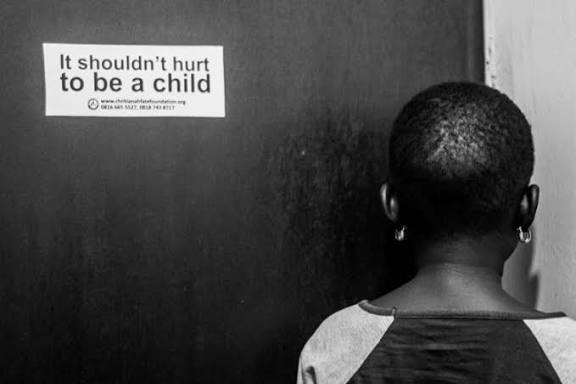
The Senate's decision to impose the life sentence for individuals convicted of the crime of child defilement marks a decisive turn in Nigeria's legal system, one that signal a growing intolerance for crimes that rob children of their innocence and future.
Ultimately, Implementation, accountability, and awareness will determine whether this reform becomes a milestone or just another missed opportunity. For now, however, this amendment stands as a promise — that Nigeria is finally beginning to confront one of its darkest societal wounds with the seriousness it deserves