To Fight For Nigeria, You Have To Fight Nigerians
A Lagos commuter filmed the endless morning queues for the Lagos Bus Rapid Transit hoping to push the government to add more buses. Instead of support, she faced anger and even assault from the same commuters she was trying to help. Why does speaking up for Nigeria sometimes mean fighting Nigerians first?

On the peculiar exhaustion of loving a country that seems to resist being loved
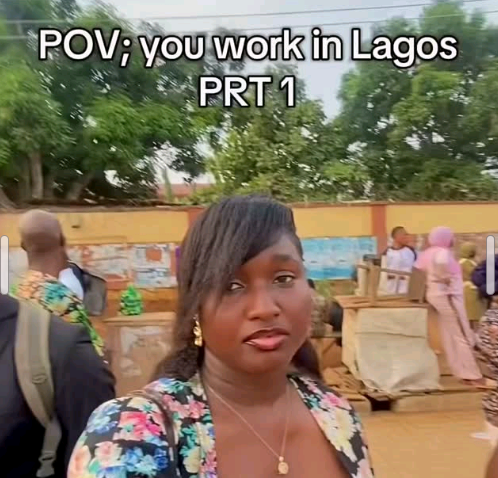
There is a young woman, named Dark Skinned Ella, who wakes up before the sun most mornings to catch the BRT to work. She has been documenting her BRT commute journey since relocating to Lagos in 2025.
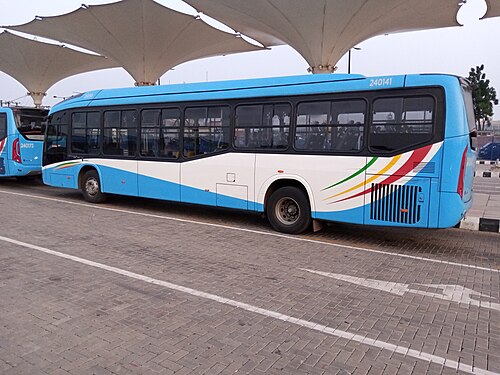
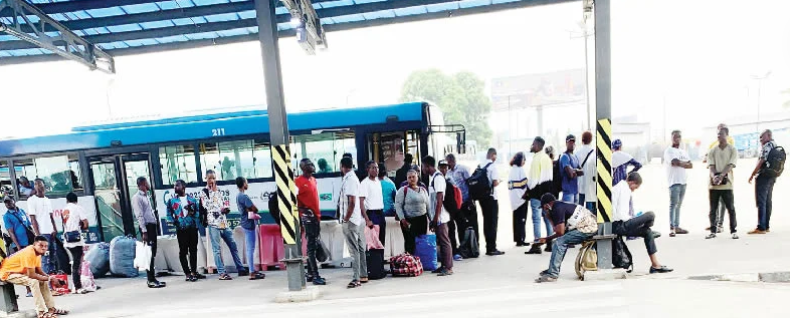
She stands in a queue so long it would make you wonder whether the people at the back even know what they are queuing for.
She does this every day, not because she has chosen hardship, but because Nigeria has handed hardship to her as a default. And one morning, instead of simply enduring , as Nigerians are so expertly trained to do, she picked up her phone and started recording.
She made videos calling on the Lagos State government to provide more buses. More transportation. She was not asking for luxury. She was asking for the basic dignity of getting to work without your spirit being crushed at the bus stop before the day had even started.
What happened next should surprise no one who has ever tried to do anything good in this country.
When the Victims Turn on the Messenger
The people in the queue, the very same people suffering the very same indignity, the very same people whose commutes would improve if her advocacy worked, turned on her. They were angry.
They were offended. They demanded to know why she was recording them. They harassed her. One woman physically assaulted her. Not the government. Not the officials who have failed to provide adequate transportation for a city of over twenty million people.
Not the bureaucrats who collect salaries to solve exactly this kind of problem and solve nothing. The woman with the phone. The one trying to help.
This is the peculiar genius of suffering in Nigeria; it is so thoroughly normalised that the person who refuses to normalise it becomes the problem.
Think carefully about what that scene contains. A country so broken that its citizens have learned to protect the brokenness. People so accustomed to being failed that they have developed a hostility toward anyone who dares to name the failure out loud.
The enemy is not the absent bus. The enemy, in that moment, is the woman with the phone who dared to say: This is not okay, and someone should answer for it.
The Psychology of Endurance
This is not a story about one bus stop. This is a story about the psychology of a people who have been failed so consistently, for so long, that survival has become indistinguishable from complicity.
When you spend enough years absorbing punishment from a system that will not change, something shifts.
Social Insight
Navigate the Rhythms of African Communities
Bold Conversations. Real Impact. True Narratives.
You stop directing your anger upward at the system. It is too large, too distant, too indifferent. You start directing it sideways, at the person next to you. At the person making noise. At the person refusing to simply absorb the punishment in silence, the way everyone else has learned to do.
That person becomes dangerous.
Not because they are wrong, everyone in that queue knows she is not wrong, but because they are a mirror. And the reflection is uncomfortable.
Because if she is right to speak, then the rest of them were wrong to stay silent. And that is a thought too heavy to carry on a Monday morning at a Lagos bus stop.
The Hidden Cost of Advocacy
To fight for Nigeria is to spend as much energy explaining yourself to Nigerians as you spend fighting the actual problem.

This is the exhaustion that nobody talks about honestly enough. Not the exhaustion of confronting power; that exhaustion is almost noble, almost bearable, because at least you know who your enemy is.
The deeper exhaustion is the one that comes from turning around after a fight with the government and finding your own people waiting to fight you, too. It is the exhaustion of having to justify your advocacy to the people your advocacy is for.
Of answering the question — why are you recording? — when the only honest response is: because someone has to, and clearly it will not be you.
Are they daft? It would be easier if they were.
Daft people, you can excuse, educate, or forgive.
What we are dealing with is something more complicated and more tragic than daftness. We are dealing with people who are intelligent enough to know exactly what is happening to them and broken enough to have decided that the safest response is to police the people trying to change it.
That is not stupidity.
That is a kind of self-preservation so extreme it has become self-destruction. It is the behaviour of people who have concluded, somewhere in the depths of their experience, that hope is more dangerous than despair — because hope requires you to care, and caring in Nigeria costs more than most people can afford to pay.
And the funniest part of it all is that complaints about bus shortages and long queues have been on the ground since as far back as 2023
The Price of Refusing Silence
So you pay it.
Social Insight
Navigate the Rhythms of African Communities
Bold Conversations. Real Impact. True Narratives.
You pay it every time you make a video nobody asked you to make. Every time you show up to a protest that others dismiss. Every time you file a complaint that disappears into silence.
Every time you explain, once more, patiently and with diminishing patience, why fighting for better is worth the trouble.
And the payment is not just energy; it is the slow, grinding erosion of your belief that the people around you want to be fought for at all.
That woman at the bus stop, the one who assaulted a girl trying to help her, will wake up tomorrow and queue again. She will stand in that same impossible line, in the same unbearable city, and she will endure it.
She will not make a video.
She will not call on the government.
She will not do anything except survive, and she will call that wisdom.
And in a sense, she will be right, because wisdom in Nigeria has been redefined as the capacity to endure what should be unendurable without making a sound.
Loving Nigeria Despite It All
But some of us refuse that definition.
Some of us are still, against all reasonable evidence, unreasonably committed to the idea that this country is worth the fight; not because the country makes it easy, not because the people always make it possible, but because the alternative is to become the queue.
To become silent. To become the woman who would rather assault the person fighting for her than risk the terrifying possibility that the fight might actually work, and that she might have to live in a country that expects something of her in return.
And now something good came out of the whole “recording”, Ella said she noticed more BRT buses on her way to work.
Fighting for Nigeria is exhausting. Fighting Nigerians for the right to fight for Nigeria is the kind of exhaustion that does not have a name yet. But those of us who keep showing up know exactly what it feels like. We feel it every morning, at every bus stop, in every queue that should not exist.