The Most Expensive Artworks Ever Sold: A Journey Through Five Centuries of Beauty, Wealth and Power
Step into a glittering gallery of record breaking masterpieces from Leonardo and Klimt to Warhol and Basquiat as we reveal the stories behind artworks that sold for up to 450 point three million dollars.
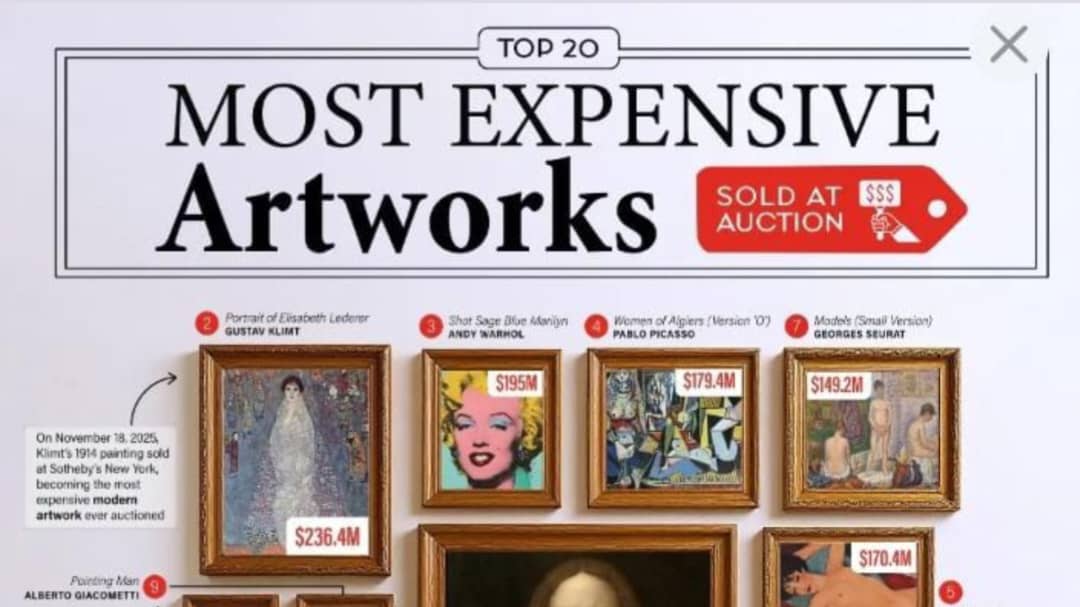
Prices in the top tier of the art world read like science fiction. A single canvas can sell for the cost of a skyscraper, a fleet of private jets or the yearly budget of a small country. Yet behind every astronomical number is a very human mix of skill, story, luck and timing.
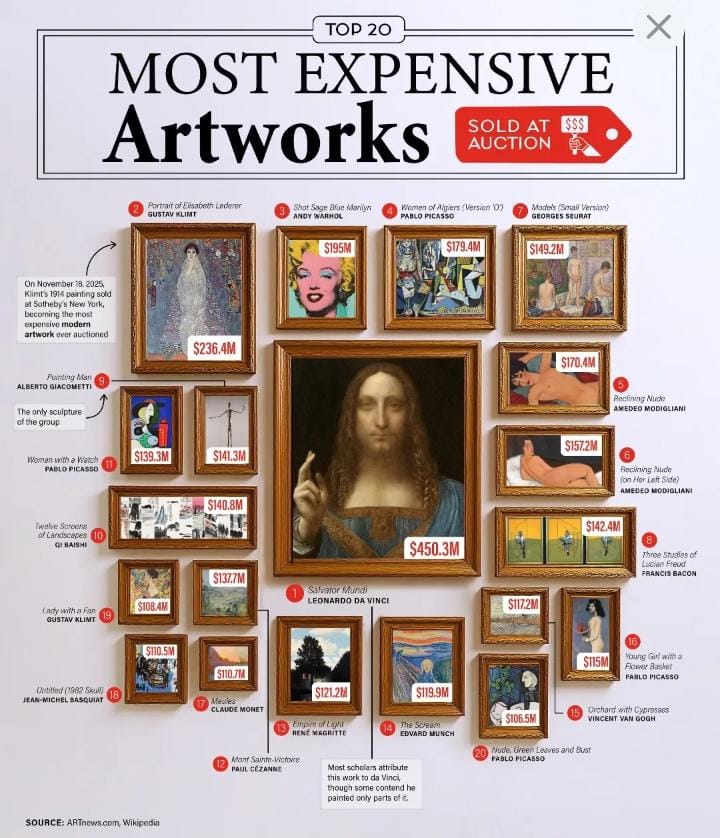
Line up the twenty most expensive artworks ever sold at auction and you get a strange museum that stretches from Renaissance devotion to New York street art, from quiet Chinese ink scrolls to neon portraits of movie stars. This article walks through that group, asking not just what these works are, but why they have inspired buyers to spend such huge sums.
A Rediscovered Christ at the Top of the Pyramid
At the summit stands Salvator Mundi, attributed to Leonardo da Vinci. Painted around the year 1500, it shows Christ in deep blue robes raising his right hand in blessing while holding a crystal orb in his left, and depicts him as “the Saviour of the World”. The pose is calm and frontal, more like a timeless icon than a narrative scene.
For centuries the work drifted through collections, damaged, overpainted and regarded as a copy. In the early two thousands it was cleaned and restored. As old varnish and later additions were removed, specialists began to argue that much of what remains is Leonardos own hand rather than that of a follower.
The hair, the mouth and parts of the drapery in particular carry that subtle softness that experts associate with him.
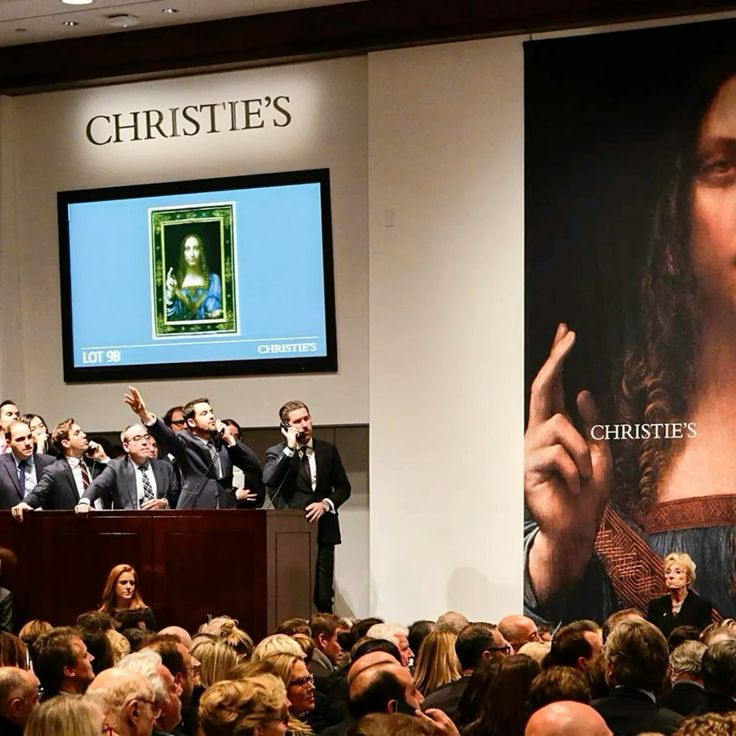
In November two thousand seventeen Christies New York put the panel up for sale. After a tense bidding war it sold for four hundred million dollars hammer price, with fees taking the total to about 450.3 million dollars. That result did not only break the previous auction record, it obliterated it and created a new ceiling for what a single artwork can cost in a public sale.
The buyer was later reported to be Saudi Prince Bader bin Abdullah bin Mohammed bin Farhan al-Saud on behalf of Crown Prince Mohammed bin Salman.
The painting has since become a symbol of soft power and secrecy. Its current location is uncertain. There have been reports of it being stored on a yacht and of behind the scenes negotiations about where and how it might be displayed.
As a result, Salvator Mundi sits at the top of the price ranking not just as a beautiful object but as a perfect storm of rarity, religious subject matter, Renaissance authorship, controversy about authenticity and the ambitions of a wealthy state.
Gustav Klimt and the weight of history
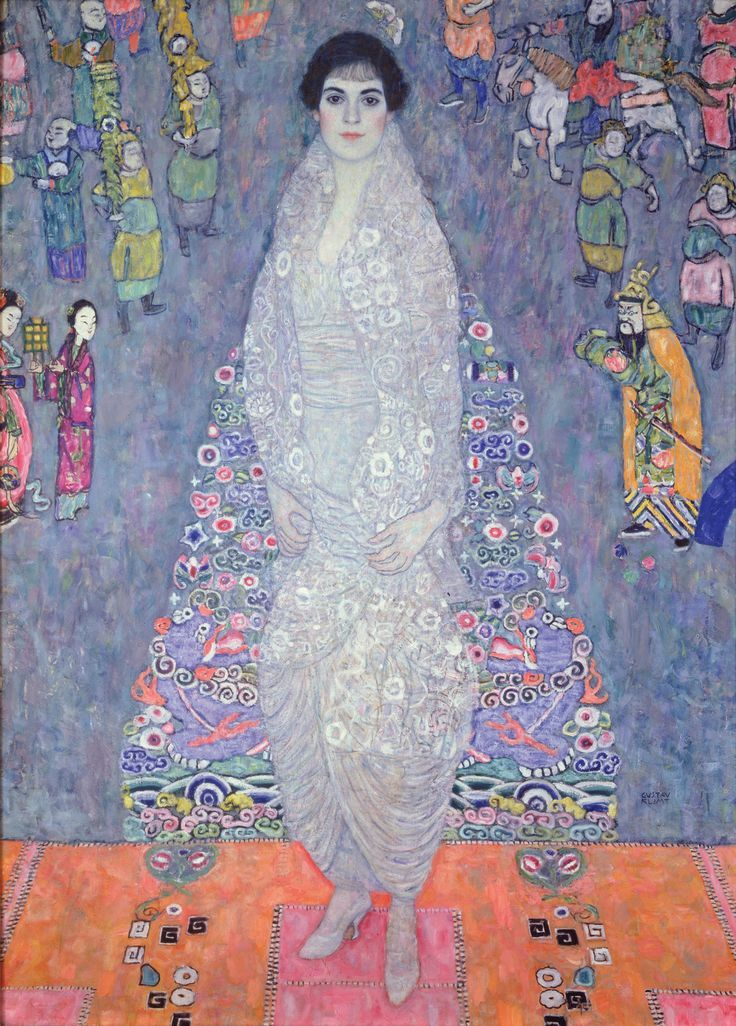
Second place belongs to a tall shimmering portrait that looks like it is made of patterned light. Portrait of Elisabeth Lederer by Gustav Klimt was painted between 1914 -1926 in Vienna. The sitter, Elisabeth, was the daughter of Serena and August Lederer, major patrons of the artist. In the painting she is wrapped in a robe inspired by East Asian textiles, her body almost dissolving into a field of ornament.
The story behind the work is as important as its appearance. The Lederer family was Jewish and during the Nazi period their collection was seized, and many works by Klimt were lost or destroyed.
This portrait survived war and looting and was eventually restituted to the family after 1945. It later entered the collection of cosmetics heir Leonard Lauder, where it hung in his New York apartment for decades.
Culture
Read Between the Lines of African Society
Your Gateway to Africa's Untold Cultural Narratives.
In November 2025 the painting returned to the public eye at Sothebys. After nearly twenty minutes of bidding it sold for 236.4 million dollars. That result made it the second most expensive painting ever sold at auction and the most expensive modern artwork in history, overtaking even Warhol’s famous Marilyn portrait.
The fascination here is layered. Collectors respond to Klimt’s distinctive style, to the tragic wartime fate of many of his patrons and to the way this particular work survived. The price reflects not only beauty and rarity but also a sense that this canvas carries the memory of an entire vanished world.
Pop glamour at two hundred million
Move from turn of the century Vienna to nineteen sixties New York and the mood changes completely. Shot Sage Blue Marilyn by Andy Warhol is a square portrait of Marilyn Monroe that glows in saturated colour. It is based on a publicity photograph, flattened by silk screen into a masklike face with bright hair, pale skin and sharply defined lips and eyes.
In May, 2022Christies sold this work for 195 million dollars, making it the most expensive artwork of the twentieth century ever sold at auction and the most expensive piece by an American artist at that time.

The title preserves a bit of art world chaos. In the 1960s, another artist fired a gun at a stack of Marilyn canvases in Warhol’s studio, literally shooting the paintings. Those events turned one group of works into legends.
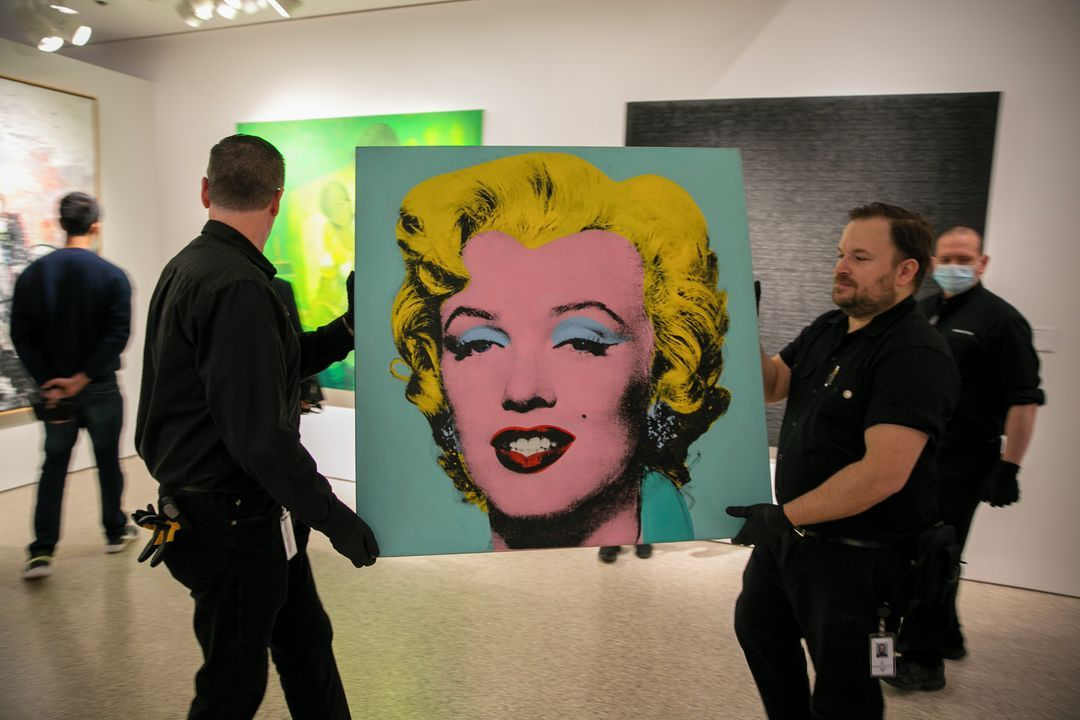
What are buyers paying for here The answer is a mix of pop culture and cold calculation. Marilyn Monroe remains a global icon. Warhol is one of the most widely recognized names in modern art. Together they form an image that is instantly readable across languages and cultures. At this level, the canvas becomes a luxury brand in itself.
The price also marks a shift. For years the very top of the auction market was dominated by early modern European masters. Warhol’s result shows that post war American art now occupies the same financial stratosphere.
Pablo Picasso in several acts
If there is a main character of twentieth century painting in this ranking, it is Pablo Picasso. Four different works by him belong to the twenty most expensive auction results, and each comes from a different phase of his long career.
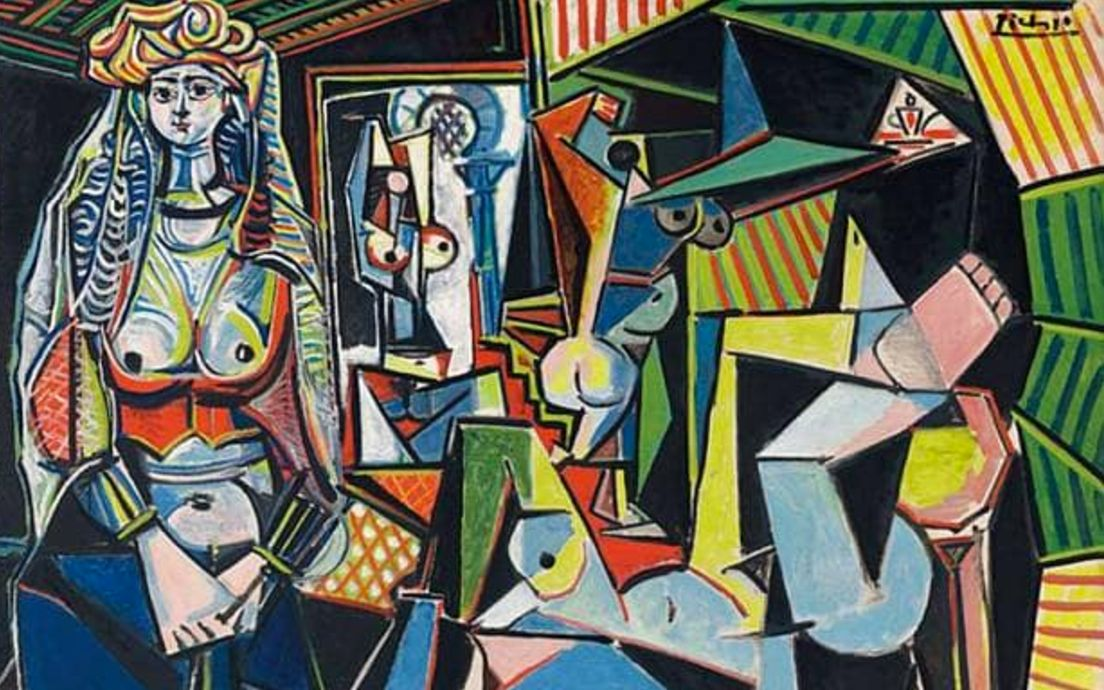
Women of Algiers Version O, painted in 1940 and 1945, reimagines a 19th century harem scene by Delacroix. The canvas fractures the figures into angular forms and intense patches of color. In two thousand fifteen it sold at Christies for about 179.4 million dollars, setting a then record for any painting at auction.
From much earlier in his life comes Young Girl with a Flower Basket, a work from the Rose Period around 1905. The painting shows a young Parisian flower seller in delicate tones of pink and blue, standing almost nude and holding a basket of blooms. The atmosphere is tender yet unsentimental. When it appeared in the Rockefeller collection sale in two thousand eighteen, it brought roughly 115 million dollars.
Two major works from 1932 complete Picassos presence. Nude, Green Leaves and Bust is a lush portrait of his muse Marie Therese Walter, surrounded by plant forms and a sculpted bust of her own head. It sold in 2010, for about 106.5 million dollars, the first painting ever to cross the 101 million mark at auction.
Later, Woman with a Watch, another portrait of Marie Therese from the same year, would sell at Sothebys in 2023 for around 139.3 million dollars, second only to Women of Algiers among Picassos auction results.
Together these pictures show why the market treats Picasso like a universe rather than a single star. He offers collectors a vast range of moods and styles, from circus performers and melancholy lovers to fractured cubist bodies and intimate portraits of his companions. Each period has its fans, and at the very top level it seems there is always at least one buyer willing to pay nine figures for a particularly strong example.
Culture
Read Between the Lines of African Society
Your Gateway to Africa's Untold Cultural Narratives.
Modigliani and the quiet power of the reclining nude
Two of the costliest works on the list show women lying on sofas, eyes half closed, bodies stretched in long curves. They are both by Amedeo Modigliani, an Italian artist whose short life was marked by illness, poverty and heavy drinking.
Around 1917, he painted a series of reclining nudes that were scandalous in their own time. The figures are frontal and frankly sensual, yet their faces have an abstracted masklike quality. The skin is modelled in warm tones, while background details are kept minimal.
In 2015 Christies New York sold one of these canvases, Reclining Nude, for about 170.4 million dollars. A few years later, Sothebys sold another, Reclining Nude on Her Left Side, for roughly 157.2 million dollars. Both results pushed Modigliani into the very top tier of auction prices.
The irony is sharp. During his life Modigliani rarely enjoyed financial stability and sometimes paid rent or medical bills with paintings. Now the works that once embarrassed polite viewers have become among the most coveted trophies in private collections.
Dots, anxiety and friendship
Another striking presence in the ranking is Georges Seurat with his Models Small Version. Seurat is known for pointillism, a technique in which tiny dots of pure color are placed side by side so that the eye blends them into richer tones.
The small version of his studio scene with three nude models was once owned by technology billionaire Paul Allen. In November, 2022, during the sale of Allens collection, it realized about 149.2 million dollars, setting a record for Seurat and for pointillist painting in general.
From a very different emotional universe comes Three Studies of Lucian Freud by Francis Bacon. Painted in 1969, the work is a triptych that shows Bacons friend and rival Lucian Freud seated on a chair in three separate panels, his features twisted into restless, almost screaming forms. In 2013, the painting sold at Christies for 142.4 million dollars, briefly setting a new auction record.
The buyer, casino owner Elaine Wynn, later bequeathed the work to the Los Angeles County Museum of Art, meaning that a painting once famous as a private trophy has become a public highlight.
Near them in price terms sits The Scream by Edvard Munch, in a pastel version from 1895. That image of a figure on a bridge clutching its head while the sky swirls in bands of color has become shorthand for modern anxiety. In 2012, this version sold at Sothebys for about 119.9 million dollars.
These works show how the market rewards not just beauty but psychological intensity. Dots of color, distorted portraits and a howling figure all speak to the inner life of the twentieth century.
Landscapes that act like blue chip stocks
Several of the most expensive artworks are landscapes rather than portraits or nudes. They show hills, stacks of grain, orchards and streets, yet sell for sums that would make most investors blink.
In the Paul Allen sale, La Montagne Sainte Victoire by Paul Cezanne set a record for the artist when it sold for about 137.8 million dollars. The canvas shows the mountain near Aix en Provence that Cezanne painted many times, rendered here with firm planes of color that anticipate modern abstraction.

Culture
Read Between the Lines of African Society
Your Gateway to Africa's Untold Cultural Narratives.
Another highlight of the same collection was Orchard with Cypresses by Vincent van Gogh, which reached roughly 117.2 million dollars. Painted in Saint Remy, it combines thick swirling brushwork with an intense palette of green, yellow and blue. For collectors, a strong landscape from Van Goghs final years is close to the definition of a blue chip masterpiece.
The surrealist master Rene Magritte also appears near the top through one canvas in his Empire of Light series, where a calm daytime sky floats above a street that looks like night. A version sold in New York for about 121.2 million dollars, a record for the artist and for surrealism at auction.
Impressionist legend Claude Monet enters the list with a painting of grain stacks from his Meules series. One of these works sold at Sothebys in two thousand nineteen for about 110.7 million dollars, pushing Impressionist prices into nine figure territory.
These results underline how powerful certain motifs have become. Cezannes mountain, Van Goghs orchards, Monets stacks and Magrittes impossible sky are instantly recognizable. They represent not just particular places but entire movements in art history.
A single Bronze and a Street Born Skull
Almost every item in the group of twenty is a painting. Only one is a sculpture. Pointing Man, or L Homme au doigt, by Alberto Giacometti shows a spindly figure with rough surface texture, one arm extended. In two thousand fifteen this bronze sold for about 141.3 million dollars, the highest auction price ever achieved by a sculpture.
At the opposite end of the stylistic spectrum stands Untitled from 1982, by Jean Michel Basquiat. The huge canvas shows a skull like head rendered in frantic lines and blocks of colour, drawing on street art, African masks and comic book energy.
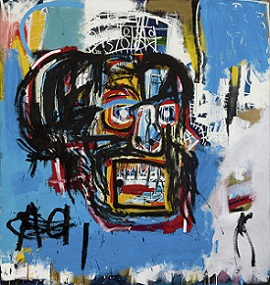
When Sothebys auctioned it in 2017, it fetched 110.5 million dollars, making Basquiat the first post 1980 artist to cross the one hundred million mark at auction and giving an American artist of colour a historic place in the market record books.
Put together, Giacometti and Basquiat show that the very top of the market is wide enough to include both existential European sculpture and art rooted in graffiti and hip hop era New York.
Twelve Ink Landscapes and the Rise of Chinese Collectors
Perhaps the most quietly beautiful work among the twenty is a set of hanging scrolls by Qi Baishi titled Twelve Screens of Landscapes. Painted in 1925, the scrolls show mountains, rivers, cottages and trees in subtle black and grey ink, each accompanied by calligraphy.
In December, 2017, the set was auctioned at Beijing Poly Auction and sold for about 140.8 million dollars, making Qi Baishi the first Chinese artist to join the one hundred million club and setting a record for any Chinese artwork at auction.
This result signals an important shift. For most of the twentieth century, the global art market focused heavily on European and later American painting. As wealth has grown in China, collectors there have increasingly turned their attention to their own artistic traditions.
Qi Baishis scrolls show that classical Chinese ink painting, once treated as a niche category in Western auctions, can now command prices on par with Western masterpieces.
Culture
Read Between the Lines of African Society
Your Gateway to Africa's Untold Cultural Narratives.
Beyond the price tag
It can be easy to get lost in the numbers. The figures run together like phone numbers from another universe.
Yet these objects continue to matter for reasons that go beyond money. Salvator Mundi keeps historians arguing about authorship and restoration. Klimt’s portraits reopen conversations about memory, loss and survival.
Warhol’s Marilyn holds up a mirror to celebrity culture. Picassos many women chart the evolution of modern form. Basquiat and Qi Baishi show that voices outside the traditional European canon can now command global attention.
Seen this way, the ranking of the most expensive artworks is less a scoreboard and more a strange map. It traces how power, taste and history intersect in a particular moment. The prices may rise further, records will eventually fall and new names will join the list. But the deeper stories behind these works will remain, long after the headlines and bidding paddles are forgotten.