The Man Who Left Earth A Soviet and Returned A Russian
The true story of Sergei Krikalev, the cosmonaut who went to space as a Soviet citizen and returned after the USSR collapsed, becoming “the last Soviet citizen.”
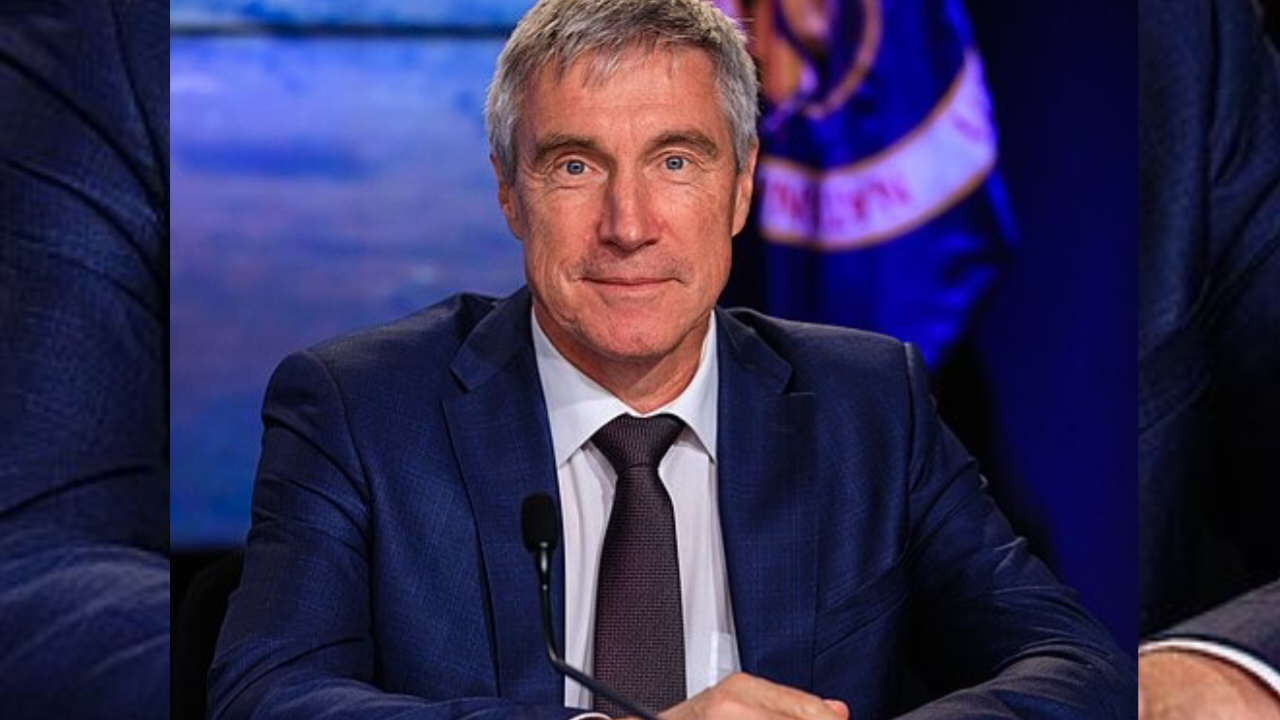
Imagine waking up one morning going to work like every other person and then when you come back after the close of what you meant to do, you return as a new citizen of an entirely different nation.
How would you feel about that? Is it even possible? That is a question to ask
History is not always black and white, where we just hear a straight line of events, in some instances there are also plot twists like we see in movies. History also plays out through the splitting of sovereign states, declarations, and revolutions.
And sometimes, its most profound moments unfold quietly, far from crowds and cameras, in places you could never not imagine. In 1991, while borders were still being redrawn and flags were either lowered or raised across Eastern Europe, one man watched it all happen from orbit or maybe he didnt watch it but it all happened under him.
Sergei Krikalev left Earth as a citizen of the Soviet Union, by the time he returned, the country that sent him no longer existed and he was entirely the citizen of a new country.
So remember my earlier question, imagine just carrying out your job description while countries are being birthed?
The Soviet Union, the Mir Space Station, and a Dream Beyond Earth
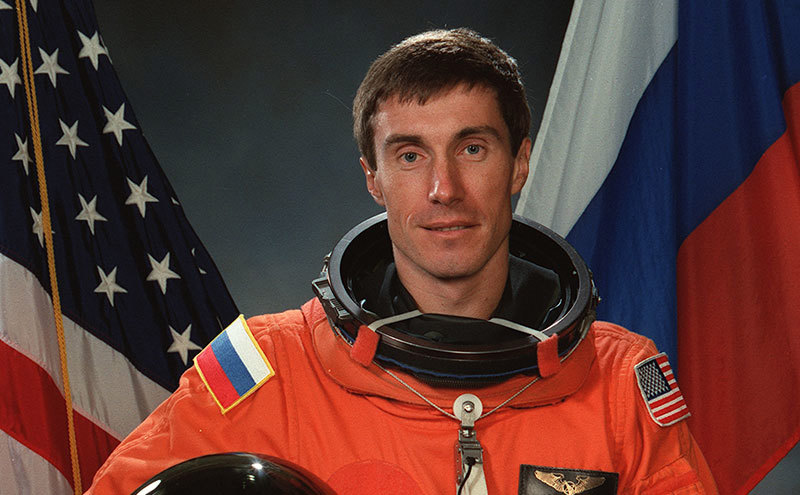
To fully understand how such a moment was even possible and how it came about, one must understand the ambition of the Soviet Union’s space program. During the Cold War, space was not just a scientific frontier for exploration, it was political theater, ideological competition, and national pride compressed into rockets and capsules.
The Soviet Union had already stunned the world by launching Sputnik on October 4, 1957 and sending Yuri Gagarin into orbit in April 1961. Exploration of outer space was literally a proof of competence, power, and progress—one that developing nations then raced to conquer.
History
Rewind the Stories that Made Africa, Africa
A Journey Through Time, Narrated with Insight.
By the mid-1980s, that ambition for the soviet union crystallized into Mir, the world’s first modular space station. Launched in 1986, Mir—meaning peace or world in Russian, was intended to be a long-term laboratory in low Earth orbit.
Unlike earlier stations before its launch, Mir had the potential to be expanded over time, with modules added for scientific research, habitation, and international collaboration. It was a marvel of engineering, but also a symbol of the Soviet Union’s declaration that it intended to live in space, explore it and not merely visit it.

Yet while Mir floated steadily above Earth with Sergei Kirkalev, the Soviet Union below was unraveling and experiencing a new order. Economic and political reforms under Mikhail Gorbachev, and rising nationalist movements weakened the once-unified state.
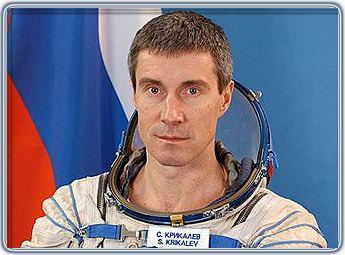
This was happening during a period when entities and groups were declaring independence, and various central governments were losing control. What was once seen and termed as strong literally became an illusion of continuity as the soviet union dissolved.
Mir became an unintended metaphor in this scenario of an unstable period,stable in orbit, but tethered to a system in free fall. Supplies still arrived and planned for, missions were still planned, and cosmonauts still trained, even as funding dried up and authority fractured. It was into this fragile moment that Sergei Krikalev launched into space.
Sergei Krikalev: The Last Soviet Citizen
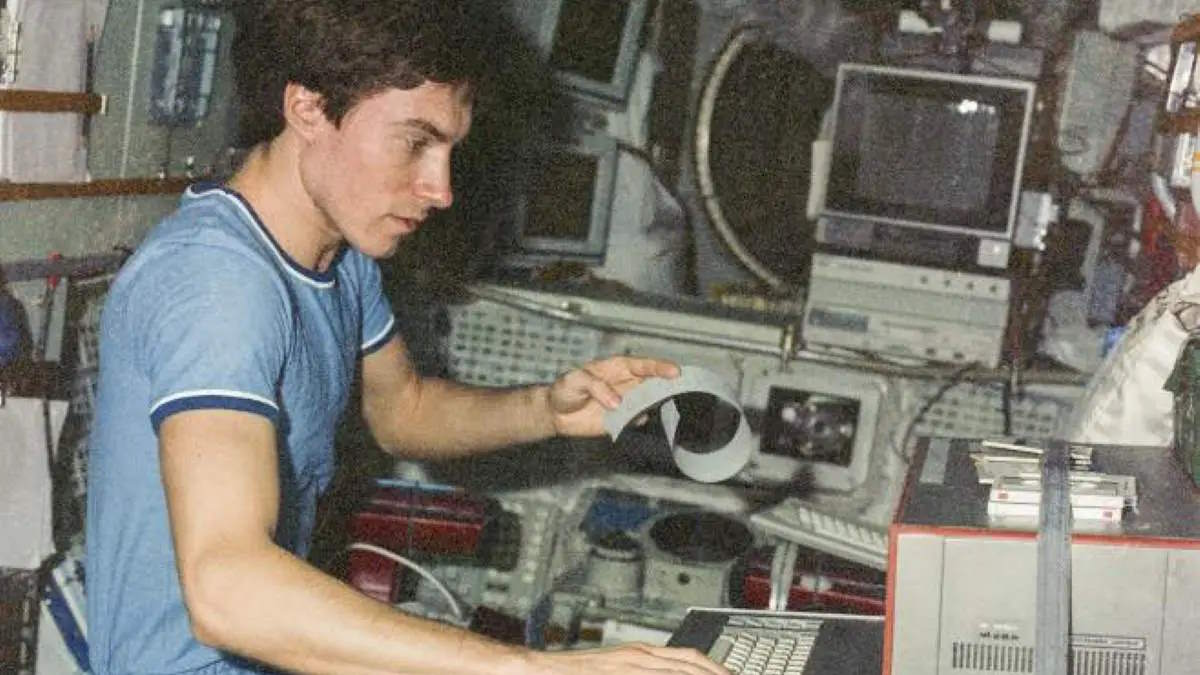
Sergei Krikalev was no accidental participant in history. Born in 1958 in Leningrad (now Saint Petersburg), is a Russian mechanical engineer and former cosmonaut. He is a veteran of six spaceflights, including two long-duration missions to Mir, two short-duration missions aboard NASA's Space Shuttle, and two long-duration missions to the International Space Station (ISS).
By 1991, he was already an experienced space traveler, respected for his technical skill and when he launched to Mir in May 1991, it was like every other mission or project he had once been part of and the mission was meant to last about five months.
And while all the preparations and plans of Mir were in progress history happened.
History
Rewind the Stories that Made Africa, Africa
A Journey Through Time, Narrated with Insight.
As Krikalev orbited Earth every 90 minutes, the Soviet Union collapsed in real time. In August 1991, a failed coup attempt against Gorbachev accelerated the disintegration of central authority, republics broke away and the Soviet flag was lowered. By December that same year, the USSR formally ceased to exist.
Up in space, the consequences of these events were immediate and surreal. The government that had sent Krikalev into orbit no longer existed and the institutions responsible for bringing him home were now fragmented across newly independent states.
Fundings literally vanished as it was now a new order that was in play. Spacecraft that would normally rotate crews were delayed or reassigned. At one point, there simply were no plans to send a replacement mission.
Krikalev was told, bluntly, that he could not return as planned.
What was supposed to be a routine mission stretched into 311 days, nearly twice its original length. While nations were renamed and borders redrawn beneath him, Krikalev maintained the Mir space station and just conducted experiments or maybe tried news things if i guessed right. He ultimately accumulated 803 days, 9 hours, and 39 minutes in space, placing him fourth on the list of those with the most time spent in space.
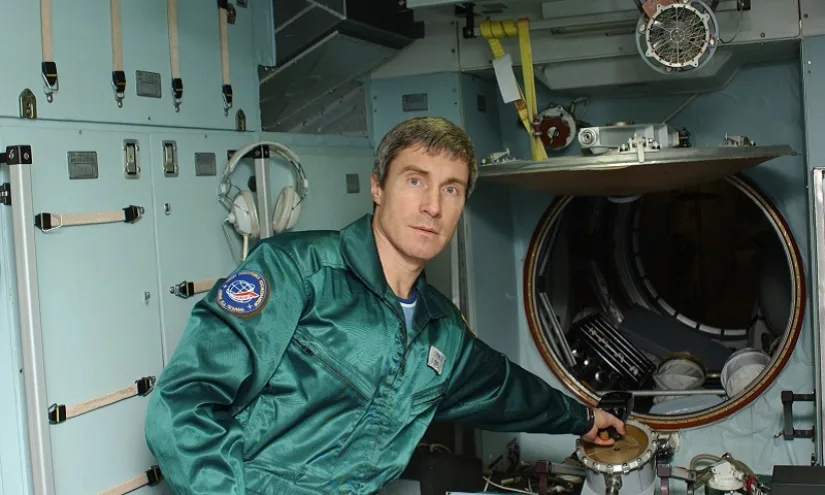
He would have definitely listened to radio conversations from Earth, hearing about strikes, shortages, and uncertainty. He watched his homeland disappear, not through news footage, but through bureaucratic silence.
When he finally returned in March 1992, he did not land in the Soviet Union. He landed in Kazakhstan as a citizen of a new country: the Russian Federation. He became known, fittingly and hauntingly, as “the last Soviet citizen.”
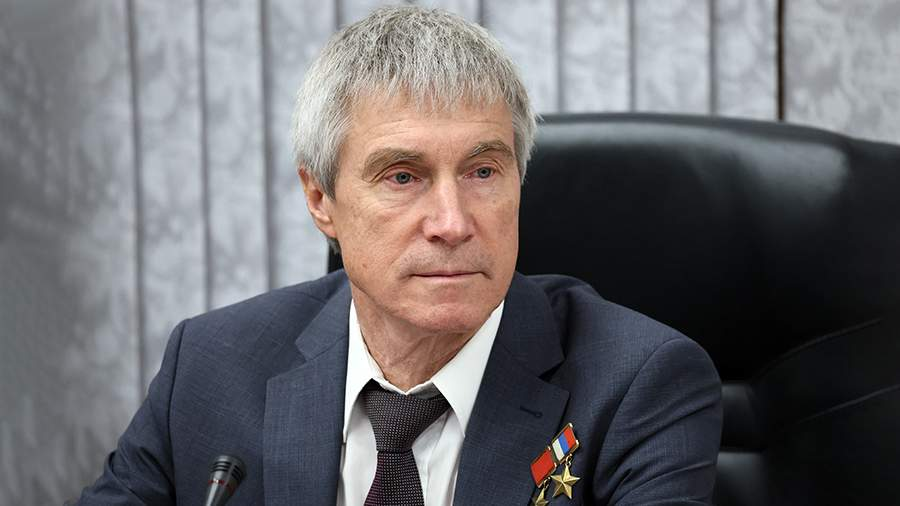
Yet Krikalev did not fade into history as a tragic footnote. According to information on wikipedia, he retired as a cosmonaut in 2007 and then served as deputy chief designer at Energia, where he contributed to the development of Russian spacecraft. From 2009 to 2014, he headed the Yuri Gagarin Cosmonaut Training Center. Since 2014, he has worked for Roscosmos, Russia's space agency, where he is a Deputy Director General leading manned spaceflight efforts.
His story endures not because of the number of days he spent in orbit, but because of what those days represented. Krikalev became a living marker of transition, a man suspended between two eras, watching a superpower dissolve while he circled above a planet that kept turning, indifferent to ideology.
Conclusion
History
Rewind the Stories that Made Africa, Africa
A Journey Through Time, Narrated with Insight.
Sergei Krikalev’s experience forces history to feel personal. The fall of the Soviet Union is often discussed in terms of treaties, speeches, and economic charts. But his story reminds us that history also happens to individuals too and sometimes in the most unlikely places.
He left Earth representing a nation that believed itself permanent. He returned to one still learning what it was. Between those two moments, he floated in silence, doing his job, while the world below rewrote itself.
History did change but Sergei Krikalev did not just witness it, He orbited it.