The Internet Before We Knew It: The Woman Who Quietly Rewired West Africa
An inspiring social commentary on Olafunke Opeke, the Nigerian engineer who transformed West Africa’s internet infrastructure and reshaped Africa’s digital future through vision, innovation, and local leadership
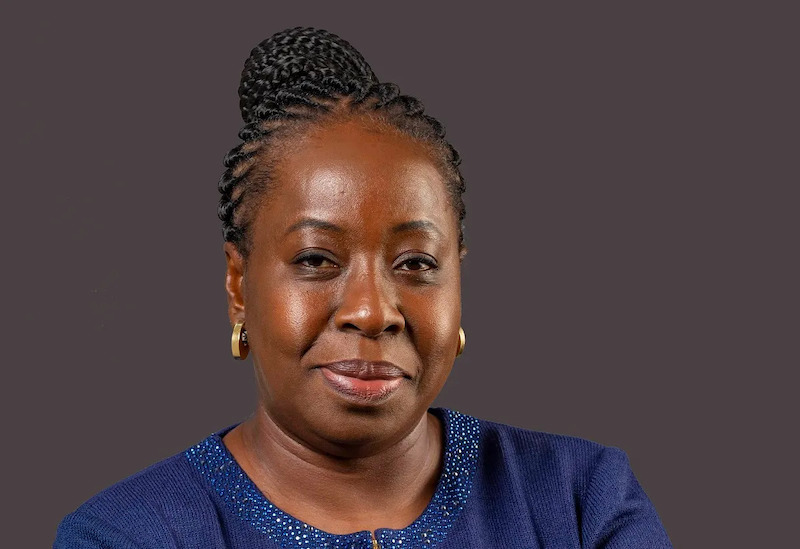
There was a time when the internet in West Africa felt so fragile and exclusionary, you could put it as an expensive privilege which was a result of slow satellite connections and unstable infrastructure.
In the early 2000s, while parts of the world were accelerating into broadband-driven economies, countries in western part of Africa including Nigeria were still navigating digital bottlenecks that limited innovation, education, commerce, and cultural expression. Connectivity existed, but it was constrained, costly, and unreliable, reinforcing the broader global imbalance between the Global North and the Global South.
It was within this context that Olafunke Opeke’s story began to take shape, not as a loud disruption, but as a deliberate intervention. Trained in Nigeria at University of Ife now Obafemi Awolowo University where she obtained a bachelor's in electrical engineering and in the United States at Columbia University, where she got her masters degree, Opeke understood both worlds: the efficiency of advanced digital systems and the structural gaps holding African economies back. She did not just return to her home country with abstract optimism; she returned with technical clarity, a precise vision for what Africa’s internet future could be after noticing poor connectivity in Nigeria.
An engineer by training and a systems thinker by instinct, Opeke recognized that access, not talent, was the true bottleneck and as we know it her work went on to redefine what connectivity meant for an entire subregion, placing her among the most consequential yet understated architects of Africa’s digital age.
Building the Backbone: Impact, Influence, and the MainOne Revolution
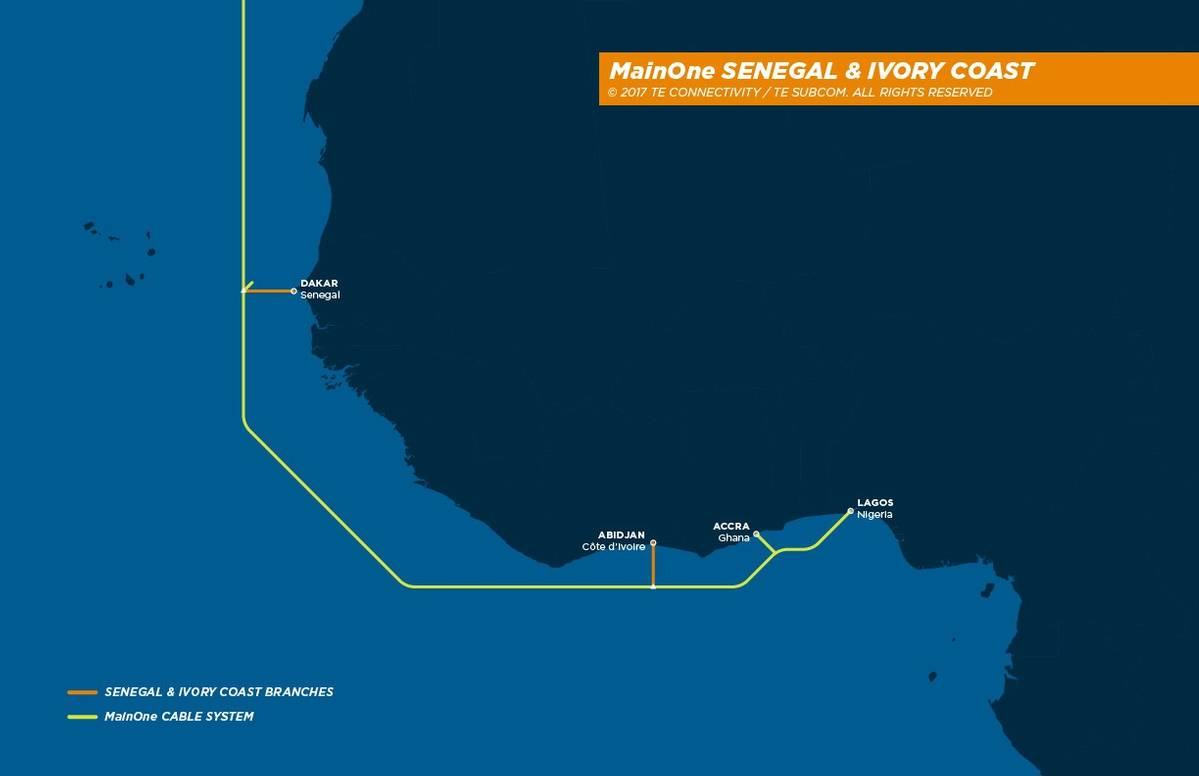
When Olafunke Opeke founded MainOne in 2008, Nigeria’s internet ecosystem was still heavily dependent on satellite bandwidth, slow, expensive, and ill-suited for a modern economy. What MainOne introduced was not merely faster internet, but a foundational shift in how connectivity was structured and delivered. By becoming the first private company to build an open-access submarine cable connecting West Africa directly to Europe, Opeke fundamentally altered the economics of internet access in the region.

Stretching from Portugal to Nigeria and later extending to Ghana, Côte d’Ivoire, and Senegal, the MainOne cable unlocked high-capacity, affordable broadband for banks, universities, tech companies, media houses, and government institutions. This was infrastructure as empowerment. For the first time, West African businesses could compete digitally without prohibitive costs, and young innovators could build products without fighting latency and downtime.
Nigerians and other West African regions scrolling through social media, developers building startups, creators monetizing content, and students accessing global research may never trace their digital freedom back to subsea cables, but much of that freedom runs through systems
Opeke helped design. Her influence is not performative; it is structural. By reducing access costs and improving speed and reliability, MainOne laid the groundwork for Nigeria’s startup ecosystem, fintech boom, and creator economy. In 2021, MainOne was acquired for $320 million by Equinix, this was not just a business exit, it was validation that African-led infrastructure could be globally competitive, scalable, and valuable.
Standing in the Present: Innovation, Recognition, and Lessons for Africa’s Future
In today’s innovation-driven world, Olafunke Opeke’s legacy continues to resonate because it challenges prevailing narratives about development and leadership. Her recognition by Forbes as one of the world’s top women in tech is significant, but it is not the most important part of her story. What matters more is where she chose to stand, firmly within the complexity of African realities, rather than waiting for external validation or foreign intervention.
Opeke did not build MainOne as a charity project or a symbolic gesture; she built it as serious infrastructure, guided by local knowledge and global standards. For African women in particular, her journey offers a powerful counter-narrative to exclusion in STEM and leadership spaces. She demonstrates that competence, preparation, and conviction can coexist with quiet authority.
Olafunke Opeke's work shows a critical lesson to the continent of Africa: that sustainable solutions emerge when problems are solved by people who live them. Africa does not lack ideas; it lacks systems that trust local expertise enough to execute them at scale.
Opeke’s career affirms that innovation does not always announce itself with hype, it often arrives through disciplined execution, long-term thinking, and an unyielding belief that Africa deserves world-class infrastructure built by its own.
What To Take Home: Legacy, Learning, and the Internet We Inherited
Olafunke Opeke’s story invites reflection beyond admiration. It asks difficult questions about how progress is made, who gets credit for it, and how quietly transformative leadership can be. Her legacy is embedded in the everyday digital lives of millions, seen in faster connections, thriving startups, remote work opportunities, and a continent increasingly present in global digital conversations.

What we should take home is not only the scale of her achievement, but the method behind it: identify the root problem, build the backbone, and let others create value on top of it. In a world obsessed with visibility, Opeke reminds us that impact does not require spectacle.
The internet infrastructure powering West Africa today is not accidental; it is the result of vision matched with technical rigor and local commitment. As Africa continues to define its place in a rapidly evolving digital economy, the lesson is clear. We do not have to wait to be included, we can build what we need, for ourselves, by ourselves.
That is the enduring meaning of Olafunke Opeke’s work, and that is the future her legacy continues to enable.