SHE100: The Story Of Zainab Fasiki, the Moroccan artivist
She was ranked first in the country as a mechanical engineer. Then she drew herself naked, put it on the internet, and called it Hshouma, meaning shame. Zainab Fasiki turned Morocco's most silencing word into a global movement for women's rights, one illustration at a time. This is the story of the artivist who refused to be ashamed.
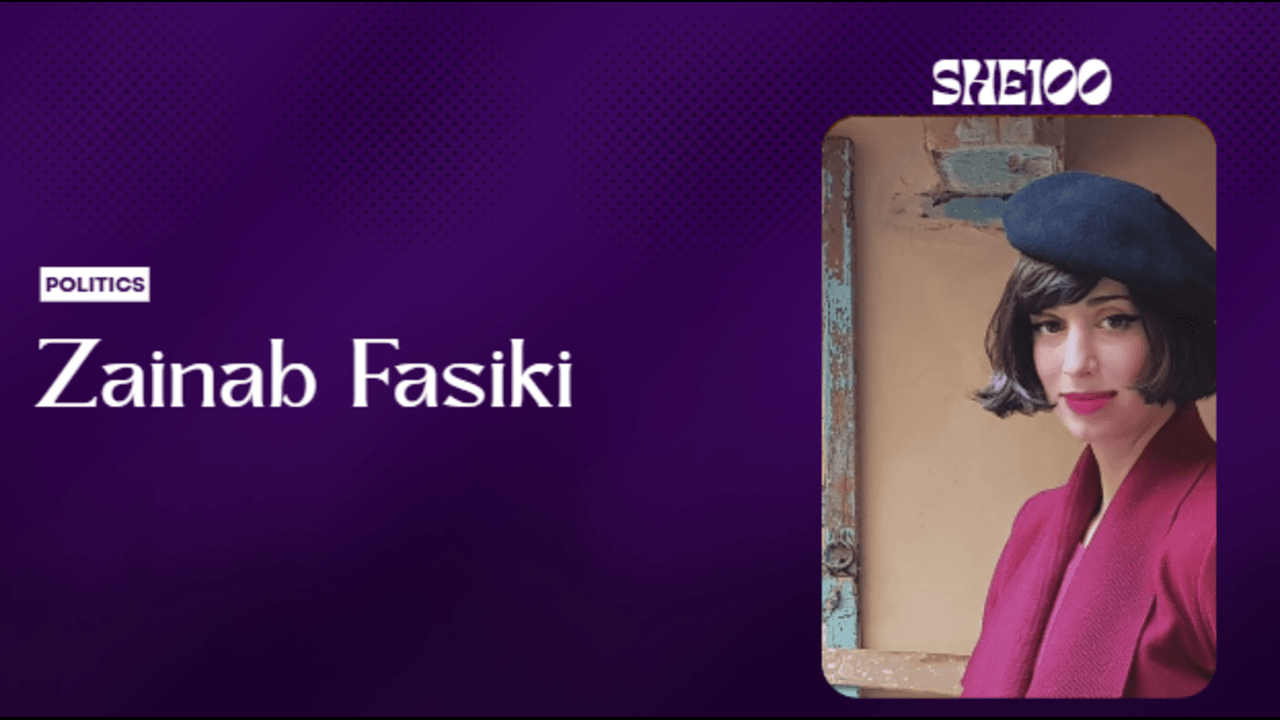
Zainab Fasiki—mechanical engineer, graphic artist, feminist, artivist—did not set out to become one of the most discussed women's rights voices in North Africa.
Because she grew up in an environment where shame was used to silence girls who ask questions about their bodies. It was a word used to end conversations before they begin. It was the word that has kept generations of Moroccan women from understanding their own anatomy, their own rights, their own worth.
One day she did something different, she picked up a pencil and drew herself naked and put it on the internet and then called the project Hshouma.
She set out to survive a world that was telling her, daily and in multiple languages, that she was too loud, too visible, too free.
Her response was to become louder, more visible, and entirely, unapologetically free — one illustration at a time.
The Engineer Who Could Not Stop Drawing
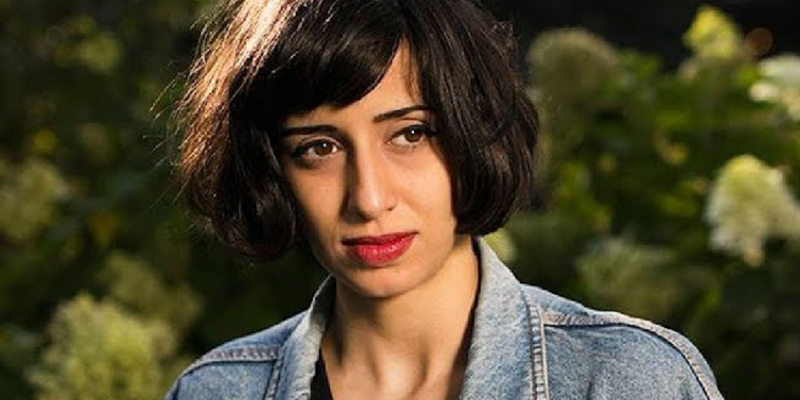
Born on July 21, 1994, in Fez, one of Morocco's oldest and most culturally conservative cities, Zainab started drawing at age four and had not stopped by the time she was fifteen, when she began creating comics on her graphic tablet.
She was also, simultaneously, fascinated by mechanics, the combination was unusual. In a society that already struggled with women in STEM, a girl who wanted to build machines and draw nude self-portraits was not exactly expected.
She pursued both interests without apology. In 2014, she earned the Diploma of Superior Technician in Mechanics, ranking first in the entire country.
She then enrolled at the National Higher School of Electricity and Mechanics in Casablanca, graduating in 2017 as a State Engineer in Mechanics, she was brilliant at it.
She was also, by then, exhausted by it, not by the discipline itself, but by what the discipline demanded of her as a woman within it.
Sexual harassment in the streets of Casablanca. Gender-based discrimination in classrooms and workplaces that had no template for someone who looked like her. The message, repeated in different forms, was always the same: this space is not for you.
Her response was not to leave, it was to draw. In 2014, she joined the Skefkef comic book collective in Casablanca, a community of artists using sequential art to tell Moroccan stories outside the bounds of official culture.
In 2017, she published her first feminist comic strip, Omor (Things), following three young Moroccan women navigating the social inequalities of daily life. It was quiet by her later standards. It was also the beginning.
Hshouma: Turning Shame Into a Weapon for Change
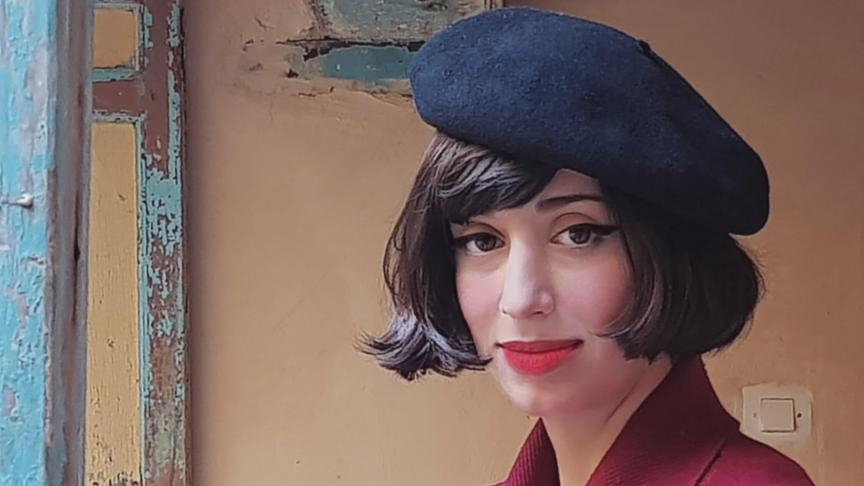
In 2018, Zainab Fasiki launched the Hshouma project, a collection of illustrations depicting nude Moroccan women in settings drawn from everyday life: the hammam, the street, the domestic interior.
The figures were bold, unembarrassed, sometimes superheroine-like. Many were self-portraits. Some had no eyes, a deliberate artistic choice.
As she has explained: "I see women as statues in my society and I want them to be free human beings." The absence of eyes was not emptiness. It was an indictment.
The first Hshouma exhibition was held in 2018 at the Matadero arts centre in Madrid, following a workshop. In November of the same year, her work was exhibited at Le Cube art gallery in Rabat.
She has also partnered with the UN Refugee Agency in Morocco to animate a story of four refugees from sub-Saharan Africa, including a woman subjected to female genital mutilation, expanding the project's scope beyond Morocco to the wider reality of women displaced and violated across the continent.
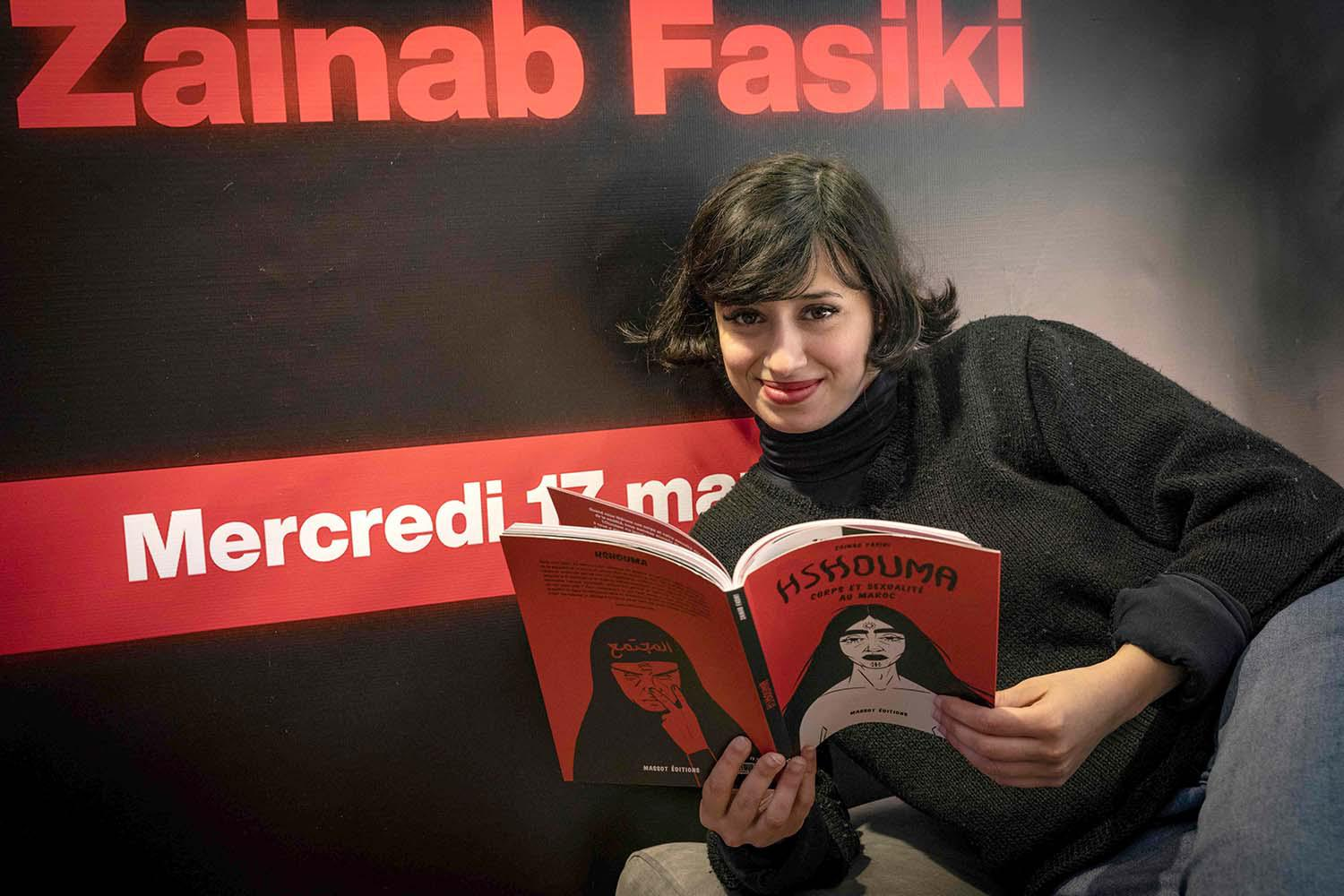
In 2019, the Hshouma project was published as a graphic novel, 144 pages combining illustrations, personal testimony, and educational content on women's bodies, sexuality, menstruation, and reproductive health.

It drew from anonymised testimonies collected via social media, making it as much a community document as an artistic one. That same year, TIME magazine named her a Next Generation Leader.
In October 2018, she also won the Amnesty Award for Activists, a recognition that her work was not simply art, but advocacy.
The graphic novel was translated into Moroccan Arabic, Spanish, Galician, and Italian, and in May 2024 an English edition—Hshouma: Shame! Bodies and Sexuality in Morocco—was published by Clairview Books, bringing her work to anglophone audiences for the first time.
In 2022, the book won the Prix du Courage, the bravery award, at the Angoulême International Comics Festival, one of the most prestigious comics events in the world. In 2020, she illustrated the French book L'amour fait loi, about sexual discrimination, with texts by writers including Leïla Slimani.
Women Power, COP28, and the Global Stage
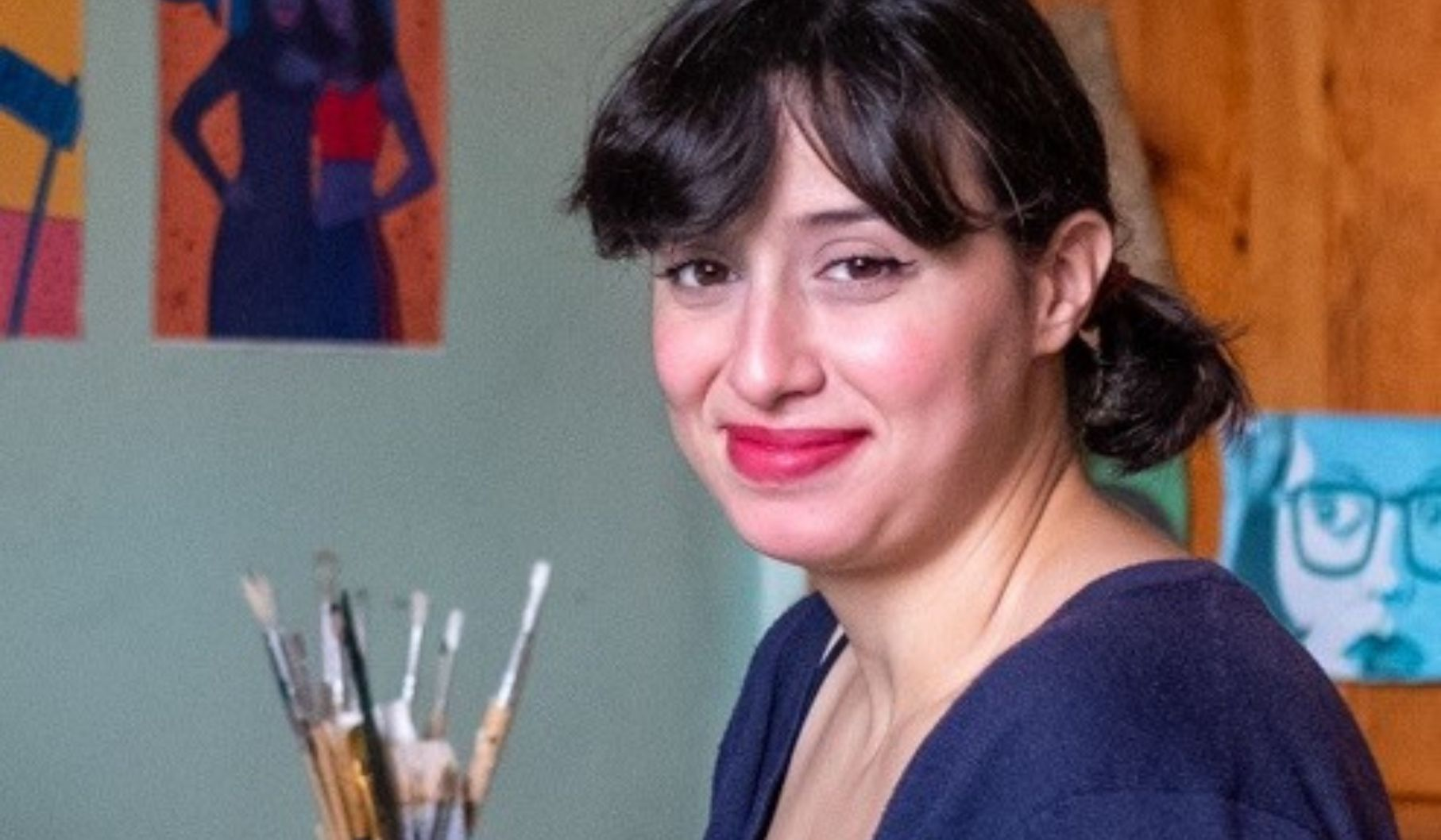
In 2018, alongside the Hshouma project, Zainab founded the Women Power collective, a feminist and queer art community that invites young women artists to monthly workshops, mentoring the next generation of Moroccan creatives and ensuring that the space she had fought to occupy was not kept to herself.
She has always understood that individual visibility is only valuable if it opens the door wider for others. Her work has continued to grow in both scale and scope. In December 2023, she participated in From Ink to Action, a comic anthology on climate and environmental issues, produced in collaboration with eleven other Arab-region artists and the Lakes International Comic Art Festival in the UK, launching at COP28 in Dubai and touring internationally.
In March and April 2024, her work was featured in the transfeminism exhibition at Mimosa House in London, a global dialogue between feminist artists across cultures.
In December 2024, she appeared in the Origins gallery exhibition at the Comic Art Museum in Brussels, in partnership with the Moroccan Ministry of Culture.
She teaches workshops on political art and its role in shaping society across the MENA region. She runs comic-strip workshops at universities and nonprofits in Morocco and internationally.
She speaks at panels on feminist leadership, environmental justice, and the power of visual storytelling to do what legislation has not yet done, change minds.
Zainab Fasiki started with a word that was meant to stop her. She took that word, wrote it in large letters on the cover of a book, filled the book with everything the word was meant to hide, and sent it around the world.
Hshouma outrightly meant shame. She wore it like armour and she is still drawing to lend her voice through activism.