Romanian Drone Provocation Triggers Fierce NATO Response
Recent Russian drone incursions into NATO and EU airspace, particularly Romania, signal a severe escalation of tensions, prompting discussions about activating NATO's Article 4. This backdrop underscores Russia's reliance on Shahed/Geran drones in Ukraine, which are domestically produced variants using components from various countries despite sanctions. The article delves into the drones' evolution, their technical specifications, and Ukraine's efforts to counter these persistent aerial threats.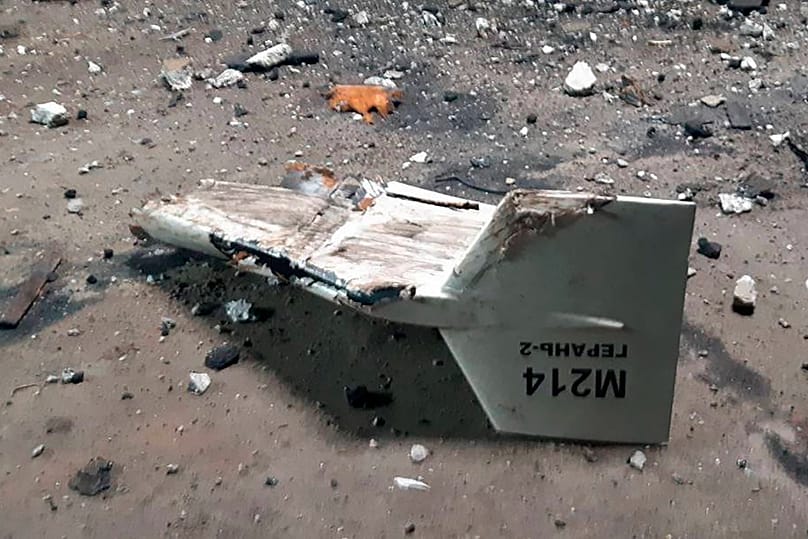
Recent Russian drone incursions into the airspace of NATO and European Union member states signal a profound shift, with Poland’s Undersecretary of State for Trade, Michał Baranowski, stating to Euronews that the EU is no longer living in peacetime. Baranowski explicitly categorized these incidents as “provocations,” not mistakes, stressing the extreme seriousness and scale of the escalation. This assessment follows a Russian drone incursion into Romania early on a Friday morning, which crashed into an apartment building and injured two people, part of a larger overnight Russian attack on Ukraine.
The Romanian incident is not isolated. Since the beginning of May, there have been at least six confirmed or suspected drone incursions into the airspace of Latvia, Lithuania, Estonia, and Finland. Prior to this, nearly 20 Russian drones entered Polish airspace in September of last year, prompting Polish Prime Minister Donald Tusk to describe it as a “direct threat.” These repeated violations have raised significant alarm within both NATO and the European Union, as the countries along the Baltic and eastern flank serve as crucial lines of defence against Russia.
In light of these escalating provocations, there have been discussions about potentially activating Article 4 of the NATO treaty. This article allows any member state to request emergency consultations when its territorial integrity, political independence, or security is deemed under threat. Romanian President Nicușor Dan called for a NATO meeting to discuss the implications of what he termed “the most serious incident” affecting Romania since Russia's full-scale invasion of Ukraine in 2022, indicating an intent to order “proportionate measures” against the Russian Federation. Discussions about triggering Article 4 had also reportedly occurred among foreign ministers in Sweden following the earlier Baltic incursions, though no such formal move has yet been made.
At the heart of many of these incidents, and a key weapon in Russia’s arsenal since its February 2022 invasion of Ukraine, are Shahed-type drones. Moscow has deployed hundreds of these drones to strike a wide array of targets, including military and residential areas, energy facilities, and civilian infrastructure. They are also strategically used in mass attacks to overwhelm Ukraine’s air defenses. Due to their distinctive, loud buzzing sound, reminiscent of lawn mowers, these drones are colloquially known as “mopeds” in Ukraine.
The Geran-2 long-range, one-way attack drone, often labeled a kamikaze drone, is essentially a Russian domestically manufactured version of the Iranian-designed Shahed-136. Russia commenced establishing home-made assembly lines for Geran-2 drones in 2023, a year into its comprehensive conflict with Ukraine. Production of these “Geran” drones takes place at a plant in Russia’s Tatarstan, and since the establishment of domestic manufacturing, Russia has significantly intensified its attacks against Ukraine, launching hundreds of drones in single nights, a scale far surpassing some entire months earlier in the war.
Geran drones typically fly at a relatively slow speed of 180 km per hour, but possess an impressive range that can extend up to 2,000 kilometres. They are capable of carrying a substantial payload of 50 kilograms of explosives. While Russia also utilizes ballistic and cruise missiles, which offer greater speed and destructive power, these cost millions and are available only in limited quantities. In stark contrast, a Shahed/Geran drone costs between €25,000 and €40,000, representing only a tiny fraction of the cost of a ballistic missile, making them a more economically viable option for frequent, mass attacks.
Despite EU sanctions specifically prohibiting direct exports of many components to Russia, an investigation by the Organised Crime and Corruption Reporting Project (OCCRP) in February revealed that hundreds of components produced by European companies, alongside those from the US and China, still find their way into Russian drones. Ukraine’s military intelligence agency, through the dissection of downed Geran-2 drones, has meticulously mapped out their anatomy. While hundreds of components are involved, only a few dozen are of Russian origin. Over 100 components, including microchips, receivers, transistors, diodes, antennas, and fuel pumps, are produced by approximately 20 European firms. Trade data for the investigation showed 672 shipments of these sanctioned components from 178 companies, primarily in China and Hong Kong, reaching Russia between January 2024 and March 2025.
Since establishing domestic production, Russia has further advanced its drone technology, introducing improved variants. The Geran-5, unveiled in May, is a jet-powered attack drone that boasts increased altitude capabilities, enhanced resistance to jamming, and more powerful warheads. This variant is notably larger, approximately 6 meters long with a wingspan of up to 5.5 meters, akin to a small winged missile. Powered by a Chinese-made Telefly jet engine, the Geran-5 carries a 90-kilogram warhead and has a stated strike range of approximately 1,000 km, cruising at speeds of 450-600 km per hour. The Defence Intelligence of Ukraine notes its potential deployment from airborne platforms like Su-25 attack aircraft and its ability to carry R-73 air-to-air missiles with infrared homing heads, further relying on Western microelectronics from countries such as Germany and the US.
Ukraine has been actively ramping up its air defense systems and developing specific Geran-countering techniques to combat these increasingly sophisticated threats. In 2025, Moscow launched attacks on Ukrainian cities on 357 out of 365 nights, illustrating the relentless nature of the aerial assault. Despite the modernization efforts by Russia to make Shahed-type drones deadlier and the broader scope of mass attacks, Ukrainian forces have demonstrated significant success. For instance, during one of Russia’s largest attacks on May 23, which involved 600 drones, 36 ballistic missiles, Kinzhal and Zircon hypersonic missiles, and Oreshnik intermediate-range ballistic missiles, Ukrainian forces managed to intercept the vast majority, achieving an impressive Shahed-type drone interception rate of over 91%.