Peter Obi's Bombshell: Tinubu 'Tired,' Unfit to Lead Nigeria, Demands Retirement!
Peter Obi, the NDC presidential candidate, has urged President Bola Tinubu to step aside before the 2027 election, citing his perceived incapacity to tackle Nigeria's deepening economic and security challenges. Obi highlighted alarming statistics on poverty and hunger, while also stressing the need for a leader with vision and commitment to address the nation's crises, linking insecurity to poverty and advocating for robust investment in education.
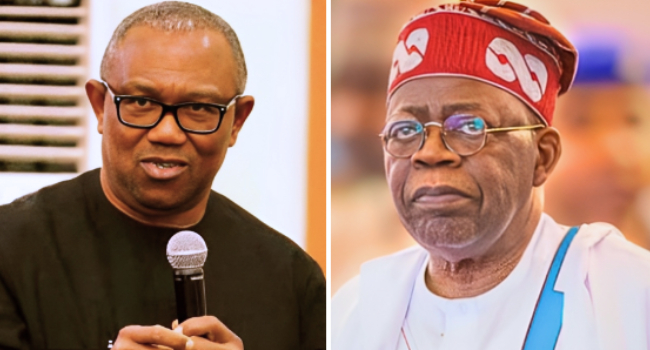
Peter Obi, the presidential candidate of the Nigeria Democratic Congress (NDC), has emphatically urged President Bola Tinubu to step aside before the 2027 general election. Obi declared that the President is “tired” and no longer possesses the requisite capacity to effectively address Nigeria’s escalating economic and security challenges. Speaking during an interview on Channels Television’s 'Sunday Politics', Obi critically assessed Tinubu's performance, noting that it had fallen significantly short of expectations, particularly when contrasted with his commendable achievements as the former governor of Lagos State.
According to the former Anambra State governor, there is a distinct difference between the Bola Tinubu who governed Lagos and the one currently presiding over the nation. Obi stated, “The Bola Tinubu that was governor is not the one that is president today. He’s tired. He should be allowed to retire in peace, and then go home.” He argued vehemently that Nigeria is currently on a perilous trajectory, necessitating a leader endowed with fresh energy, visionary leadership, and unwavering commitment to confront the nation's burgeoning challenges. Obi concluded, “As it is right now, Bola Tinubu is leading us nowhere. We will turn it so he can see it. That’s why maybe I’m calling for his retirement. The man should just step aside. Yes, he doesn’t have the capacity to do the job.”
Obi painted a stark and sobering picture of Nigeria’s current economic and social conditions, highlighting rampant poverty, widespread hunger, pervasive insecurity, and what he characterized as profound governance deficiencies. He cited recent alarming reports from international organizations, emphasizing the worsening living conditions for ordinary Nigerians. Specifically, he mentioned the World Bank's projection that 79 percent of Nigerians, equating to over 180 million people in a country of 230 million, are anticipated to face poverty. “That should be the issue we should be discussing,” he stressed.
The NDC presidential candidate further advocated for a fundamental shift in national discourse, urging that conversations should pivot away from political personalities and instead concentrate on pressing national issues. He called for discussions centered on critical areas such as the alarming number of out-of-school children, inadequacies in healthcare, and the judicious and effective utilization of public resources, lamenting that these crucial topics are largely ignored. Moreover, he underscored the severe issue of food insecurity, referencing the World Food Programme's warning that 35 million Nigerians are at risk of hunger. “This election in 2027 should be about issues that affect ordinary Nigerians,” Obi asserted, also noting the widespread kidnappings and the urgent need to address the broader challenges facing Nigeria.
Addressing a recent commendation by former United States President Donald Trump regarding Tinubu’s efforts to combat insecurity, Obi acknowledged the praise but firmly maintained that the government’s response has been insufficient given the immense scale of the crisis. He stated, “Thank you to Donald Trump. Thank you to President Trump. But we need to do more, far more than what we are doing. I’ve heard people, and Donald Trump is now confirming it, say he has done his best. But with the crisis we are facing, his best is not enough. We need to do more.” As compelling evidence, Obi pointed to recent mass abductions in Zamfara State, where 40 people were abducted on one day and 50 the next, leading to entire communities fleeing their homes, thereby underscoring the severity of the national emergency.
Obi steadfastly maintained that insecurity cannot be effectively tackled without addressing its foundational root causes, primarily mass poverty and chronic underinvestment in education. He articulated a direct correlation, stating, “You can’t create mass poverty and think you can deal with insecurity. The more you put people out of poverty, the more you reduce criminality. You need to invest in education, massive.” In outlining his own leadership philosophy, Obi pledged a highly hands-on and proactive approach to governance if elected president, committing to personally spearhead efforts to ensure the safety and security of all Nigerians. He declared, “Whatever it takes to secure any Nigerian, I will do that. If your people are dying, you should be ready to die. You’re the president. You’re the number one person.”