Mathjabeng's Fiscal Collapse: A Town's Descent into Financial Ruin
A report by Auditor-General Tsakani Maluleke has exposed severe financial mismanagement and service delivery failures within the ANC-led Mathjabeng Local Municipality. The municipality faces a massive R871.6 million deficit, liabilities exceeding assets by billions, and critical issues including unverified revenue, 'ghost infrastructure' payments, and the collapse of wastewater treatment works leading to environmental pollution.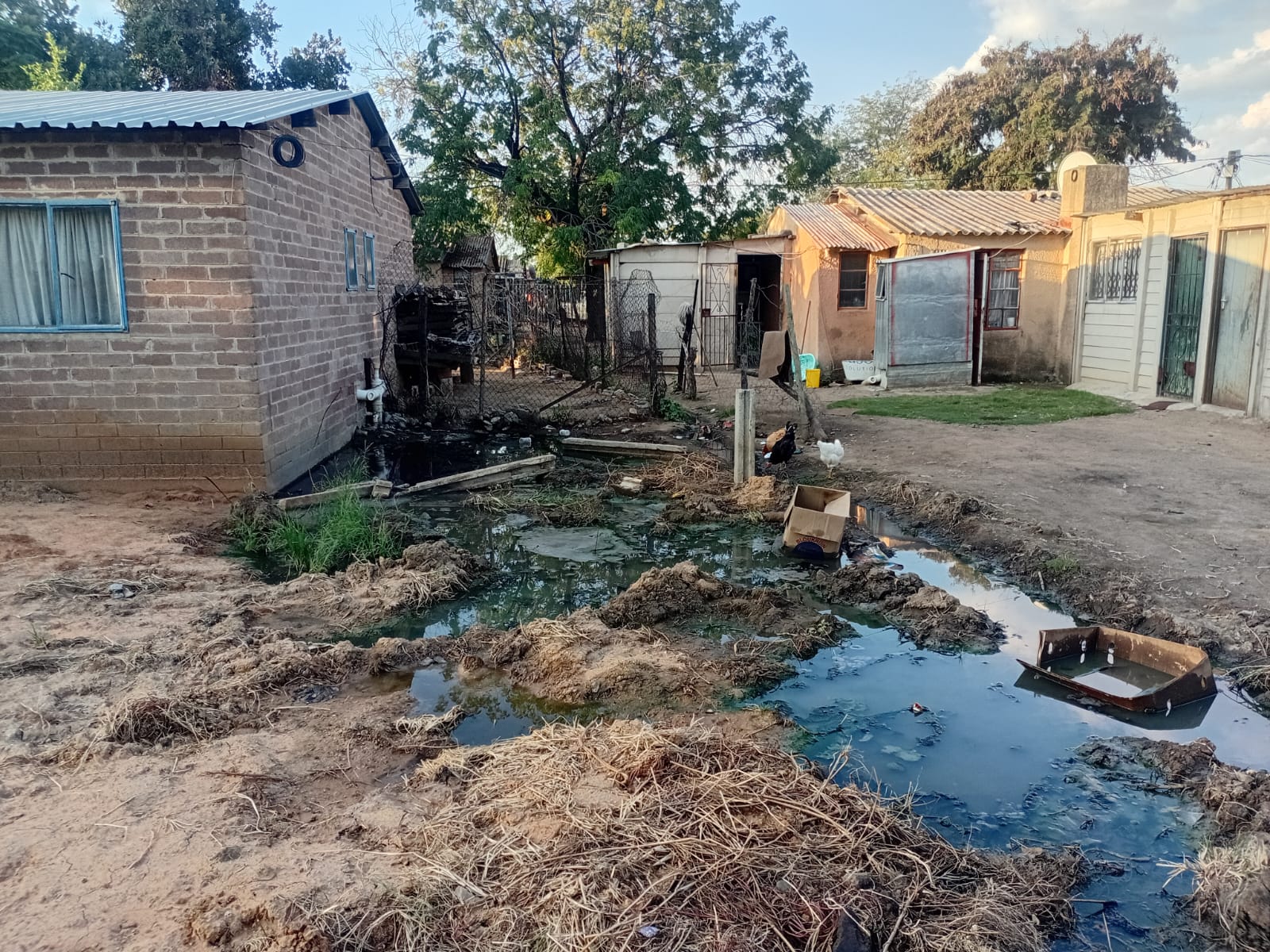
The Mathjabeng Local Municipality, an ANC-led entity, is in a state of severe financial distress and widespread mismanagement, according to a critical report from Auditor-General Tsakani Maluleke. The report, covering the financial year from July 1, 2024, to June 30, 2025, details a staggering deficit of R871.6 million. As of June 30, 2025, the municipality's total liabilities exceeded its total assets by R5.8 billion. Maluleke issued an unqualified audit opinion, but noted this was due to the lack of reliable supporting data, which prevented her office from verifying several critical figures.
Operational inefficiencies are starkly evident in the municipality’s performance: only 61% of its planned targets were achieved, despite spending 117% of its budget during the reporting period. Mathjabeng Local Municipality has accumulated substantial long-overdue debts, including over R1.58 billion owed to Eskom and more than R6.84 billion to Vaal Central Water, highlighting a profound financial crisis.
Further financial irregularities include an inability to confirm R1.28 billion in water and electricity revenue, attributed to the municipality’s reliance on estimated billing rather than actual consumption data. Bulk purchases also revealed concerning issues, with electricity and water losses totaling over R723 million that could not be verified due to inaccurate tracking of units sold. The municipality also faces a significant challenge with debt impairment, as over R6.7 billion owed to it is unlikely to be recovered.
Maluleke’s report meticulously documented various forms of financial mismanagement. Unauthorised expenditure amounted to R946.3 million, reflecting money spent beyond the approved budget. Fruitless and wasteful expenditure reached R151.7 million, with a substantial portion consisting of interest and penalties incurred because the municipality failed to pay its creditors on time. Additionally, irregular expenditure stood at R95.8 million, stemming from non-compliance with supply chain management requirements. Disturbingly, the municipality failed to investigate most of this irregular and unauthorised spending to determine liability or hold officials accountable.
Beyond financial malfeasance, the report also highlighted significant service delivery failures. In pothole patching, only 12% of the target for the west region and a mere 8% for the east region were achieved. Sanitation services fared poorly, with only 14% of household and business waste removal backlogs addressed within 48 hours, far below the 100% target. Electricity infrastructure development also lagged, with only 13% of work on a new substation completed against a target of 70%.
Several material irregularities were brought to light. One involved a revenue consultant who was paid R253.6 million based on a percentage of revenue. Auditors found that the company did not generate this revenue, as it originated from pre-existing government property valuations. The consultant’s initial 24-month contract (October 2018 to October 2020) was extended on a month-to-month basis until February 2025. Maluleke noted that the accounting officer failed to take all reasonable steps to ensure that municipal resources were used effectively, efficiently, and economically, as required by section 62(1)(a) of the Municipal Finance Management Act (MFMA). This non-compliance is likely to result in a material financial loss for the municipality.
Another significant irregularity highlighted was “ghost infrastructure,” specifically an attenuation dam for which R7.2 million was paid but was never constructed. This payment was part of a R13.7 million contract awarded in April 2017 for the Nyakallong stormwater system. Payments were made for the attenuation dam after the consulting engineer certified the work as complete. However, during a site visit, auditors found the project incomplete, the contractor had abandoned the site, and the work performed was substandard. This contravened section 65(2)(a) of the MFMA regarding expenditure control. The material irregularity was referred to the Directorate for Priority Crime Investigation (DPCI), leading to the arrest of a municipal official and two representatives of the service provider. Their trial, initially set for May 2025, has been provisionally withdrawn from the court roll for further evidence consideration and consultation, with the matter yet to be re-enrolled.
Maluleke also described an environmental collapse at the Henneman, Phomolong, and Witpan wastewater treatment works, which have allegedly “totally collapsed.” This has resulted in the continuous discharge of raw sewage into the environment, including groundwater systems, the Rietspruit, and connected watercourses. The municipality’s failure to prevent pollution and environmental degradation contravenes the National Environmental Management Act and the National Water Act, posing substantial harm to communities dependent on these contaminated water resources. Despite notification to the accounting officer, appropriate action was not taken, leading to a referral to the Department of Water and Sanitation, where an investigation is currently in progress.
As a direct consequence of its financial mismanagement, the National Treasury has withheld R7.3 million of the municipality’s equitable share allocation. This action stems from the municipality’s failure to repay unspent conditional grants, which amounted to a material underspending of R76.3 million. This withholding of funds underscores the serious repercussions of Mathjabeng Local Municipality’s ongoing financial and operational failures.