Major Players Atiku, Obi, Makinde Hint at United 2027 Presidential Bid
An emerging opposition coalition ahead of Nigeria's 2027 elections faces scrutiny following the absence of key figures Atiku Abubakar, Peter Obi, and Seyi Makinde from a recent summit. While their parties assure commitment, analysts raise concerns about unresolved personal ambitions, political mistrust, and policy divergences. The coalition's ability to unify diverse voter bases will be crucial for its success against the incumbent.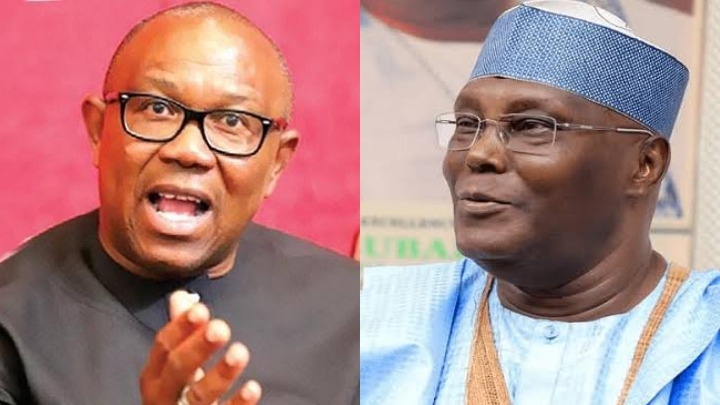
An emerging opposition coalition, gearing up for Nigeria's 2027 general elections, has reportedly taken steps towards forming a united front against President Bola Tinubu and the ruling All Progressives Congress (APC). However, a recent G100 opposition summit held at the Shehu Musa Yar’Adua Centre in Abuja brought to light potential challenges, specifically the absence of three prominent figures: former Vice President Atiku Abubakar, former Anambra State Governor Peter Obi, and Oyo State Governor Seyi Makinde. Their non-attendance has sparked debate and raised questions regarding the alliance’s overall strength, strategic direction, and leadership cohesion.
The summit convened representatives from major opposition parties, including the African Democratic Congress (ADC), Allied Peoples Movement (APM), National Democratic Congress (NDC), Peoples Democratic Party (PDP), Peoples Redemption Party (PRP), and Social Democratic Party (SDP), all gathered to discuss a framework for electoral cooperation. Despite the presence of party delegates, the physical absence of Atiku (presidential candidate of ADC), Obi (presidential candidate of NDC), and Makinde (APM presidential candidate) was immediately noticeable. This led to speculation about whether these political heavyweights were hesitant to fully commit to the coalition or if their respective parties were merely proceeding with negotiations on their behalf.
Reactions from the camps of the absent leaders, however, sought to dismiss notions of rejection. Atiku, Obi, and Makinde each hold distinct and strategically important positions within Nigeria’s complex political landscape. Atiku, with decades of political experience, a vast nationwide network, and significant influence in the northern political establishment, brings substantial weight. Peter Obi, who secured third place in the 2023 presidential election, commands a strong following among younger voters and the influential 'Obidient movement.' His camp has also benefited from the 'Kwankwasiya movement' following Senator Rabiu Kwankwaso’s selection as his running mate. Governor Makinde, as a serving governor and a prominent opposition figure, contributes executive experience and crucial influence within the South-West region. The critical question remains whether the coalition can successfully merge these diverse political strengths into a singular, formidable electoral force capable of challenging Tinubu in 2027.
For the NDC, Peter Obi’s absence was attributed to an official engagement, not a deliberate disengagement from the summit. The party’s national publicity secretary, Osa Director, confirmed Obi’s commitment and highlighted that the NDC was fully represented by its national chairman, Moses Cleopas, and the entire leadership. This explanation is particularly significant given Obi’s strong public profile and his formidable 2023 campaign, which mobilized a crucial youth demographic. The NDC’s stance suggests that Obi’s absence should not be misconstrued as a withdrawal from the coalition talks.
Similarly, the ADC downplayed Atiku Abubakar’s absence. The party’s national publicity secretary, Bolaji Abdullahi, clarified that the summit was primarily a discussion among political parties rather than individual candidates. He affirmed that the ADC was adequately represented by himself and four vice chairmen, making Atiku’s physical presence non-consequential. Abdullahi emphasized Atiku’s full commitment to the project, though he also stated that the ADC believed it could defeat Tinubu independently, viewing cooperation as a facilitator rather than an indispensable requirement.
The Allied Peoples Movement offered perhaps the most revealing insight regarding Governor Seyi Makinde. While Makinde was absent, the APM was represented, and its national publicity secretary, Abubakar Yusuf, expressed the party’s preference for Makinde to emerge as the opposition’s consensus presidential candidate. Yusuf stated that Makinde was prepared to abide by the group's decision, indicating ongoing consultations among opposition parties for a single candidate, with the APM believing Makinde is best positioned to lead.
However, analysts offer a more cautious perspective on the coalition’s prospects. Professor Elijah Agbaje, a Professor of Political Economy, suggested that the absence of Atiku, Obi, and Makinde could signal unresolved internal differences. He noted that, unlike in mature democracies, Nigerian politicians often prioritize personal interests over collective good, implying that the non-attendance indicated they were “not conveniently in accord with the rest.” Agbaje differentiated Makinde's situation as a serving governor from Atiku and Obi, who face the more fundamental challenge of reconciling their presidential ambitions with the demands of a unified coalition.
Professor Major Adeyi of the University of Jos echoed these concerns, viewing the absences as typical of Nigerian opposition politics and indicative of unresolved disagreements and potential mistrust. Reflecting on Nigeria's First and Second Republics, Adeyi highlighted that opposition parties historically struggled to cooperate despite shared interests. He specifically pointed to a