Ghana's GoldBod Model Shines: African Nations Adopt Success, Trillions Recovered
Ghana's Gold Board (GoldBod) has revolutionized the nation's gold sector by tackling significant trade leakages and boosting official exports and foreign exchange earnings through comprehensive reforms. These initiatives, which include a new blockchain-based traceability system, have created thousands of jobs and positioned Ghana as a leading model for mineral resource management across Africa. The African Union has notably endorsed GoldBod's success, urging other nations to adopt similar strategies.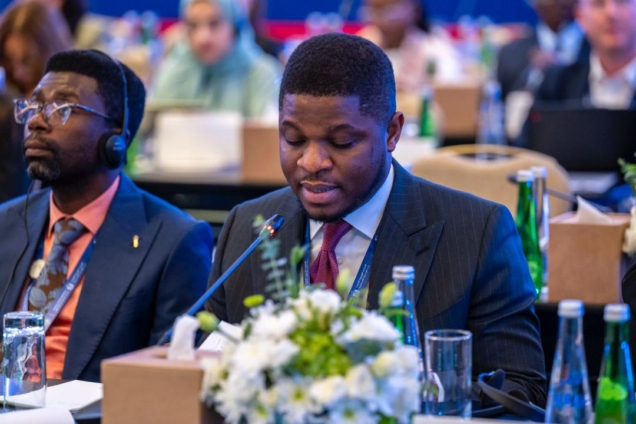
Before the implementation of significant reforms, Ghana faced substantial gold trade leakages, an issue highlighted by the Chief Executive Officer of the Ghana Gold Board (GoldBod), Sammy Gyamfi. A SWISSAID analysis of UN Comtrade mirror data revealed a staggering 229-tonne discrepancy, valued at approximately US$11.4 billion, between Ghana’s reported gold exports and the corresponding imports declared by its trading partners from 2019 to 2023. This significant gap demonstrated how considerable volumes of Ghanaian gold bypassed official export records and the country’s crucial foreign exchange system. Official small-scale gold exports had previously seen a drastic decline, falling from 75.7 tonnes in 2018 to 53.4 tonnes in 2019, and further to 39.3 tonnes in 2020. Following the introduction of a three per cent withholding tax on unprocessed small-scale gold, official exports plummeted to a mere 3.4 tonnes in 2021, valued at US$185 million. Mr. Gyamfi stated that the gold had not vanished, nor had production ceased; rather, “the trade had simply moved beyond official view.” He attributed these leakages to fragmented trading arrangements, weak regulatory oversight, and ineffective aggregation and foreign exchange repatriation systems.
Established in 2025, the Ghana Gold Board (GoldBod) was mandated to regulate Ghana’s gold trading industry, particularly focusing on the purchase, aggregation, and export of gold from the artisanal and small-scale mining (ASM) sector. Its primary objectives were to improve oversight, formalise the sector, and retain more foreign exchange earnings from gold exports, thereby ensuring greater benefits for Ghanaians. GoldBod's institutional, licensing, and value addition reforms have swiftly yielded tangible results.
In less than two years, GoldBod’s reforms have generated 4,866 direct jobs, comprising 361 public-sector positions and 4,505 private-sector jobs. Mr. Gyamfi noted that these reforms are also creating further opportunities across the gold value chain for artisanal smelters, jewellers, and young entrepreneurs. Speaking at the African Minerals Policy Forum – Mining in Motion 2026, he underscored the imperative for African countries to construct mineral economies that provide decent jobs and opportunities for their citizens while simultaneously safeguarding the environment. He advocated for measuring the success of the sector not solely by production volumes but by the economic and social benefits that are retained within local communities. Mr. Gyamfi further argued that mineral sovereignty must empower Africans to assume roles as mine owners, geologists, engineers, equipment providers, financiers, processors, refiners, and traders, moving beyond confinement to low-value activities within the mining chain.
To bolster responsible gold sourcing and address environmental concerns associated with ASM, GoldBod is set to award a contract for its gold traceability system imminently. This blockchain-based system is designed to track gold from its mine of origin through various stages of custody, aggregation, and processing, up to its eventual purchase and export. It will enable GoldBod to establish a verifiable record of gold from legitimate sources, distinguishing it from supplies potentially linked to illegal mining in water bodies and forest reserves. Miners and other supply-chain participants will be required to bag and tag gold at designated custody points to facilitate tracking. The system is also expected to enhance Ghanaian producers’ access to international markets, including Dubai, India, and markets served by the London Bullion Market Association (LBMA), potentially increasing the value and foreign exchange earnings from gold exports. Licensed small-scale miners and companies are expected to be onboarded onto the platform before the end of 2026.
GoldBod’s reforms have already demonstrated significant positive impacts on Ghana’s economy. President John Dramani Mahama reported that artisanal and small-scale mining gold exports increased from 64 tonnes in 2024 to 104 tonnes in 2025. This surge in exports helped generate $10.8 billion in earnings in 2025, a substantial increase from $4.66 billion in 2024. In a testament to its effectiveness, GoldBod generated US$1.871 billion in foreign exchange in September 2026, surpassing its monthly target of US$1.4 billion. Of this amount, US$701.3 million was channeled to authorized commercial banks, and US$1.170 billion contributed to the Bank of Ghana’s reserve accumulation.
The Ghana Gold Board has garnered international recognition, with the African Union (AU) recommending it as a model for other African countries aspiring to increase the value derived from their mineral resources and strengthen their economies. Madam Francisca Tatchouop Belobe, the AU Commissioner for Economic Development, Trade, Tourism, Industry and Minerals, lauded Ghana’s experience, highlighting how mineral sector reforms can bolster foreign exchange earnings, strengthen international reserves, support currency stability, and enhance economic resilience. She urged Africa to transcend the export of raw minerals and instead develop local processing, refining, and manufacturing industries. President Mahama reiterated Ghana's ambitious target to end exports of unprocessed mineral ores by 2030, supported by phased restrictions and legal measures. Liberia's Vice-President, Jeremiah Koung, also advocated for common principles on mineral development for continental cooperation, emphasizing regional infrastructure, transparent mineral agreements, community benefits, and responsible artisanal and small-scale mining.