Lesotho Just Banned Airtime Credit for Minors And The Underlying Lessons
Lesotho has banned airtime advances for minors effective April 2026, a quiet but significant move that exposes how slowly Africa is building digital consumer protection for its children.
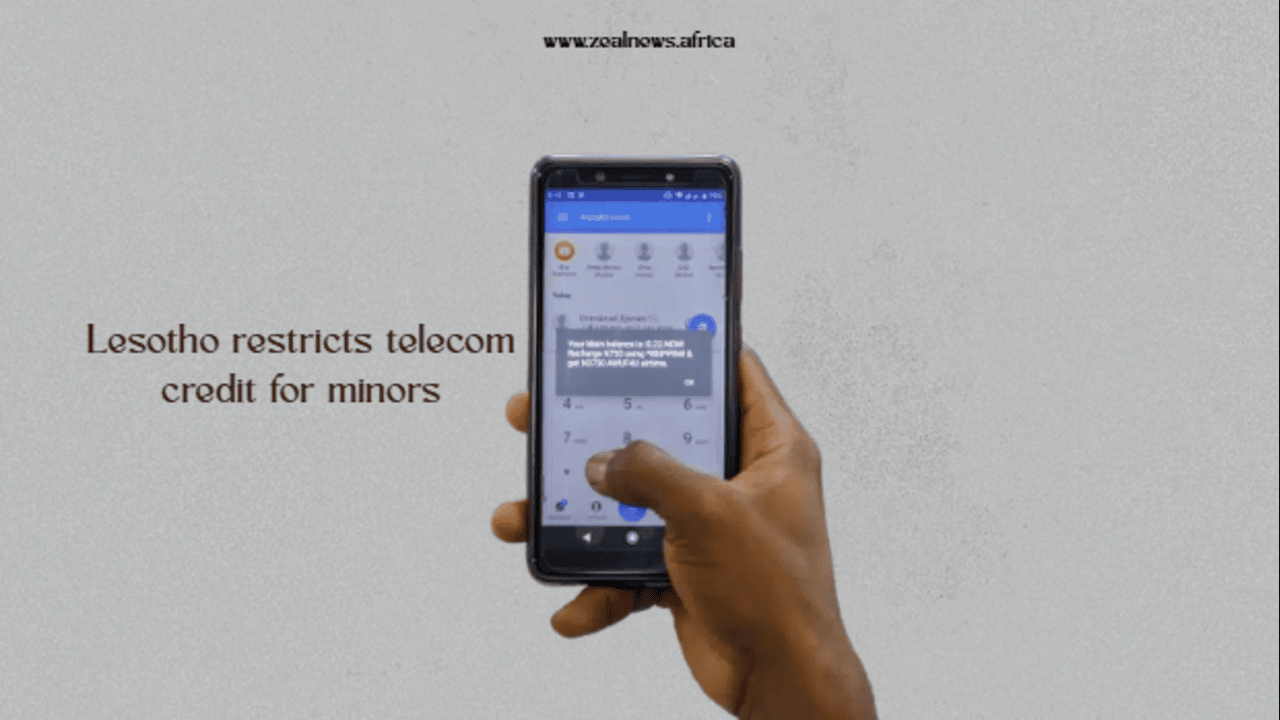
Lesotho is on the path to do something that would have a significant impact on the trajectory of its nation.
Effective from April 1, 2026, the Lesotho Communications Authority (LCA), working with mobile network operators Econet Telecom Lesotho and Vodacom Lesotho, will cut off children under 18 from accessing airtime advance services.
That would mean no more borrowing data. No more credit top-ups to be settled on the next recharge. For minors on Lesotho's mobile networks, the tab is officially closed.
The mechanism for all of this is pretty straightforward. SIM registration data will be integrated with Airtime Credit Systems to automatically flag and restrict underage subscribers.
Existing balances racked up before the April 1 cutoff remain payable, because the operators are not forgiving debt, they are stopping new ones.
The LCA's stated reasoning is clean: minors are not legally empowered to enter credit-related obligations.
Putting them in debt, even micro-debt disguised as a quick airtime advance, is a consumer protection failure that the regulator has finally decided to address.
Small Country, Significant Signal

Lesotho is not a market anyone typically watches for regulatory precedent.With a population of just over two million and a mobile penetration rate that still trails its neighbours, it rarely makes the top of any Africa tech conversation.
But this move deserves attention precisely because of what it reveals: that meaningful digital consumer protection for children is possible, it is implementable, and it does not require a massive economy or a sophisticated regulator to pull off.
Across the continent, airtime advances have become one of the most ubiquitous forms of micro-credit.
In markets like Nigeria, Kenya, Ghana, and Tanzania, millions of prepaid subscribers, including children, access data and airtime on credit daily.
Operators definitely love it and make profits from it. It drives retention, builds loyalty, and generates interest revenue from users who might otherwise churn. Nobody asks how old you are when you dial the advance code.
Africa Is Regulating the Digital Economy, But Not Always for Its Children

The continent has made genuine progress on digital consumer protection in recent years.
South Africa amended its End-User and Subscriber Service Charter Regulations in early 2026, introducing data rollover rights and better price transparency.
Latest Tech News
Decode Africa's Digital Transformation
From Startups to Fintech Hubs - We Cover It All.
Somalia's National Communications Authority is finalising a consumer protection framework. Nigeria's NCC has an Interactive Platforms Code requiring protections for minors in content and data handling.Ghana is developing an Emerging Technologies Bill covering transparency and consumer consent.
But most of this regulation is pointed at adults navigating complex digital markets.The specific question of whether children should be allowed to take on telecom credit, however small, has gone largely unasked.
Lesotho is one of the first countries on the continent to answer it with policy, not just a principle.Meanwhile, global telecommunications trends in 2026 make protecting minors in digital environments a stated policy priority.
Africa is not exempt from that conversation. It is just seems to be slower at arriving at it.
The Real Conversation Is Bigger Than Airtime

Here is what should unsettle the region's regulators: airtime advances are just the most visible version of the problem.

African children today navigate mobile money accounts, in-app purchases, algorithm-driven advertising, data harvesting, and platform engagement designed by adults for profit maximisation.
They borrow airtime, rack up charges and access services built without their protection in mind. And in most markets, no regulatory body is specifically watching out for them.
Lesotho has drawn one line in one place. It is a modest intervention, but it is the right one.
The question for Ghana, Kenya, South Africa, and every other market where a child can dial a short code and land in debt before breakfast is simple: what is taking so long?
The children on Africa's mobile networks are not abstractions. They are customers and they deserve a regulator willing to say so.