Kyiv Rallies Global Support: Ukraine's Independence Day Sees EU Backing and UK Missile Pledge
Ukraine is set to boost its domestic defence industry by producing SCALP cruise missiles, thanks to a technology transfer agreement with the UK. This development coincides with urgent calls for enhanced air defences and critical Patriot interceptors at the Coalition of the Willing meeting and during Ukraine's 35th Independence Day celebrations in Kyiv. European leaders have pledged substantial support, reaffirming solidarity amidst escalating Russian attacks and a critical shortage of interceptor missiles.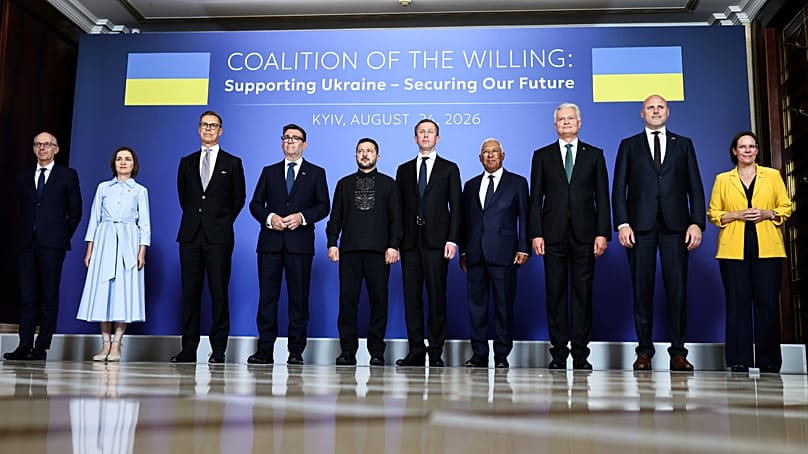
Ukraine has achieved a significant step towards bolstering its domestic defence capabilities by moving closer to producing SCALP cruise missiles within its borders. This breakthrough comes after Britain agreed to provide crucial information on the UK-made components of the Franco-British weapon, clearing the path for the missiles to be assembled in Ukraine. The decision, following months of negotiations between Kyiv and Paris on licensing and local production, was affirmed by Luke Pollard, the UK's Minister for Defence Readiness and Industry, who stated it would strengthen Ukraine's defensive capabilities. The air-launched cruise missile, known as SCALP in France and Storm Shadow in Britain, boasts a range exceeding 250km and is specifically designed for precision strikes against pre-planned, fixed targets. Ukraine has already effectively deployed these missiles against various Russian military targets and infrastructure, including command posts and defence-industry facilities located in occupied Ukrainian territory and even inside Russia. The UK's provision of long-range cruise missiles to Ukraine in 2023 marked a crucial turning point, and this latest technology transfer signifies a further evolution in Western support, shifting from merely supplying finished weapons to actively assisting Ukraine in manufacturing its own sophisticated defence systems.
This pivotal announcement coincided with a meeting of the Coalition of the Willing in Kyiv, where the pressing issue of protecting Ukraine from intensifying Russian missile attacks was a top priority. In a joint declaration, the allied nations strongly condemned Russia's “systematic and escalating strikes against Ukraine’s cities, critical infrastructure and civilians.” They further pledged to strengthen Ukraine’s air defences “as a matter of urgent priority.” The gathered leaders also committed to sharing relevant technologies, including through the Anti-Ballistic Missile Coalition, in anticipation of another harsh winter marred by Russian assaults on Ukrainian cities and vital energy infrastructure.
Despite progress on cruise missile production, Ukraine's most critical military need remains robust defences against ballistic missiles. For this, it relies heavily on US-made Patriot systems and PAC-3 interceptors. Kyiv has been actively lobbying Washington not only for additional interceptor missiles but also for the crucial permission to manufacture them domestically, a move that would ensure a more reliable long-term supply. US President Donald Trump had previously indicated a willingness to approve such a licence at the NATO summit in early July. However, three weeks later, he stated that no final decision had been taken, describing the technology transfer as a significant step. US Ambassador to NATO Matthew Whitaker subsequently tempered expectations, suggesting that a long-term production agreement was unlikely before winter and emphasizing the tight control under US export rules over PAC-3 technology. These mixed signals arrive at a critical juncture, as Ukraine faces dwindling supplies of Patriot interceptors amid an escalating Russian ballistic missile campaign and looming attacks on its energy network during the winter months.
Amidst these defence discussions, European leaders converged in Kyiv as Ukraine marked its 35th Independence Day – the fifth such occasion since Russia's full-scale invasion, a milestone few observers expected when Russian forces advanced on the capital in February 2022. UK Prime Minister Andy Burnham, making his inaugural overseas trip since assuming office, joined European Council President António Costa and other senior European officials in Kyiv for both celebrations and vital talks with President Volodymyr Zelenskyy. French President Emmanuel Macron and German Chancellor Friedrich Merz also participated remotely as part of the Coalition of the Willing meeting, underscoring collective European solidarity as Kyiv pressed its allies for more air-defence missiles ahead of the winter season.
In a tangible display of commitment, the European Union announced a fresh package of €6.1 billion in military assistance. Speaking alongside Zelenskyy and the British prime minister, António Costa paid heartfelt tribute to the Ukrainian people for their “courage and bravery,” which he declared “inspire the world.” He reiterated the EU's unwavering commitment to “continue to provide as much support as necessary for as long as necessary,” extending this pledge beyond the immediate conflict to Ukraine’s future membership in the European Union. “International law must prevail. Russia will not prevail,” Costa asserted, adding, “The European Union cannot be neutral when international law is being violated. We are not neutral. We are Ukrainian supporters.” UK Prime Minister Burnham drew a powerful historical parallel, comparing Ukraine’s resistance against Russia to Britain’s fight against Nazi Germany, telling Ukrainians, “My nation kept the flame of European freedom alive in the 20th century, you hold that flame in the 21st.” UK Defence Minister Luke Pollard re-confirmed London’s commitment to share technology for domestic SCALP missile production, affirming, “We will stand with them for as long as it takes.”
Notably absent from the Kyiv commemorations were senior representatives of the Trump administration. Despite earlier speculation that Independence Day might mark their first visit to Ukraine, Donald Trump’s envoys Steve Witkoff and Jared Kushner did not make the trip. Neither has traveled to Kyiv since taking leading roles in the US administration’s diplomatic efforts, despite repeated meetings with Russian officials and eight visits by Witkoff to Moscow. In contrast, former US Vice-President Mike Pence and Keith Kellogg, Trump’s former special envoy for Ukraine, did travel to Kyiv over the weekend and attended events surrounding the anniversary. During a speech marking Independence Day, President Zelenskyy addressed both Ukrainians and international leaders, recalling that 35 years prior, intelligence agencies doubted Ukraine’s survival as an independent state, anticipating its return to Russian influence. “But Ukrainians restored the independence of their state, and we will definitely protect the independence of Ukraine. No doubt about it,” he declared, referencing Western intelligence assessments before the full-scale invasion that Ukraine might fall within days or weeks. He forcefully stated that “Ukrainians will not be cobblestones under the feet of tsars and rulers. Ukrainians will not submit. Ukrainians will not be bargaining chips in disputes between capitals. Ukrainians will not submit to what they do not believe in. And they will definitely not abandon their own dream – the dream of living independently.”
The day’s commemorations also starkly highlighted the immense cost of preserving this independence. President Zelenskyy and First Lady Olena Zelenska began the day by honouring fallen defenders, followed by the president presenting some of Ukraine’s highest state awards to servicemen and women, with families of soldiers killed defending the country receiving posthumous honours. There was no traditional military parade through central Kyiv; instead, Ukraine showcased domestically produced drones and other defence technologies, which have become integral to its war effort. This solemn ceremony followed a severe escalation in Russian attacks on Ukraine, with Moscow intensifying ballistic missile and drone strikes on Ukrainian cities. These attacks have pushed civilian casualties to their highest levels since the initial months of the invasion and underscored Ukraine’s critical and growing shortage of advanced interceptor missiles. Zelenskyy himself noted that deliveries of Patriot interceptors had fallen significantly even as Russian missile attacks intensified. Ukraine is urgently seeking at least 300 additional interceptors ahead of the winter, making robust air defence a central and immediate concern in its ongoing discussions with European allies.