Kenya's $1.16 Billion Loan Economy Raises a Bigger Question: Do Africans Need More Loans or More Opportunities?
Kenya's $1.16 billion digital lending market highlights the success of mobile credit, but it also raises bigger questions about Africa's growing dependence on debt. Do citizens need more digital loans or more economic opportunities, grants, and sustainable pathways to wealth creation?
Not every financial problem is a credit problem. Sometimes, it is an income problem wearing the clothes of a loan application.
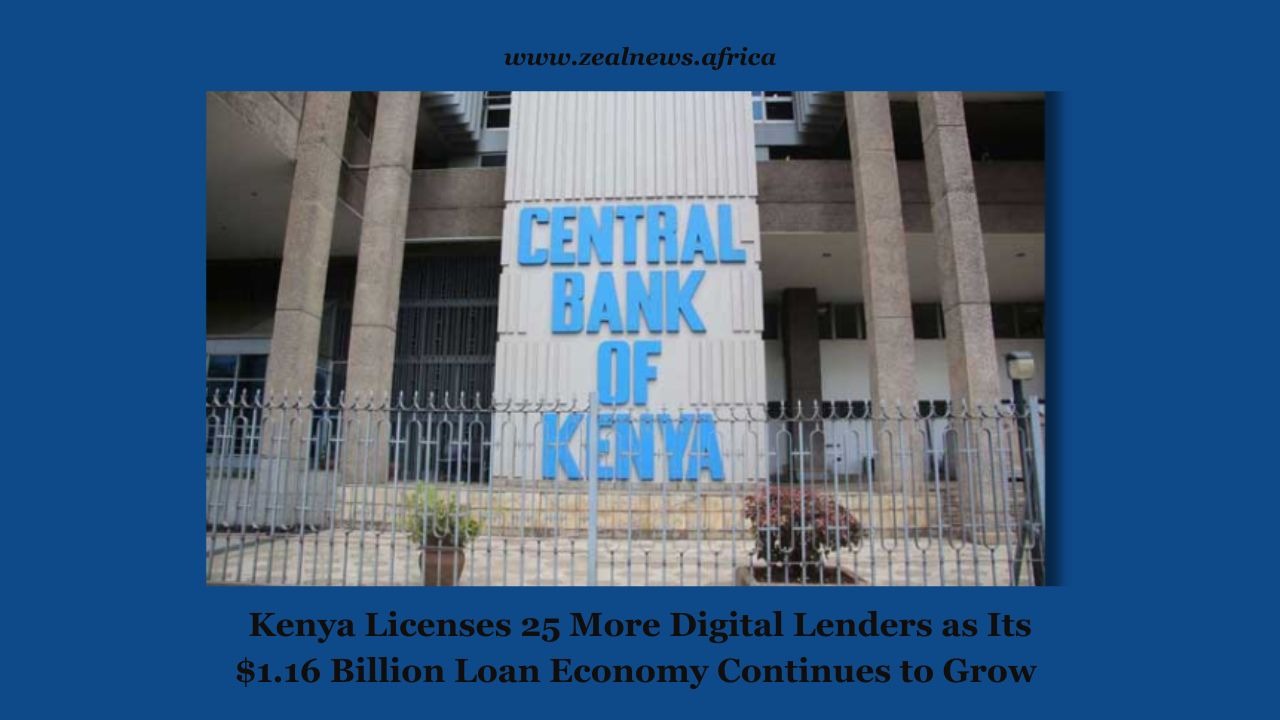
Kenya's digital lending industry is once again expanding. The Central Bank of Kenya has licensed 25 additional digital credit providers, bringing the total number of approved lenders to 252.
At the same time, licensed lenders have issued 8.37 million loans worth KSh150.56 billion ($1.16 billion) as of May 2026, cementing Kenya's position as one of Africa's most mature mobile lending markets.
Most of the conversation around those figures has focused on regulation and financial inclusion. Those are important conversations to have. But perhaps the more uncomfortable question has received far less attention: why do so many people need to borrow in the first place?
There is something both impressive and unsettling about $1.16 billion flowing through mobile phones. It speaks to innovation and access, but it also tells a story about economic realities that cannot be ignored.
For millions of Kenyans, digital loans have become less of an emergency financial tool and more of a survival mechanism.
The Convenience of Borrowing Has Become the New Normal

A loan that once required paperwork, collateral, and several days of waiting can now be approved in minutes via an app or a USSD code. That convenience has fundamentally changed how people interact with credit.
Today's borrowers are market traders paying suppliers, boda boda riders repairing motorcycles, university students paying fees, parents covering hospital bills, and small business owners filling temporary cash flow gaps. Digital lenders have undoubtedly solved a problem traditional banking left behind.
In many ways, Kenya deserves credit for building one of Africa's most successful digital financial ecosystems. Mobile money transformed payments. Digital lending democratised access to credit. Financial technology lowered barriers that once excluded millions from formal financial services.
Yet financial inclusion should not be confused with economic prosperity. Access to loans is not the same thing as access to wealth creation.
A country where millions of people can borrow instantly is not necessarily a country where millions can build wealth sustainably. The question, then, is whether Kenya's growing digital lending industry is financing growth or financing survival.
Those perspectives on the question matter.
When loans help businesses expand, create jobs, or acquire productive assets, they become economic multipliers. When they are repeatedly used to buy food, pay rent, settle medical bills, or repay previous loans, they become symptoms of deeper structural problems.
A Billion Dollars in Loans Should Also Raise Billion-Dollar Questions
The most revealing number in the Central Bank of Kenya's announcement is not the additional 25 licences. It is the $1.16 billion itself.
That figure represents a significant volume of credit flowing through apps and USSD codes into homes and businesses across the country. But it also represents millions of moments when people needed money they did not have at the time.
The uncomfortable question is whether Africa is slowly normalising debt as its primary development tool. The continent itself offers an interesting parallel. African governments borrow to build infrastructure, borrow to fund budgets, and in many cases borrow simply to service existing debt.
Several countries now spend substantial portions of their revenues servicing loans rather than investing in healthcare, education, or industrial development.
Citizens are increasingly doing something similar on a much smaller scale. Governments borrow to survive fiscal crises. Citizens borrow to survive economic ones. Perhaps that should concern us more than it currently does.
Africa's future cannot simply be built on better ways to borrow money. It must also be built on better ways to create it.
Do We Need More Digital Lenders or More Economic Opportunities?


This is not an argument against digital lending. Credit remains one of the most important tools in economic development. Businesses need capital. Entrepreneurs need financing. Families occasionally need emergency support.
The problem begins when loans become substitutes for functioning economic systems.
Should a young entrepreneur's first option be a short-term digital loan or access to startup grants and business development programmes? Should medical emergencies immediately become fundraising campaigns and loan applications? Should small businesses survive solely on revolving credit facilities?
These are questions that extend beyond Kenya. Across Africa, conversations around financial inclusion often stop at opening bank accounts or increasing access to loans. They rarely continue into conversations about income security, productivity, industrial development, or social protection systems.
Credit can open doors, but it cannot replace opportunity. Perhaps what Kenya and Africa as a whole need alongside more lenders is more grant programmes for small businesses, stronger startup financing ecosystems, better vocational development initiatives, patient capital for entrepreneurs, and larger investments in industries capable of creating sustainable employment.
People should certainly have the ability to borrow when necessary. They should also have meaningful opportunities to earn enough not to need loans for everyday survival, but they should not depend on the loans.
The Future Cannot Be Built on Debt Alone
Kenya's digital lending story is, in many ways, an African success story. Regulation is improving. Financial services are becoming more accessible. Innovation continues to solve real problems for millions of people.
Those achievements deserve recognition. But the $1.16 billion figure should invite more than celebration. It should invite reflection.
When millions of loans become woven into the fabric of everyday life, they reveal something larger than financial inclusion statistics. They reveal economic realities.
The ultimate goal of development cannot simply be producing societies that borrow more efficiently. It must be producing societies that create more opportunities, generate more wealth, and require debt less frequently for survival.
Perhaps the bigger question isn't whether Kenya needs another 25 digital lenders. It is whether, alongside them, it is building enough pathways that allow its people to borrow by choice rather than by necessity.