Jack Thorne Reveals Netflix's Lord of the Flies' Darkest Moment: The 'Brutal Death'
Jack Thorne discusses his Netflix adaptation of William Golding's Lord of the Flies, detailing his personal connection to the novel, his unique approach to character exploration, and the challenges of depicting complex boyhood. He also touches on the special impact of Adolescence and his diverse career, inspired by filmmakers like Ang Lee.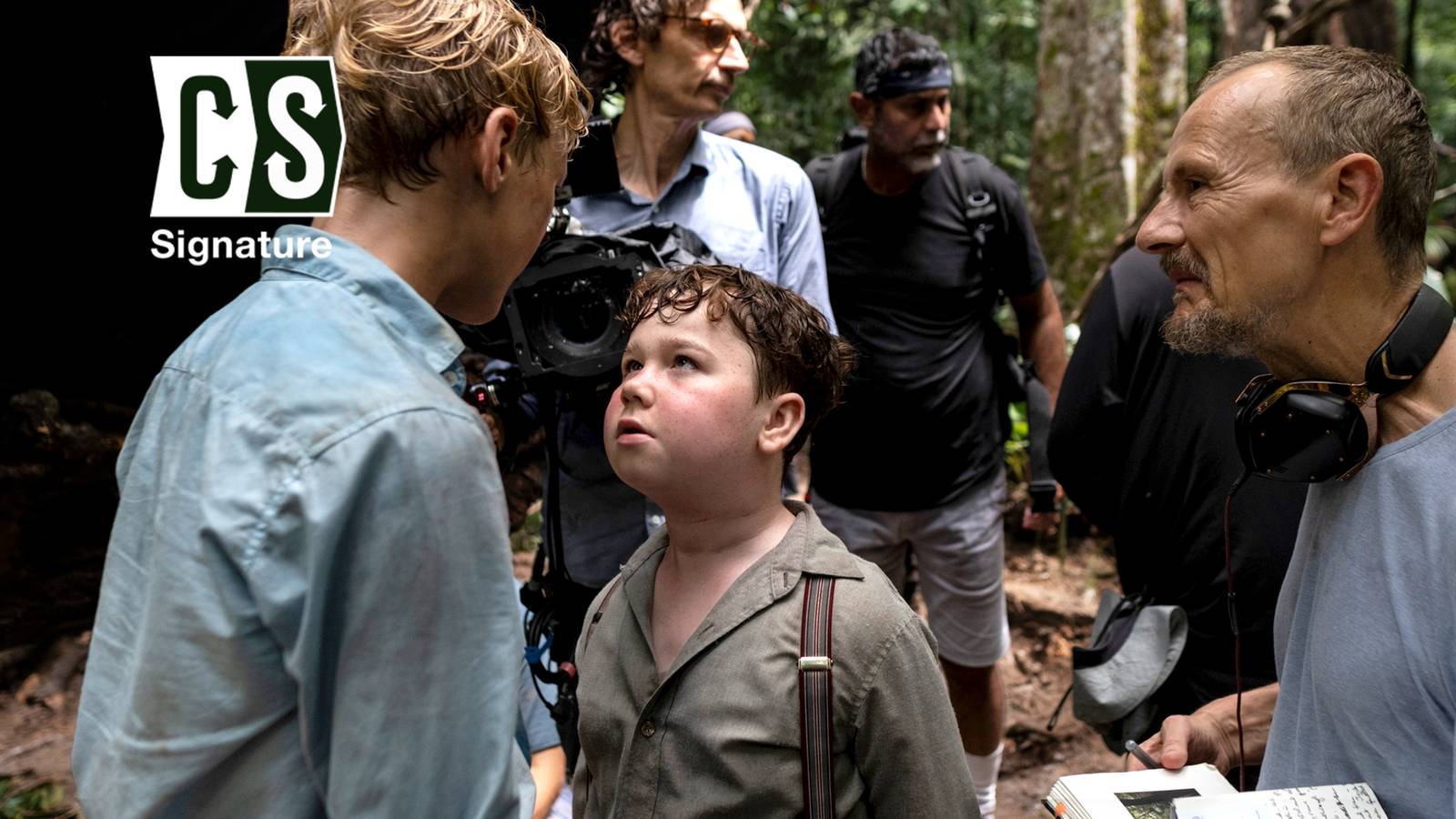
Writer Jack Thorne, fresh from his success with the series Adolescence, delves into the complex landscape of boyhood once again with the first television adaptation of William Golding’s dystopian classic, Lord of the Flies. Streaming on Netflix, this adaptation, a story that has profoundly resonated with Thorne since his own childhood, brings to life the harrowing tale of schoolboys stranded on a tropical island after a plane crash, rapidly descending into primal madness without adult supervision. The series focuses on key characters such as Piggy (David McKenna), Jack (Lox Pratt), Simon (Ike Talbut), and Ralph (Winston Sawyers), exploring how their initial friendships unravel into brutal leadership struggles as civilization crumbles around them.
Thorne’s career, spanning over 25 years, is characterized by a deliberate embrace of chaos and a willingness to explore diverse projects, genres, and mediums. His extensive portfolio includes the award-winning Adolescence, the Enola Holmes film series, the stage play Stranger Things: The First Shadow, and an ambitious upcoming Beatles cinematic universe for director Sam Mendes, featuring biopics for each band member. In an in-depth conversation, Thorne shared insights into his adaptation process for Lord of the Flies, the unique reception of Adolescence, his admiration for Owen Cooper’s performance in Adolescence and the young ensemble of Lord of the Flies, his trust in Sam Mendes for The Beatles films, and his reverence for filmmaker Ang Lee.
Lord of the Flies holds deep personal significance for Thorne. He first encountered the book as an 11-year-old through a stolen copy from his mother’s English department. He recalls a profound identification with the character of Simon, particularly as an autistic child who struggled with social situations and often sought 'the other.' The shocking death of Simon left an indelible mark on him. Thorne had attempted to adapt the novel about 15 years prior for Channel 4, but couldn’t secure the rights. The opportunity arose again through his close friend and executive producer, Joel Wilson, reaffirming its status as 'the book' that has lived with him throughout his life, offering numerous ways of interpretation.
Thorne emphasized the advantages of television over film for this adaptation, particularly the potential of its chapter format to delve deeper into Golding’s nuanced writing. He sought to spend more time with each character, especially Jack, whose emotional complexity after the argument at the fire became a 'big revelation' during his revisit to the book. This ability to provide insight into the characters was a significant 'treat' of adapting it for television.
A striking perspective Thorne gained as an adult was viewing Lord of the Flies as a 'remarkably tender portrait of young boys.' While as a child he identified solely with Simon, his adult reading allowed him to see the less kind aspects of Ralph and even tenderness in Jack, whom he felt Golding 'quite liked.' He believes Golding loved Piggy and Simon, reserving his dislike mostly for Roger. This adult discovery shaped his narrative approach, aiming to understand and portray Golding's underlying tenderness as a writer.
The structuring of the series, with individual chapters focusing on different boys, was a crucial decision. Simon was an obvious choice for chapter three, leading to his death. Jack felt appropriate for chapter two, exploring the hunt and the extinguished fire. The placement of Ralph was the trickiest, ultimately concluding the series as the lead character, following Golding's book structure where Ralph's home life is briefly revealed towards the end, spotlighting his struggle for survival. Piggy initiates the narrative, and Ralph brings it to a close.
Thorne found the casting process for Lord of the Flies both inspiring and challenging. The young age of the actors, many of whom were prepubescent boys, presented unique dynamics, especially with 30 young extras on set. While some actors, like Ike Talbut as Simon and David McKenna as Piggy, immediately embodied their roles, Winston Sawyers (Ralph) and Lox Pratt (Jack) auditioned for both parts multiple times before their roles were finalized. Thorne praised their ability to deliver detailed performances despite the difficult circumstances, crediting director Marc Munden’s brilliance. He contrasted this with Owen Cooper’s more mature performance in Adolescence, where director Phil Barantini gave all notes to Cooper, allowing Erin Doherty to react organically.
Despite becoming known for penning complex portraits of boyhood masculinity and violence, Thorne asserts this was an 'accident,' not a planned trajectory. His fascination with this age stems from his own traumatic and observational adolescent years, where he felt he 'saw many different colors' of that period due to his quiet, introverted nature. He plans to continue exploring this period in his writing but with breaks for other genres.
Key scenes, such as the intense 'Kill the beast' chant leading to murder and the poignant ending of Episode 4, are largely attributed to director Marc Munden. Thorne expressed awe at Munden's choices, particularly his ability to delve into the 'animal' nature of the boys and his collaboration with choreographer Polly Bennett. The ending of Episode 4, featuring the discovery of adult men, showcases Winston Sawyers' exceptional performance as Ralph, bearing the weight of responsibility, while Lox Pratt's Jack transforms from warrior to lost child, and Thomas Connor's Roger immediately conforms. Thorne credits the powerful performances to the incredible actors and Munden's direction, largely retaining Golding’s original text.
The audience reaction to Adolescence was a uniquely 'special' experience for Thorne. Unlike typical TV shows, which often receive limited feedback, Adolescence sparked widespread conversation. He received emails from long-lost friends and strangers, grateful for having prompted important discussions with their children. Though aware of calls for a second season, Thorne confirmed the story was always intended to conclude with Episode 4, and his mind has not changed on that.
Thorne also contributed to the Stranger Things: The First Shadow stage play, assisting in translating the story for the stage. He described the first preview as an 'amazing' experience, akin to a rock concert, fueled by the audience’s passion. Looking ahead, he anticipates that the rise of AI will make live experiences like theater increasingly important. His involvement in The Beatles cinematic universe, with a biopic for each member, is a significant undertaking, born from his trust in director Sam Mendes, with whom he previously collaborated on the play The Motive and the Cue. He views each project, whether fictional or non-fictional, as presenting unique challenges and rewards, aiming to avoid predictable storytelling rhythms that allow audiences to disengage.
Thorne’s varied approach to projects, from real people like The Beatles to source material like Lord of the Flies and growing characters in Enola Holmes, is inspired by his hero, filmmaker Ang Lee. He admires Lee’s ability to move between different creative spaces, constantly learning and keeping his approach 'fresh.' Thorne embraces a chaotic, unpredictable career path, valuing the excitement and novelty that continue to define his writing journey after 25 years. Lord of the Flies is available for streaming on Netflix.