Iyinoluwa Aboyeji Says Investing Is for Lazy People — Africa Cannot Retire Its Builders
Investors helped fund the companies Iyinoluwa Aboyeji built. His “lazy people” remark opens a wider debate about investing and Africa’s need for repeat founders.
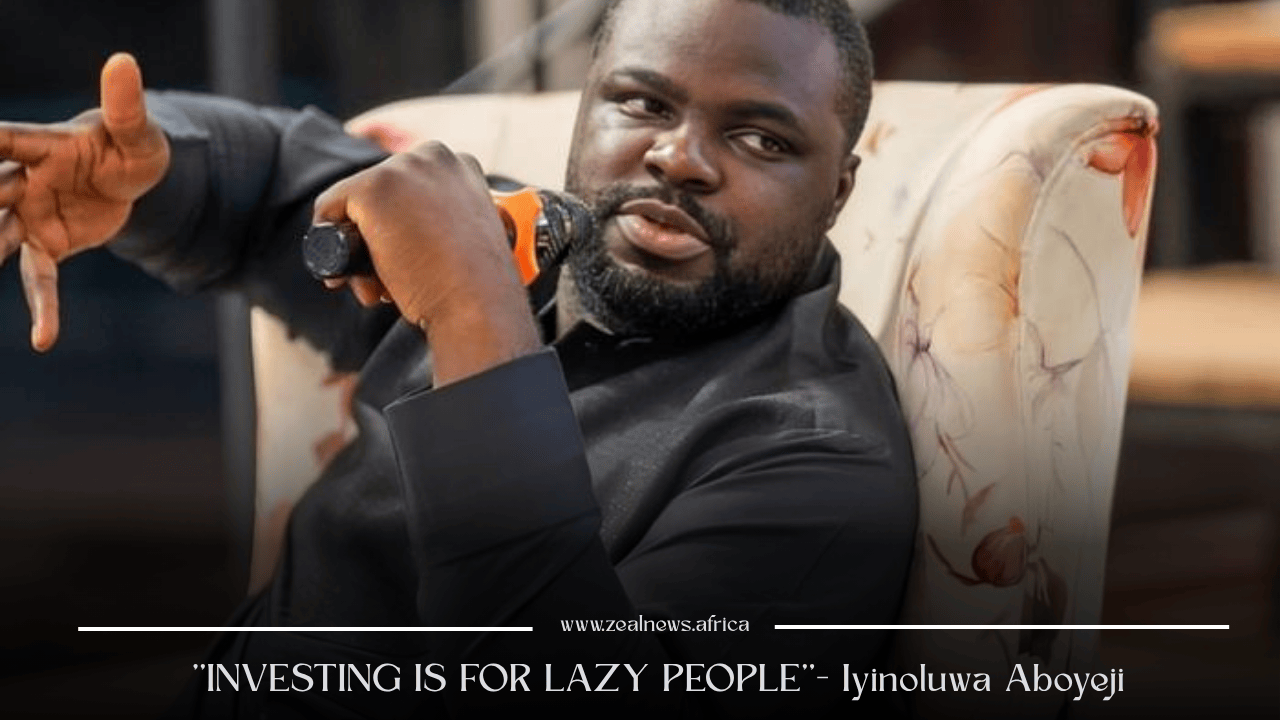
“Investing is for lazy people.”
Iyinoluwa Aboyeji made the remark during the July 8 episode of the Afropolitan Podcast, titled We Are a Generation of Influencers, Not Builders. His full statement was even more pointed: “I have not seen Elon Musk build wealth through investing. Investing is for lazy people.”
Coming from Aboyeji, the comment is difficult to brush aside.
He co-founded Andela and Flutterwave, two of Africa’s most recognisable technology companies, before moving into venture investing through Future Africa. He has been the founder asking investors for money and the investor deciding which founders to back.
That makes his position both informed and deeply ironic.
Andela and Flutterwave were not built through execution alone, Investors supplied some of the capital that allowed both companies to grow.
His remark is therefore more useful as a challenge to successful entrepreneurs than as financial advice for everyone else.
This Is Not Advice to Stop Investing

Part of the problem is that “investing” describes very different activities.
It can mean a salary earner buying treasury bills, mutual funds, shares or land. It can also mean a venture capitalist funding an early-stage company and helping it recruit leaders, raise capital or enter new markets.
As investor Ola Brown pointed out during the debate, investing exists on a spectrum. In some cases, the money does most of the work. In others, the investor remains actively involved in the business.
That distinction matters for ordinary Nigerians trying to secure their financial future.
You may have family responsibilities, limited time or no desire to manage employees, chase customers and live with the uncertainty of entrepreneurship.
Choosing investments that match your income and appetite for risk is not laziness. It may simply be good judgment.
Aboyeji also speaks from a position of experience, access and connections that most people do not have. His decision to return to building should not become a rule for everyone.
Entrepreneurship is not a moral duty.
Advising Is Different From Carrying the Burden
Aboyeji’s frustration becomes easier to understand when we consider the difference between advising a business and being responsible for it.
An investor can tell a company to cut costs, while the founder may have to decide whose job disappears.


An investor can recommend expansion into another country. The founder must deal with regulators, recruit employees, win customers and live with the consequences if the move fails.
That burden is heavier in an environment where businesses contend with expensive credit, unstable currencies, unreliable infrastructure and changing government policies.
Many African founders are not only developing products; they are also working around systems that make ordinary business decisions harder.
Still, calling investors lazy goes too far.
Serious investors study markets, assess founders and take responsibility for the capital they deploy. Some help companies refine strategy, recruit executives and secure further funding. A capable investor may create more value by supporting several founders than by starting another company.
The real question is whether some successful operators have moved too far from the difficult work that gave them valuable experience.
What Africa Loses When Builders Leave
In parts of Africa’s startup ecosystem, becoming an investor, adviser or conference speaker can appear to be the natural next step for a successful founder.
There is nothing wrong with that transition. Former founders can become excellent investors because they understand what lies behind a pitch deck.
They know how quickly a promising strategy can collapse when it meets customers, regulation and cash-flow pressure.
But the ecosystem also needs repeat builders: people who have made mistakes, learned from them and are prepared to start again.
Their second or third companies may be stronger because they understand hiring, partnerships and the difference between raising money and making progress.
That experience is particularly valuable in healthcare, agriculture, energy, manufacturing, housing and transport. These sectors demand infrastructure, operational discipline and patience not just an exciting idea or funding announcement.
If too many successful founders move to the other side of the table, who takes that experience back into the field?
Africa Cannot Retire All Its Builders

Investing is not for lazy people. Aboyeji’s statement is too broad to survive serious examination.
Aboyeji's statement is too broad to survive serious examination. Flutterwave itself, whichbecame one of Africa's fintech unicorns after raising $170 million from investors including
Tiger Global and Avenir Growth Capital, is a reminder that the capital he now dismisses helped build the very companies that made his career.
But his provocation points to a real risk: Africa’s most experienced founders may become more comfortable funding the next generation than building alongside it.
Nobody should be expected to start companies forever. Some entrepreneurs will contribute more as investors or advisers. Yet Africa needs experienced operators willing to apply hard-earned lessons to difficult problems.
The continent will always need people prepared to fund ideas, what it cannot afford is for investing to become the automatic retirement plan of every successful builder.