APC Won Every Seat in the Edo LG Elections 2026. Should That Worry Us?
APC won all 18 chairmanship and 192 councillorship seats in the Edo LG Elections 2026 after major opposition parties boycotted the poll. What does one-party dominance mean for accountability, democracy, and grassroots governance in Edo State?

On July 11, 2026, the All Progressives Congress (APC) swept every contested seat in Edo State's local government election and that is all 18 chairmanship positions and 192 councillorship seats across the state's 192 wards.
The Edo State Independent Electoral Commission (EDSIEC), led by Jonathan Aifuobhokhan, declared the results on July 13, framing the exercise as one conducted in line with the Edo State Local Government Electoral Law of 2022, as amended in 2026.

However, the announcement entirely missed the fact that the main opposition parties which includes the Peoples Democratic Party (PDP), the African Democratic Congress (ADC) and the National Democratic Congress (NDC), boycotted the election entirely.
The PDP's state chapter cited the dissolution of democratically elected council officials before their tenure expired, their replacement with unelected caretaker committees and the state government's refusal to obey eight High Court judgments ordering the reinstatement of sacked chairmen. The ADC withdrew after EDSIEC allegedly failed to guarantee that election materials would reach all polling units.
In other words, Edo's clean sweep was not simply a case of APC popularity outpacing its rivals but rather a case of a contest the rivals refused to enter.
This is a pattern that has been present in Nigeria's local government election and that history is precisely why this outcome deserves scrutiny.
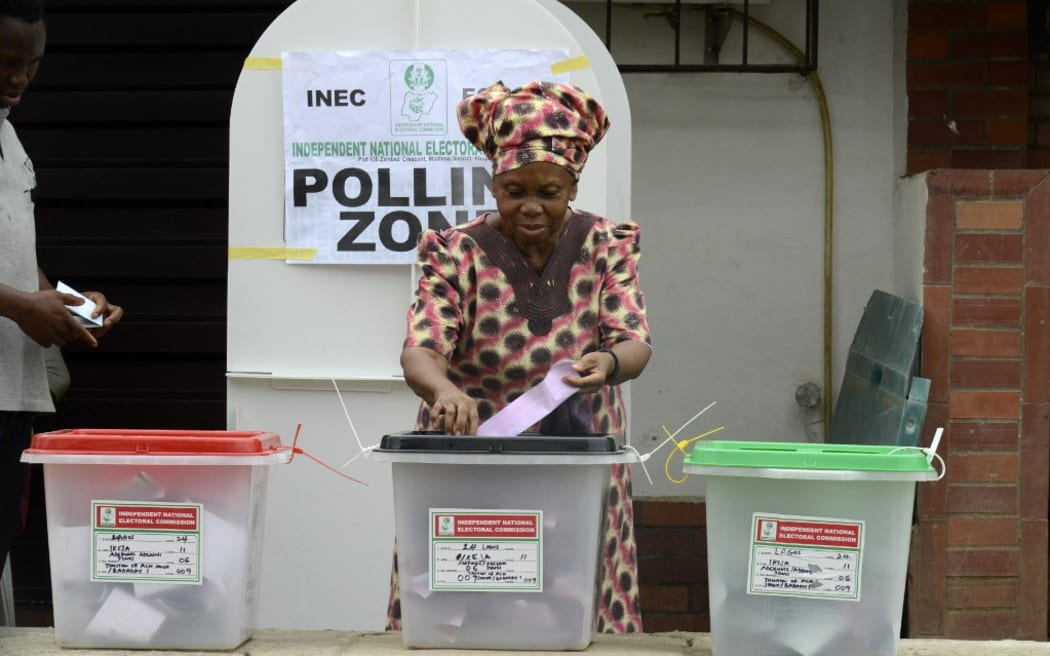
A Familiar Pattern in Nigeria's Local Government Elections
Local government polls conducted by state-controlled electoral commissions have a well-documented tendency to return near-total victories for the sitting governor's party. State electoral commissions are typically constituted by the governor and election tribunals are set up through chief judges the governor appoints. This is a structural arrangement critics say leaves little room for genuine contestation.
Imo State's 2024 local government election produced a similar outcome. The state's ruling party won every seat after the electoral commission announced results without disclosing vote figures. This prompted the opposition to call the process a "show of shame."
Ondo, Lagos and Gombe have seen comparable patterns in recent cycles, with opposition parties frequently boycotting rather than contesting. There have also been recurring calls including a bill before the House of Representatives to transfer control of local government elections from state commissions to the Independent National Electoral Commission (INEC).
Edo's result, then, sits within a broader national trend of single-party dominance at the grassroots level. This trend predates the current APC administration in the state and cuts across party lines nationally.
In Ondo State, a political analyst summarised the pattern ahead of the state's January 2025 local government poll. He established that it is almost always the ruling party that wins every council area and the financial autonomy now granted to local governments by the Supreme Court has, if anything, raised the stakes for the grip to remain intact.
The concern, in other words, is structural and it would apply equally to a PDP-controlled state producing the same clean sweep under the same conditions.
Why Political Monopoly Threatens Development
Comparative political history offers useful and cautionary cases. A popular case study is Mexico. Mexico's Institutional Revolutionary Party (PRI) governed the country continuously for 71 years, from 1929 to 2000, winning nearly every presidential and gubernatorial contest during that period.
Political scientists have long linked that era of dominance to entrenched clientelism, weak institutional checks and corruption scandals that took decades to unwind after the PRI eventually lost power.
Another case study can be found in Africa. Zimbabwe's ZANU-PF has held uninterrupted power since independence in 1980; the absence of a credible governing alternative has coincided with a currency collapse in the 2000s, hyperinflation that peaked in 2008 and persistent underinvestment in public infrastructure.These outcomes are what analysts attribute partly to weakened accountability mechanisms.
There is also Tanzania's Chama Cha Mapinduzi (CCM) who has similarly governed without interruption since 1977; this dominance is what domestic and international observers have repeatedly linked to constrained space for opposition scrutiny of public spending.
The common thread across these cases is not that one-party dominance automatically produces failure. For example, Singapore's People's Action Party has governed since 1959 alongside strong development outcomes, showing dominance alone doesn't determine results.
The thread is that where dominance is paired with weak institutional checks, unopposed local councils and sidelined courts, oversight of public funds tends to erode. Local governments in Nigeria control substantial monthly allocations from the federation account and councillors are constitutionally meant to check chairmen's spending.
When every chairman and every councillor in a state belongs to the same party and when courts' reinstatement orders go unenforced, that internal check has been weakened.

What This Means for Grassroots Governance in Edo

None of this proves that development in Edo's 18 local government areas will suffer. Governor Monday Okpebholo's administration will point to the peaceful conduct of the exercise, commended by EDSIEC itself, and to continuity in infrastructure projects already underway.
However, the opposition's boycott, grounded in specific and verifiable grievances means Edo's councils now govern without the scrutiny that a contested and participatory election would have supplied.
A one-party sweep produced through legitimate and competitive contest is a mandate. A one-party sweep produced after rivals walked away over unresolved legal disputes is a governance question still waiting for an answer.