IMF's N8.8 Trillion BOMBSHELL: FG Denies Misrepresentation as Obi Demands Tinubu's Resignation
A controversy has erupted in Nigeria following an IMF report on uncaptured public spending, estimated at N8.83 trillion. Opposition leader Peter Obi has called for President Tinubu's resignation, citing grand corruption, while the Federal Government dismisses the claims, insisting all expenditures were properly recorded and the IMF merely recommended reporting improvements.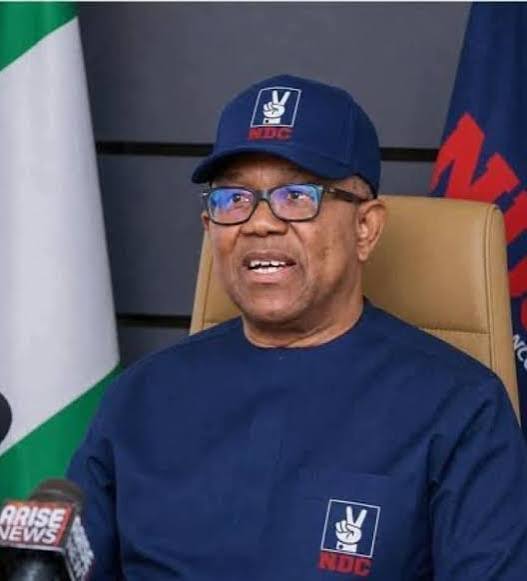
A significant political and economic controversy has erupted in Nigeria following a revelation by the International Monetary Fund (IMF) concerning uncaptured public spending in the nation's recent budgets. Christian Ebeke, the IMF’s resident representative in Nigeria, disclosed on Wednesday that off-budget expenditure, equivalent to approximately two per cent of the country’s Gross Domestic Product (GDP), was not reflected in official budget documents. This discrepancy, he noted, made Nigeria’s fiscal deficit appear smaller than the government’s actual borrowing needs, sparking widespread concern and leading to calls for accountability from opposition leaders.
Peter Obi, the Presidential Candidate of the Nigeria Democratic Congress (NDC), strongly reiterated his demand for President Bola Tinubu's resignation in light of the IMF's findings. In a statement issued on Sunday, Obi described the disclosure as raising fresh concerns about the scale of grand corruption under President Tinubu’s administration. He specifically highlighted that about N8.83 trillion in expenditure was not reflected in the budget, meaning it lacked legislative oversight or administrative scrutiny. Obi expressed dismay, stating, “This is horrible. It is more than the entire combined budget for education (N3.52 trillion) and health (N2.38 trillion),” arguing that such an amount, if properly used, could transform Nigeria’s public health and education sectors and foster economic development. He characterized this as a pattern of grand corruption posing a grave danger to national security and stability, and undermining the state by deepening poverty and state failure.
Obi further alleged that the IMF’s revelation exposed the ruling All Progressives Congress (APC) government as "grossly corrupt, incompetent and insensitive." He contended that with growing poverty and the urgent need for infrastructure upgrades, a responsible government would prudently utilize such a substantial sum, a commitment he found lacking in the Tinubu administration. Reaffirming his earlier call for President Tinubu to step down, Obi stated that these latest allegations, combined with the administration's handling of governance and insecurity, constituted sufficient grounds for resignation. He urged Nigerian citizens to legally rise and hold the administration accountable, emphasizing that daily revelations of pervasive corruption reinforce the need for greater accountability.
Echoing calls for investigation, former Vice President Atiku Abubakar had also urged the Economic and Financial Crimes Commission (EFCC) and the Independent Corrupt Practices and Other Related Offences Commission (ICPC) to probe the IMF’s claim of unrecorded public expenditure. This collective pressure from opposition figures intensified the demand for transparency and oversight in public finance management.
However, the Federal Government has swiftly dismissed the claims, insisting that all spending was properly recorded and disclosed through official budget implementation processes. In a statement on Sunday, Mr. Taiwo Oyedele, the Minister of Finance and Coordinating Minister of the Economy, clarified that the reports misrepresented the IMF’s observations and stressed that no public funds were missing. Oyedele asserted that the Federal Government does not operate a "shadow budget" or expend public funds outside established constitutional and statutory frameworks. He explained that the expenditure in question largely pertains to infrastructure projects, statutory obligations, and other government programs, all of which were duly captured in the Budget Office’s Quarterly Budget Implementation Reports and other fiscal documents.
The Minister further maintained that the IMF did not allege fraud, diversion, or disappearance of public funds, but rather recommended improvements in fiscal reporting and reconciliation to ensure full harmonization of spending records. He debunked the suggestion that approximately two per cent of GDP, estimated at about N8.8 trillion, was spent outside the budgetary framework as "inaccurate and misleading," reiterating that there are no hidden expenditures or parallel budgets. Oyedele attributed the perceived discrepancy to differences in statistical treatment and the timing of expenditure recognition across various public finance reporting systems. He affirmed the Tinubu administration's commitment to transparency, accountability, and adherence to international best practices in public financial management, pledging to strengthen fiscal reporting and improve coordination to meet global standards.