Accra's Flood Nightmare: Fury Mounts as Leaders Blame Decades of Failure
Ghana faces a chronic flooding crisis, deemed a human-made disaster rather than an act of nature, rooted in weak governance, policy failures, and poor enforcement. While relief efforts are underway, experts and leaders demand a paradigm shift towards comprehensive urban planning, nature-based solutions, and strong political will to implement lasting prevention and preparedness measures, drawing lessons from successful international models.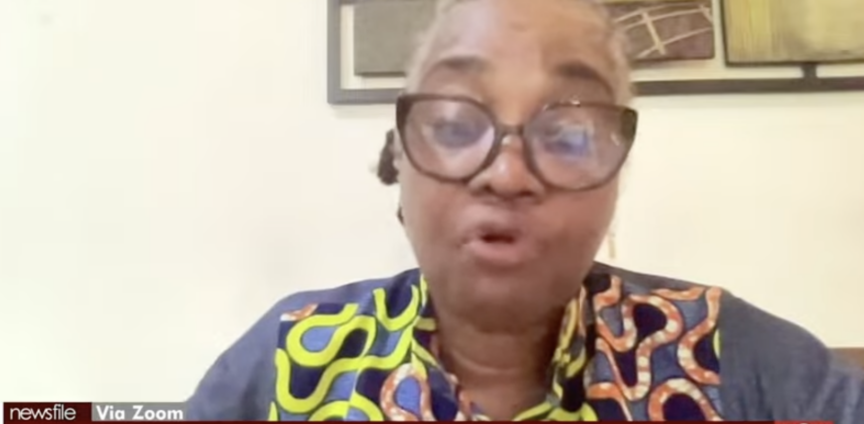
Every rainy season, Ghana faces a grim ritual: torrential rains lead to widespread flooding, triggering promises of action from officials, only for structural issues to remain unaddressed. This recurring crisis, particularly in Accra, is not a natural disaster but rather a consequence of human actions and systemic failures. It represents a story of awakening, recognizing that while external forces may contribute, the primary drivers are within human control and capacity for change.
Ghana's history with devastating floods stretches back decades, with records showing significant events from 1959 to recent years. In June 1959, Accra experienced its heaviest rainfall on record, bringing life to a standstill. Major floods struck Sekondi-Takoradi in 1971, and the July 1995 floods marked a severe disaster in the Fourth Republic. The 2000s saw an escalation, with the 2001 floods described as the worst since 1995, and 2010 witnessing 35 bodies retrieved from floodwaters, the highest death toll in recent history, compounded by the Bagre Dam spillage. The tragic June 3, 2015, event, a combination of flooding and a fuel station explosion, claimed approximately 150 lives and prompted the annual commemoration of National Flood Disaster Day. Recent years, including March and September 2023, and May and June 2026, have continued this pattern, causing numerous deaths, displacements, and extensive property damage, reinforcing the urgent need for lasting solutions.
Successive governments have been heavily criticized for their persistent failure to find lasting solutions to Ghana's recurring flooding challenges. Susan Adu-Amankwah, Executive Secretary of the National Interest Movement, argues that leadership since the 1960s has collectively failed, as floods continue to escalate. She emphasizes that while responsibility is shared, the current government must provide decisive leadership to implement permanent preventative measures. JoyNews' Newsfile host, Samson Lardy Anyenini, echoed this sentiment, stating that Ghanaians are tired of political promises and relief item distributions, demanding decisive leadership to enforce laws and implement proactive, sustainable solutions. Dennis Miracles Aboagye, Communications Director for the NPP's 2028 Presidential Candidate, strongly cautioned against blaming citizens for leadership failures, asserting that governments have had decades to put in place durable drainage systems and urban planning structures. He highlighted his personal experience of losing almost all his belongings due to the recent floods, underscoring the devastating impact on individuals.
Experts point to a multifaceted problem beyond just heavy rainfall. Research from 2025 found no statistical correlation between increased rainfall intensity and the rise in flooding frequency in Accra, identifying land use failure as the primary driver. ED Andrews, an Operational Governance and Risk Management Expert, criticized Ghana's disaster management approach as being too focused on response rather rather than prevention and preparedness. He noted a predictable 10-year cycle of major rainfall events, implying that authorities should be better prepared, yet there is a clear absence of practical planning, simulations, and rescue drills. This lack of preparedness, he asserted, leaves the country vulnerable to mass casualty events.
Adu-Amankwah further detailed that Ghana’s recurring flood crisis is deeply rooted in weak policy controls, a broken land tenure system, and poor enforcement of planning rules, rather than solely a lack of drainage infrastructure. She stressed that engineering solutions must be robust enough to withstand pressure even when residents fail to follow rules, and urban engineering must be built around the realities of Ghanaian cities, where rapid population growth, weak enforcement, and public indiscipline strain infrastructure. The land tenure system, plagued by confusion over family, stool, and government lands, coupled with corruption, enables unregulated development in unsuitable locations. PRINPAG, the Private Newspapers and Online News Publishers Association of Ghana, also emphasized comprehensive urban planning, strict enforcement of building codes, and intensive public education to mitigate floods, calling for zero tolerance for construction on waterways and flood-prone zones.
The Okyenhene, Osagyefo Amoatia Ofori Panin, also highlighted human behavior as a major threat, citing indiscriminate dumping of refuse into drains and water bodies, construction on waterways, and destruction of natural ecosystems. He urged Ghanaians to reconnect with nature and adopt responsible environmental practices, noting how traditional customs historically promoted environmental protection. He also criticized contractors for abandoning projects after receiving mobilization funds, citing the Ofankor-Nsawam road as an example of citizen suffering due to delays in critical infrastructure.
The Institute of Statistical, Social and Economic Research (ISSER) has called for substantially increased investment in waste management and sanitation, viewing it as a strategic national investment. They argue that inadequate funding costs Ghana billions annually in healthcare and lost productivity. ISSER recommends aligning spending with lower-middle-income countries, targeting densely populated urban communities, and integrating health and economic benefits into national budgeting to improve public health, create jobs, and drive economic growth.
The failures are systematized into five pillars: 1. Encroachment on Waterways: A 2026 GARID project analysis revealed 16% of designated 25-meter drainage buffer zones in Greater Accra have been lost to encroachment, with over 10,000 structures now within these buffers. 2. Institutional Fragmentation: Responsibility for flood control is scattered across multiple agencies, whose administrative boundaries often do not align with natural drainage basins, hindering coordinated planning. 3. Political Will and Funding Gaps: The $350 million World Bank-funded Greater Accra Resilient and Integrated Development (GARID) Project has faced delays, with its performance downgraded due to funding bottlenecks caused by the Ministry of Finance capping disbursements and sweeping funds. 4. Weak Enforcement of Planning Regulations: Over 52% of households in flood-prone areas attribute flooding to weak enforcement, leading to the systematic encroachment of vital wetlands like the Densu Delta, Sakumo Lagoon, and Songor Lagoon. 5. Nature's Balance Disrupted: Rapid urbanization has replaced permeable land with impervious surfaces, and drainage channels are frequently blocked by solid waste, causing even moderate rainfall to overwhelm the city.
Globally, other nations have found successful approaches to flood management that offer a roadmap for Ghana. The Netherlands adopted the "Room for the River" program, giving rivers space to overflow safely and achieving lower design water levels through stakeholder involvement and multifunctional planning. Japan developed "paddy field dams" (Tambo Dam), using ordinary rice fields to temporarily store excess rainfall, a cost-effective, nature-based strategy integrated across all government and community levels. Singapore combines sophisticated engineering with aesthetics, upgrading drainage infrastructure while creating multifunctional parks and waterways that serve as recreational spaces, supported by an advanced early warning system. China's "Sponge City" program utilizes nature-based solutions like permeable surfaces and wetlands to absorb stormwater, reducing flood risk and improving urban quality of life. Germany overcame institutional fragmentation by establishing structured collaboration between local authorities, embodying a principle of solidarity where upstream communities share costs for downstream benefits. Finally, examples from Kenya, Guinea, and Colombia demonstrate the power of community-led initiatives, where residents leverage indigenous knowledge to build canals, create risk maps, and establish early warning systems, proving that solutions can emerge from the grassroots with appropriate tools and support.
Ghana’s flagship urban resilience program, the Greater Accra Resilient and Integrated Development (GARID) Project, backed by $350 million from the World Bank, aims to reduce flood risk, improve solid waste management, upgrade drainage systems, and strengthen emergency response. Despite challenges like funding bottlenecks, contractor delays, and encroachment, GARID has made progress, including dredging significant volumes of sediment from the Odaw Channel and advancing drainage works in key areas. Its success hinges on consistent funding without political interference, strong enforcement of planning regulations, active community engagement, and effective inter-agency coordination. Ing. Wise Ametefe emphasized that while drainage works are costly, failing to fund them is a political failure, necessitating more resources to protect lives and property.
A vision for Ghana's flood-free future requires decisive actions: treating land governance as the foundation of flood management with zero tolerance for encroachment, investing in nature-based solutions as load-bearing components of resilient cities, empowering communities with tools and support, overcoming institutional fragmentation through structured collaboration, and leveraging technology for early warning systems. Most critically, it demands a collective respect for rules and regulations that protect waterways and wetlands. The history of flooding in Ghana is one of loss and frustration, but also of resilience and hope. The path forward is clear, with available tools and international examples. The imperative is to cultivate the collective will of a nation that refuses to accept tragedy as inevitable, demands accountability from its leaders, and commits to building a future where water is life-giving, not life-taking.
In the immediate aftermath of recent floods, efforts have been made to provide relief. The National Disaster Management Organisation (NADMO) announced the distribution of relief items from July 4, with emergency supplies reaching affected communities. Felix Kwakye Ofosu, Minister of State in charge of Government Communications, reaffirmed the Mahama government's commitment to supporting victims and rebuilding communities. Member of Parliament for Ablekuma North, Ewurabena Aubynn, also donated essential relief items to affected residents and businesses in her constituency, emphasizing a leadership approach focused on community engagement and support for vulnerable residents. However, Susan Adu-Amankwah warned of a potential public health crisis due to stagnant water and poor sanitation, stressing that urgent measures are needed to prevent further loss of life from disease outbreaks.