Amazon Mechanical Turk Halts New Sign-Ups, Signaling Shift in AI Crowdsourcing
Amazon's crowdsourcing platform, Mechanical Turk, is slated to close to new customers by July 30, 2026, effectively placing the two-decade-old service on "life support." Once a hub for human-powered tasks and data annotation for AI, the platform ironically saw workers using large language models, questioning its future and the integrity of its data. This move signals the impending end for a service central to debates on digital labor and the evolution of AI.
Amazon's pioneering crowdsourcing platform, Mechanical Turk (MTurk), appears to be nearing its end, with a recent announcement indicating that the service will cease accepting new customers on July 30, 2026.
This decision, made by Amazon Web Services (AWS) after "careful consideration," marks a significant shift for a platform that has been a cornerstone of digital labor for nearly two decades.
While existing customers are permitted to continue using the service "as normal" and AWS plans to maintain security and availability, it has explicitly stated that no new features will be introduced, effectively placing MTurk on a path towards obsolescence, or as some describe it, "life support."
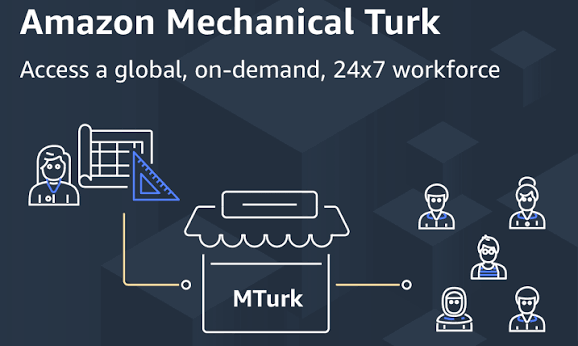
It was launched in 2005, Mechanical Turk was conceived as a revolutionary marketplace designed to connect businesses with a global, on-demand workforce capable of performing "human intelligence tasks" (HITs) that were too complex or nuanced for automation.
These tasks often involved activities like completing CAPTCHA challenges, transcribing audio, identifying objects in images, or discerning the sentiment of text – work that required human cognitive abilities but could be broken down into micro-tasks paid at very small rates.
The platform quickly grew, becoming an essential tool for many researchers and companies seeking scalable human input.
Throughout its active years, Mechanical Turk found itself at the nexus of considerable debate, particularly concerning the ethics of crowdsourced labor.
It brought to light discussions about worker pay, working conditions, and the digital divide, and its influence even extended into high-profile controversies, playing a minor role in the early stages of the Facebook-Cambridge Analytica scandal.
From 2018 onwards, Amazon strategically positioned MTurk as a vital component for companies engaged in artificial intelligence development, specifically for annotating data crucial for training neural networks, integrating it with its SageMaker AI service.
Perhaps one of the most intriguing aspects of Mechanical Turk's history is its unofficial role as a "hidden enabler" for companies adopting a "fake-it-till-you-make-it" strategy in the AI sector.
The products marketed as powered by advanced artificial intelligence were, in many instances, secretly being operated by the human workforce on MTurk.
This dynamic drew striking parallels to the platform's namesake, the original Mechanical Turk – an 18th-century automaton that famously pretended to play chess autonomously but secretly housed a human chess master within.
This historical echo underscored the complex interplay between human and artificial intelligence that the platform facilitated.
The relationship between MTurk and AI models became even more convoluted and ironic in recent years.
A 2023 analysis revealed a paradoxical situation: between 33% and 46% of workers on the platform were found to be utilizing large language models (LLMs) to complete their assigned tasks.

This development sparked serious questions regarding the reliability and integrity of data annotated through the platform, simultaneously challenging the fundamental premise of "humans in the loop."
If humans were using AI to complete tasks intended for human intelligence, the very purpose of the platform came into question.
The public reaction to Amazon's announcement has largely echoed a sense of inevitability. A Reddit user, upon hearing the news, commented that the platform had effectively "died years ago," citing a decline in both worker and researcher engagement due to pervasive issues like bots and fraud.
The user further speculated that it would only be a matter of time before Amazon decides to "pull the plug entirely," deeming the maintenance of MTurk servers an unnecessary waste of resources.

This sentiment encapsulates the perceived decline of a service that, despite its initial promise and significant impact, ultimately struggled to adapt to the very technological advancements it once helped foster.