High Stakes US-Iran Diplomacy: Last Chance Talks Begin in Pakistan

Published 2 hours ago3 minute read
Pelumi Ilesanmi
Pelumi Ilesanmi
High Stakes US-Iran Diplomacy: Last Chance Talks Begin in Pakistan

High-stakes talks between the United States and Iran are currently underway in Islamabad, Pakistan, as a critical two-week ceasefire approaches its expiration on Wednesday. These intensive diplomatic efforts aim to de-escalate tensions and secure a comprehensive agreement, even as US President Donald Trump continues to issue severe warnings.

On April 12, 2026, US Vice President JD Vance was observed in Islamabad alongside Pakistan's Chief of Defence Forces, Field Marshall Asim Munir, and Deputy Prime Minister and Foreign Minister Mohammad Ishaq Dar, following high-level discussions on Iran. US negotiators, including Special Envoys Steve Witkoff and Jared Kushner, are expected to resume talks in Pakistan on Monday, with Trump seeking a deal to reopen the strategic Strait of Hormuz and dismantle Iran’s nuclear program.

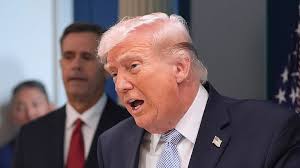
President Trump has adopted a hardline stance, declaring his intention to offer Iran a "reasonable deal" but threatening devastating consequences if an agreement is not reached. In a social media post, Trump stated that if Tehran refuses the deal, "the United States is going to knock out every single Power Plant, and every single Bridge, in Iran. NO MORE MR. NICE GUY!" He further emphasized that these targets "will come down fast, they’ll come down easy and, if they dont take the DEAL, it will be my Honor to do what has to be done, which should have been done to Iran, by other Presidents, for the last 47 years." He explicitly warned that if no deal is reached this week, he will be ordering strikes on Iran’s power plants and bridges, going as far as to say, "If they don’t sign this deal, the whole country is going to get blown up."

Adding to the tensions, Trump accused Iran of violating the ceasefire with attacks on Saturday in the Strait of Hormuz. The Strait, a vital shipping lane, remained closed on Sunday amidst the stand-off. Iran had declared it shut again to shipping on Saturday, despite announcing its reopening just a day prior. Iran has explicitly stated it will not reopen the strait until the United States ends its blockade of Iranian ports.

Reports from Saturday detailed three incidents in the Strait of Hormuz: Iran's Revolutionary Guards reportedly fired at a tanker, threatened to destroy an empty cruise ship, and an unknown projectile reportedly caused damage to shipping containers on another vessel. These incidents underscore the volatile situation as the ceasefire deadline looms.

The Iranian delegation for these talks is expected to include Foreign Minister Abbas Araghchi and parliament speaker Mohammad Bagher Ghalibaf. While the previous round of high-level talks in Pakistan on April 11-12 failed to reach a deal, Iran hopes for a symbolic joint announcement extending the ceasefire on Wednesday. Furthermore, sources suggest that if talks progress smoothly and President Trump agrees to travel to Islamabad, Iranian President Masoud Pezeshkian would also attend a joint meeting to sign an “Islamabad declaration.” Trump believes there is a “divide” within the Iranian government, potentially influencing the outcome of these critical negotiations.

Loading...
Loading...
Loading...

You may also like...