Google has Now added Yorùbá and Hausa To Its AI Search features In Nigeria
Google has added Yorùbá and Hausa to its AI Search features in Nigeria. But can an AI truly understand a tonal language like Yorùbá, where one word, one tone, means everything? Here's the announcement and the uncomfortable question behind it.
Google has added Yorùbá and Hausa to its AI-powered Search features in Nigeria, marking a significant moment in the push to make artificial intelligence more accessible across the African continent.
The update enables Nigerian users to interact with AI Overviews and AI Mode in their native languages, asking questions, receiving summaries, and exploring the web in a way that feels, at least in theory, more natural and culturally grounded.
With this addition, Google now supports 13 African languages across its AI Search features, including Afrikaans, Amharic, Kiswahili, Somali, Wolof, and isiZulu, among others.
The languages were selected based on strong search activity across the continent, and the feature is powered by a customized version of Gemini, Google's AI model, integrated directly into Search.
For Nigerians, the practical implication of this is straightforward. You can now just open the Google app on Android or iOS, tap AI Mode, and type or speak your question in Yorùbá or Hausa.
The AI responds in kind, summaries, conversational answers, contextual exploration.
On paper, it is a meaningful step forward, but paper and practice are two very different things in Africa. And the more important conversation is the one Google's announcement quietly sidesteps.
Can AI Actually Hear a Tonal Language?
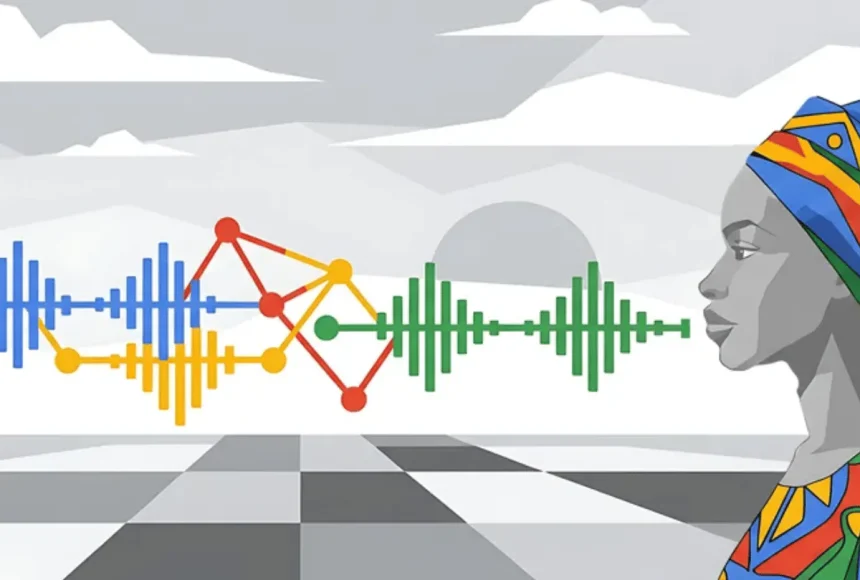
Can Ai truly hear tonal language in a linguistically diverse country such as Nigeria is a question worth asking.
Yorùbá for instance is not simply a language. It is a living, breathing system of tones, intonations, and context-dependent meanings where a single word—same spelling, different tone—can communicate entirely different things.
Ọbẹ̀ means soup, shift the tone and Ọ̀bẹ also means knife. These are not minor variations, they are differences between feeding someone and threatening them.
The question worth asking is not whether Google can display Yorùbá characters or generate responses in the language.

The question is whether the AI has been trained to truly hear and interpret the tonal texture that makes Yorùbá what it is and whether it can do so accurately enough to be genuinely useful rather than confidently wrong.
Taiwo Kola-Ogunlade, Google's Communications and Public Affairs Manager for West Africa, acknowledged, according to Techpoint Africa, that building a truly global Search "goes far beyond translation" and requires "nuanced understanding of local information."
That is the right framing. The concern is whether the execution lives up to it.
Because here is the thing: nuanced understanding of Yorùbá does not come from datasets alone.
It comes from a woman in Ondo whose grandmother speaks a different dialect from the woman in Ibadan whose Yorùbá sounds nothing like the Yorùbá spoken in Lagos.
It comes from the market, the church, the burial ceremony, the joke told between friends that loses everything when transcribed.
Dialect variation within Yorùbá alone is vast enough to trip up even fluent human speakers across regions.
An AI trained primarily on written text or standardised speech samples will encounter that complexity quickly.
The Deeper Question of Who Trains the AI
This is where the conversation about African AI must become more honest. Can Google fully integrate African languages without Africans deeply embedded in the training process—not just as consultants or validators, but as architects of how the model understands meaning?
Language models learn from data. The quality, diversity, and cultural depth of that data determines what the model can and cannot grasp.
If the Yorùbá data used to train Gemini skews toward formal text, academic writing, or digitised literature, the model may handle written queries reasonably well but stumble the moment a user types the way they actually speak abbreviated, dialectal, tonal markers missing, context assumed.
Hausa presents a different but equally layered challenge. Spoken across northern Nigeria and several other West African countries with regional variations, Hausa carries its own set of contextual rules that a model must internalise, not merely translate around.
None of this means the initiative is without value. It is genuinely important that Google is investing in African language inclusion at this scale.
For millions of Nigerians who are more comfortable thinking and searching in Yorùbá or Hausa than in English, even an imperfect native-language AI experience is a step toward digital equity.
But imperfect should not be dressed up as solved. The gap between supporting a language and truly understanding it is wide and in tonal, context-heavy languages like Yorùbá as well as Hausa, that gap can produce errors that are not just inconvenient but culturally tone-deaf.
The AI speaks Yorùbá now. Whether it fully understands Yorùbá, is a question that only a typical Yorùbá woman from Ondo—with all her dialect, her idioms, and her expectations—can truly answer.