Global Health Crisis: DR Congo Faces Critical Ebola Threat, Travel Restricted
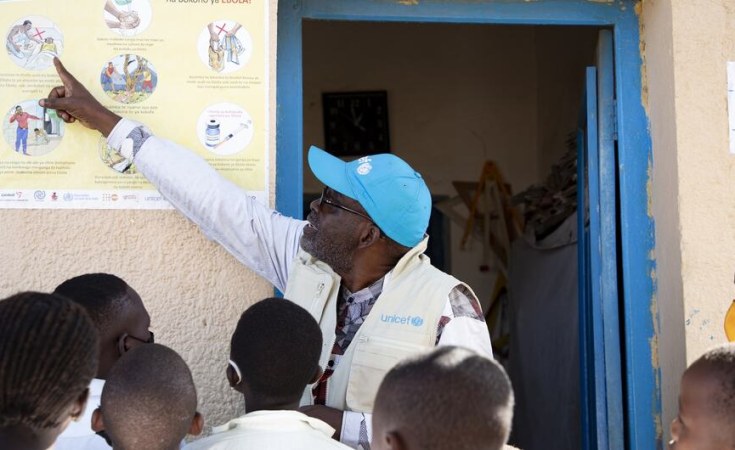
The World Health Organization (WHO) has elevated its risk assessment for the ongoing Ebola outbreak in the Democratic Republic of Congo (DRC) to the highest level, prompting neighbouring countries Uganda and Rwanda to implement stringent travel restrictions to curb the spread of the deadly virus.
In the DRC, 82 Ebola cases and seven deaths have been officially confirmed, alongside nearly 750 suspected cases and 177 suspected deaths. WHO chief Tedros Adhanom Ghebreyesus stated that the epidemic in DRC is 'much larger' than the confirmed numbers suggest. The WHO has increased its risk assessment for DRC from high to very high, its maximum level, while maintaining a high regional risk and a low global risk level.
Uganda, sharing a border with DRC's eastern Ituri province where the outbreak is concentrated, has reported five total Ebola cases, one of which was fatal. The first two Ugandan cases involved individuals who had traveled from DRC. Consequently, Uganda has temporarily halted direct flights between Entebbe and Bunia in eastern DRC, suspended all public transport, including ferries and cross-border buses, for four weeks (though cargo and food transport are permitted), and put large gatherings and markets in border zones on hold. These measures reflect the high risk of further importation due to Uganda's proximity and strong cross-border linkages.
Rwanda, despite having no confirmed cases so far, has also imposed travel limitations. Foreign nationals who have traveled through DRC within the past 30 days will be denied entry. Rwandan nationals and foreign residents are permitted to return but must undergo quarantine. The Rwandan health ministry also announced stepped-up screening measures at Kigali's international airport.
Experts suspect the outbreak may have begun up to two months prior to its official declaration last week. This particular outbreak is caused by the less common Bundibugyo strain of the Ebola virus, for which there are currently no approved vaccines or treatments. Consequently, contact tracing and isolation remain the only proven methods to contain its propagation. The Bundibugyo strain has only caused two previous outbreaks, occurring in Uganda in 2007 and in DRC in 2012.
You may also like...
NBA Playoff Stunner: Spurs Dominate Thunder, Even Series After OKC's Offensive Collapse

The San Antonio Spurs dominated the Oklahoma City Thunder in Game 4 with a 103-82 victory, evening the Western Conferenc...
Global Music Stars Rema, Lisa, Anitta Unite for Epic 2026 FIFA World Cup Anthem!

Nigerian afrobeats star Rema, alongside Thai rapper LISA and Brazilian sensation Anitta, has released 'Goals', the offic...
Global Health Crisis: DR Congo Faces Critical Ebola Threat, Travel Restricted
The World Health Organization has raised its Ebola risk assessment in the Democratic Republic of Congo to the highest le...
Kruger Park Horror: Urgent Security Clampdown After Tragic Tourist Deaths
South African National Parks is strengthening security in isolated areas of Kruger National Park following the tragic di...
AI Security Headaches: Even Google Navigates Real-Time Challenges

Google Cloud COO Francis de Souza outlines a critical, platform-based approach to AI security, emphasizing the need for ...
Shocking Assault: Senator Kingibe Alleges Attack During ADC Primary Chaos
FCT Senator Ireti Kingibe reported a violent attack by political thugs during the ADC National Assembly Primary in Abuja...
Political Quake! Bauchi APC Rocked by Mass Resignations Over Imposed Candidates

A significant crisis has erupted within the Bauchi State All Progressives Congress (APC) following its 2027 primaries, l...
Putin's Nuclear Brinkmanship Intensifies with Oreshnik Missile Strike on Kyiv

Russia has escalated its attacks on Ukraine, reportedly using Oreshnik intermediate-range ballistic missiles, drawing st...