Putin’s Nuclear Brinkmanship Escalates as Oreshnik Missile Strike Hits Kyiv
Russia has escalated its attacks on Ukraine, reportedly using Oreshnik intermediate-range ballistic missiles, drawing strong condemnation from international leaders who label it "reckless nuclear brinkmanship." The strikes have caused casualties and damage in Kyiv, prompting warnings from France to Belarus about its involvement, while Ukraine has responded with drone attacks on Russian oil infrastructure.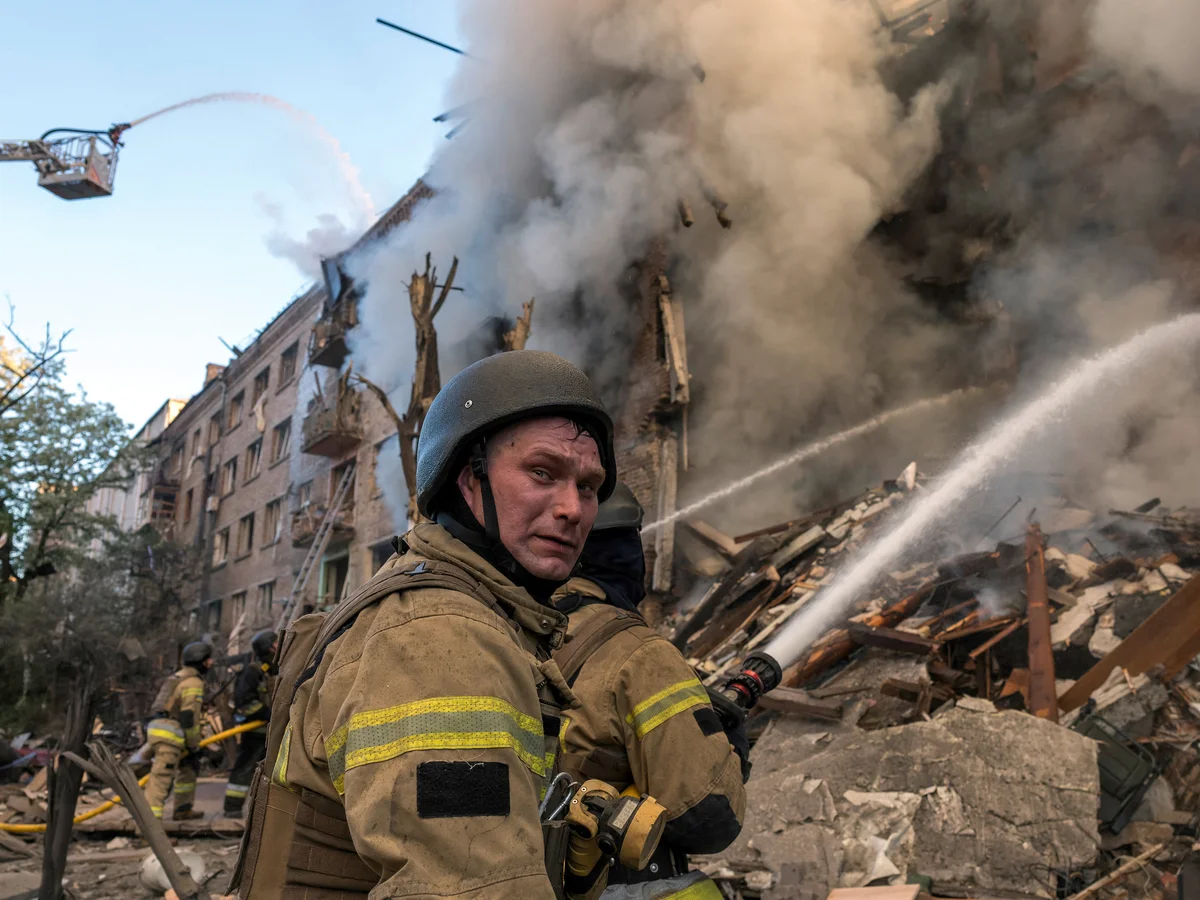
Russia has intensified its attacks on Ukraine, with President Volodymyr Zelenskyy reporting the use of an Oreshnik intermediate-range ballistic missile in a strike on Kyiv.
The alleged deployment has triggered strong international condemnation, with EU foreign policy chief Kaja Kallas describing the attacks as “reckless nuclear brinkmanship” and accusing Moscow of deliberately targeting civilian areas to maximize casualties and fear.
According to reports, the strikes form part of an escalation involving Russia’s advanced hypersonic-capable systems, with claims that Oreshnik missiles have been used multiple times in recent operations.
The latest assault on Kyiv left at least four people dead and around 100 injured, while critical infrastructure and residential zones were heavily affected. Zelenskyy condemned the attacks as actions of a “genuinely deranged” adversary, as global institutions, including the World Health Organization, confirmed damage to UN facilities in the capital, though no casualties were reported inside those offices.
The strikes have drawn widespread diplomatic backlash. German and French officials described the missile use as a dangerous escalation, while UK Foreign Secretary Yvette Cooper said the attacks reflect Russia’s weakening position and disregard for civilian life.
Meanwhile, French President Emmanuel Macron issued a warning to Belarus over its alignment with Moscow, urging it not to deepen involvement in the war.
As tensions rise across the region, Ukraine has also intensified counterstrikes, with its security services reporting drone attacks on key Russian oil infrastructure, further widening the scope of the conflict.