Political Firestorm: El-Rufai Battles ICPC, Obi Calls for Justice
Presidential candidate Peter Obi has called for fair treatment of former Kaduna State Governor Nasir El-Rufai, emphasizing justice and the rule of law. El-Rufai, in turn, has strongly refuted allegations by the ICPC of abusing medical privileges and violating court orders, providing a detailed account of his medical circumstances and challenging the Commission's claims.
The treatment of former Kaduna State Governor, Mallam Nasir El-Rufai, has drawn significant attention, with calls for fair and transparent justice processes from prominent political figures and a robust defense from El-Rufai himself against allegations of abusing medical privileges and violating court orders.
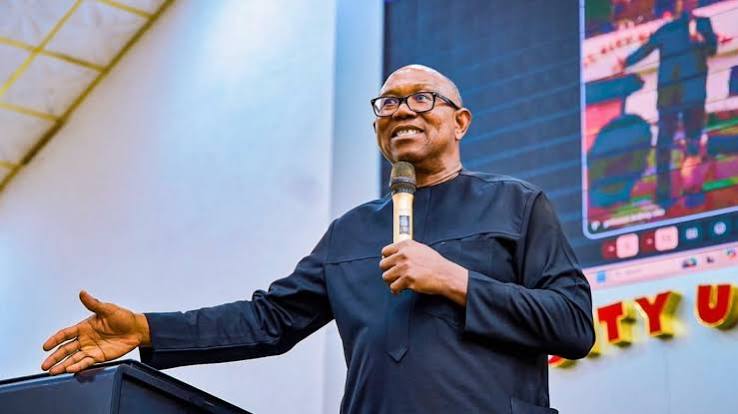
Presidential Candidate of the Nigeria Democratic Congress (NDC), Peter Obi, expressed deep concern over the situation, particularly after being moved by an emotional viral video of Hajiya Asiya El-Rufai, the former governor's wife. Obi, writing on his X handle under the title “A Wife’s Tears, A Nation’s Conscience: Let Justice Have a Heart”, emphasized the paramount importance of the rule of law in a democracy. He urged that justice be transparent and fair for all citizens, irrespective of allegations, advocating for reasonable bail conditions that are not punitive before trial. Obi strongly cautioned against any hint of selective justice that could erode public trust and threaten national unity, stressing that law enforcement institutions must act professionally and strictly adhere to due process. He concluded by calling for a Nigeria where the law is supreme and every citizen is guaranteed dignity and justice, aligning with his vision of a 'New Nigeria'.
Meanwhile, former Kaduna State Governor, Nasir Ahmad El-Rufai, has vehemently rejected allegations from the Independent Corrupt Practices and Other Related Offences Commission (ICPC). The ICPC had issued a statement on July 7, titled “El-Rufai and Medical Doctor Abuse Privilege, Violate Court Order”, accusing him of abusing court-approved medical privileges and violating a court order. Through his Media Adviser, Muyiwa Adekeye, El-Rufai described the ICPC’s statement as inaccurate in both fact and law, demanding a retraction of the allegation that he breached any court order.
El-Rufai clarified that his inability to appear before the court in Kaduna on July 6 was solely due to unresolved medical issues, which he claimed had been communicated to the ICPC well in advance of the court sitting. He detailed how his personal physician, Professor Bello Abubakar, had attempted to visit the ICPC facility to examine him but was allegedly prevented despite waiting for over two hours. Following this, El-Rufai’s family formally requested that he be taken to the National Hospital, Abuja, for a medical consultation with Professor Abubakar at 5:00 p.m. on July 7. This request, according to the statement, had been conveyed to the hospital by the ICPC several days before the family became aware of the July 6 court sitting in Kaduna, making his journey to Kaduna impossible due to his health condition.
The former governor's media office countered the ICPC’s claim that El-Rufai declined to accompany officers to court despite having no immediate medical complaints. They insisted that the Commission ignored documented medical history and prior requests for medical attention, asserting that the request to see his physician was not an afterthought or an attempt to evade trial, but a continuation of an already approved medical process. Regarding the July 6 court proceedings, the statement recounted that the prosecution attempted to persuade the court to continue the case in El-Rufai’s absence without calling witnesses or presenting evidence. The defense objected, arguing that such allegations should be presented through sworn testimony and subjected to cross-examination. The court subsequently adjourned the matter until July 15, 2026, to hear El-Rufai’s application seeking the trial judge’s recusal and to await the Chief Judge’s directive on a pending transfer petition dated June 30.
El-Rufai also denied violating any judicial order by meeting supporters at the National Hospital during his medical visit. He argued that the only applicable order was Justice R.M. Aikawa’s dated April 1, 2026, in Charge No. FHC/KD/73C/2026, which granted him access to medical treatment while in custody without restricting persons he could meet. He further pointed out that the ICPC itself facilitated the hospital visit under security arrangements, which he deemed compliance with the court order rather than a discretionary privilege.
Providing his version of events at the National Hospital, El-Rufai’s statement alleged that while his family requested a 5:00 p.m. appointment to minimize public attention, the ICPC unilaterally rescheduled the consultation to 10:00 a.m. without prior notice. He reportedly met privately with his physician before waiting in a public section for about an hour while officials obtained the required medical report. The statement clarified that any individuals who greeted him became aware of his presence or encountered him by chance, and there was no organized political gathering, thus refuting the ICPC’s allegation that the medical visit was transformed into a political event.
El-Rufai's legal team cited the United Nations Standard Minimum Rules for the Treatment of Prisoners, also known as the Nelson Mandela Rules, asserting that access to healthcare and consultation with a physician of one’s choice are recognized rights, not discretionary privileges. The statement warned that any future restriction on El-Rufai’s access to medical treatment, legal counsel, or family members would constitute a breach of the April 1 court order and could lead to contempt proceedings against the ICPC. He also questioned the arrest of his physician, Professor Bello Abubakar, demanding that the Commission disclose the specific false statement, when and to whom it was made, and whether the doctor was informed of the allegations before his arrest. He called for Professor Abubakar’s immediate and unconditional release.
El-Rufai further disputed the ICPC’s assertion that it would report his alleged disobedience of court orders to the court, insisting that no order had been violated. He reiterated his commitment to defending himself through lawful means and insisted on his constitutional rights to a fair trial, adequate medical care, and due process. The ICPC had previously stated it would bring the former governor’s alleged disobedience of court orders to the attention of the court, following the arrest of his physician whom they accused of making false statements.