Ghana Unleashes Unprecedented Clean-Up Drive: Floods Spark Massive National Effort
Ghana is launching a two-day national clean-up exercise on July 10-11, 2026, to tackle the aftermath of recent devastating floods. Led by President Mahama and various stakeholders, the initiative aims to restore sanitation, clear drains, and prevent future disasters, with strict directives for business closures and broad community participation.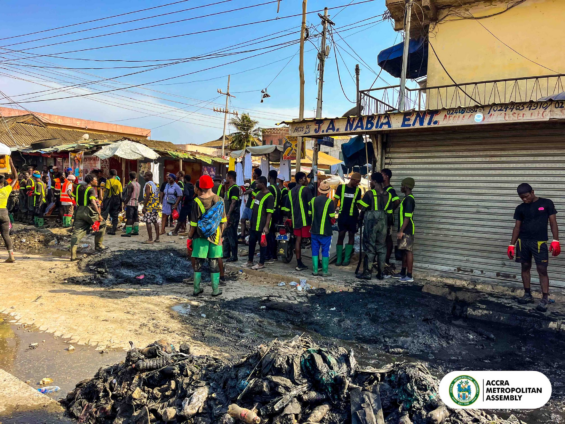
Ghana is set to embark on a two-day National Flood Aftermath Clean-up Exercise on Friday, July 10, and Saturday, July 11, 2026. This nationwide initiative, following a directive from President John Dramani Mahama, aims to restore environmental sanitation, clear choked drains, and mitigate the risk of future flooding and disease outbreaks after the devastating June 29 floods. The exercise is coordinated by the Post-Flood Mitigation Committee under the unifying theme, "Our Actions, Our Future: Cleaning Ghana after the Floods."
The Ministry of Local Government, Chieftaincy and Religious Affairs has outlined comprehensive implementation arrangements, directing public institutions, communities, and residents across seven flood-affected regions to participate. On Friday, July 10, participation will be led by all Ministries, Departments and Agencies (MDAs), Metropolitan, Municipal and District Assemblies (MMDAs), public and private institutions, Security Services, educational institutions, waste management companies, and the general public. The Ghana Education Service has specifically requested Junior High and Senior High School students in the Ashanti Region to partake. The following day, Saturday, July 11, the focus will shift to communities, with residents, community-based organisations, volunteer groups, Security Services, and MMDAs, supported by waste management companies, expected to participate alongside the general public. President Mahama has mandated ministers, Members of Parliament (MPs), MMDCEs, and heads of state institutions to personally lead clean-up activities in their respective jurisdictions. Speaker of Parliament Alban Sumana Bagbin further directed MPs from affected constituencies to participate, suspending parliamentary sittings on Friday, July 10, 2026, to facilitate their involvement.
To ensure full public participation and effectiveness, all non-essential businesses, including shops, markets, commercial establishments, and corporate organisations within the seven affected regions, are directed to remain closed from 6:00 a.m. to 1:00 p.m. on both days. Institutions providing essential and emergency services are exempted. The Ga Traditional Council, supporting this directive, specified closure for Accra businesses from 7:00 a.m. to 12:00 noon. Similarly, the Kumasi Metropolitan Assembly advised business owners in the Central Business District to close from 6:00 a.m. to 10:00 a.m. on Friday, and remain closed until the end of the exercise on Saturday. Minister for Local Government, Chieftaincy and Religious Affairs, Ahmed Ibrahim, stressed the mandatory nature of the closures, warning of legal consequences for defiance. Security agencies, including the Chief of the Defence Staff, the Inspector-General of Police, and the Controller-General of the Ghana Immigration Service, have committed personnel to ensure compliance and maintain order.
The Greater Accra Region, a key focus area, is conducting its dedicated sanitation and clean-up campaign dubbed “Green Heart,” spearheaded by Regional Minister Linda Ocloo. Preparations included extensive meetings with stakeholders like MMDCEs, traditional authorities, NADMO, and environmental health officials, as well as reconnaissance exercises to assess ground conditions and logistical needs. Madam Ocloo assured proper waste management post-exercise, confirming engagements with service providers and securing multiple transfer sites in locations such as Achimota, Opeibea, Pantang, Ashaiman, and Mallam. The Adepa landfill site has been designated as the final destination, with sufficient capacity. Over 500 police officers from the Accra Regional Police Command have been deployed to provide security and actively participate, with additional personnel across districts. Healthcare professionals have also pledged their support. Identified flood-prone and affected locations across various MMDAs in Greater Accra include areas in Ga South, Ga Central, Ga North, Ga East, Okaikwei North, Adenta, Madina, Shai Osudoku, Ayawaso West, Ayawaso North, Ayawaso Central, Ayawaso East, Tema West, Ledzokuku-Krowor (LEKMA), Ningo-Prampram, and Ada East and West, encompassing specific areas like Tetegu, Mallam East, Awoshie, Pokuase, Dome Market, Alajo, Kokomlemle, Nima Highway, and Texpo Market.
Beyond government efforts, various bodies have rallied support for the initiative. The Creative Arts Agency (CAA) urged players in Ghana's creative and cultural industries, including musicians, actors, filmmakers, and artisans, to actively participate, emphasizing their role in influencing public behavior and promoting responsible citizenship. Religious organizations have also expressed strong support; Assemblies of God, Ghana, called on its pastors, members, and the wider Christian community to join, viewing the exercise as a crucial step towards a renewed national commitment to environmental sanitation. The Christian Council of Ghana (CCG) endorsed the initiative as a timely intervention for environmental responsibility and public health, aligning it with their Environmental Care and Cleanliness (ECC) Programme. Both organizations stressed that environmental cleanliness should be a continuous civic and moral responsibility, not a one-off event. President John Mahama and Vice President Professor Naana Jane Opoku-Agyemang are expected to participate, with their specific locations kept undisclosed to assess the preparedness of MMDAs by surprise.
The National General Cleaning Exercise underscores the government's resolve to address the severe impact of the June 29 floods, which claimed lives, displaced thousands, and caused extensive damage. It serves as a critical intervention for immediate recovery and a foundational step towards fostering a sustained culture of environmental cleanliness and resilience against future environmental disasters across Ghana.