Ghana's War on Illegal Mining Intensifies: Galamsey Crackdown Sparks Political Firestorm and Deployment of Blue Water Guards
Ghana's environmental fight intensifies with the repeal of L.I. 2462, a controversial law that permitted mining in forest reserves, drawing strong condemnation against former President Akufo-Addo. Simultaneously, the Blue Water Guards initiative expands to combat illegal mining, while civil society leaders demand President Mahama confront 'vested interests' within his party for true accountability.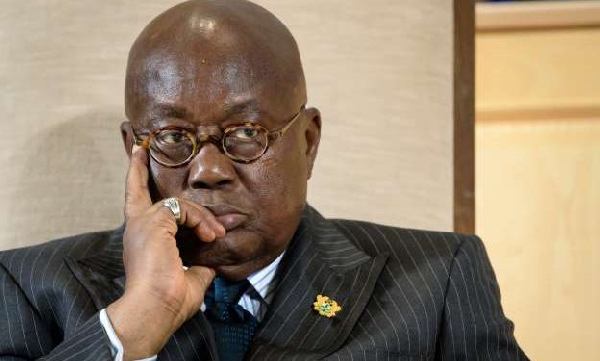
Ghana's fight against environmental degradation, particularly illegal mining known as 'galamsey', has reached a critical juncture, marked by recent legislative changes, intensified enforcement, and calls for profound political accountability. The debate centers on the controversial past legalisation of mining in forest reserves and the ongoing struggle to protect the nation's natural resources from destructive practices.
Andrew Appiah Danquah, the Legal Director of the United Party (UP), recently delivered a strong critique of Ghana’s political and legal establishment, condemning what he described as a collective failure to impeach former President Nana Addo Dankwa Akufo-Addo. Appiah Danquah’s criticism on Channel One TV on December 20, 2025, stemmed from the former President's role in legalizing mining in forest reserves through Legislative Instrument (L.I.) 2462. He labeled this decision a “heinous crime against the environment” and expressed deep disappointment in the nation’s inability to hold the former leader constitutionally accountable, stating, “If I have one regret or one disappointment about all of us as Ghanaians, then it was in our inability or our refusal to impeach Nana Addo when he committed this heinous crime and how he deliberately fueled galamsey.”
L.I. 2462, a regulation passed in 2022, had controversially granted the sitting President discretionary powers to permit mining activities within protected forest reserves. Appiah Danquah, a respected legal practitioner and environmental advocate, emphasized that no president prior to 2022 possessed such legal authority. The passage of this L.I. in 2022 had ignited widespread outrage among environmentalists, who warned of accelerated deforestation, threats to biodiversity, and undermined efforts to protect Ghana’s vital forest reserves. Under this instrument, areas critical for water regulation, wildlife protection, and climate resilience, such as parts of the Atewa, Bia, and Tano Offin forests, came under threat from mining interests, leading to protests and lawsuits.
After months of pressure from environmental groups, civil society organizations, and concerned citizens, Parliament successfully passed the repeal of L.I. 2462 on December 10, 2025, formalized under the Environmental Protection (Mining in Forest Reserves) Revocation Instrument, 2025. While this repeal is seen as a legislative victory, critics argue it may be too late to reverse the environmental damage already inflicted. There are now urgent calls for a comprehensive review of all concessions granted under L.I. 2462 and for stronger constitutional and legal safeguards to prevent future executive overreach in environmental matters.
Simultaneously, the Ministry of Lands and Natural Resources has intensified its offensive against illegal mining with the commissioning of 636 additional personnel into the Blue Water Guards initiative. This deployment on December 12, 2025, brings the national frontline force to a total of 1,700 trained guards, designed to protect Ghana’s heavily polluted river bodies. Minister Emmanuel Armah-Kofi Buah, speaking at the passing-out ceremony in Ezilebo, highlighted the strategic importance of the guards, who are operational across seven regions hardest hit by illegal alluvial mining. Rivers like the Pra, Ankobra, and Birim have suffered severe mercury and silt contamination. The Blue Water Guards work in conjunction with the Ghana Navy and the National Anti-Illegal Mining Operations (NAIMOS), focusing on 24-hour surveillance, destruction of illegal 'changfan' machines, and arresting illegal miners.
Despite these efforts, Franklin Cudjoe, President of IMANI Africa, challenged President John Dramani Mahama to directly confront “vested interests” within his own National Democratic Congress (NDC) if the war against illegal mining is to succeed. Speaking on Channel One TV on December 20, 2025, Cudjoe argued that legislative victories, like the revocation of L.I. 2462, would remain superficial without a ruthless internal purge of political actors profiting from environmental destruction. He expressed alarm over reports of Members of Parliament allegedly visiting mining sites and claiming ancestral lands, fostering a culture of impunity. Cudjoe advocated for a radical accountability framework, suggesting strict Key Performance Indicators (KPIs) for the Minister for Lands and Natural Resources, Emmanuel Armah-Kofi Buah, and heads of security agencies like NAIMOS, with consequences for failure to achieve clear water targets.
Appiah Danquah further accused the ruling New Patriotic Party (NPP) members of lacking the moral authority to speak on the galamsey crisis, urging them instead to show remorse for what he termed an environmental and moral failure of historic proportions. The combination of these critiques and new enforcement actions reflects a growing public demand for accountability that extends beyond legislative repeal. Many sections of the Ghanaian public, including Appiah Danquah, are calling for retrospective investigations and, in some cases, a truth and accountability commission on environmental governance during the Akufo-Addo administration. As Ghana grapples with the severe consequences of illegal and poorly regulated mining, there's a prevailing sentiment that this moment presents an opportunity for national reckoning and a chance to reestablish the rule of law in environmental management.