Ghana's All-Out War: Government's Relentless Battle Against Illegal Mining (Galamsey)
Ghana is undertaking extensive reforms in its mining sector, led by the Ministry of Lands and Natural Resources, to combat illegal mining and promote sustainable practices. Initiatives include real-time tracking of excavators, new medium-scale mining licenses, and decentralized District Mining Committees. These efforts aim to enhance regulation, accountability, and environmental protection while ensuring mining remains a key economic driver.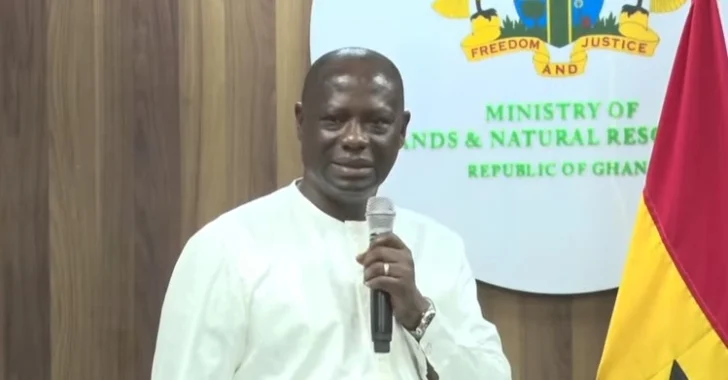
Ghana is undergoing a significant overhaul of its mining sector, spearheaded by the Ministry of Lands and Natural Resources under Minister Emmanuel Armah-Kofi Buah. These comprehensive reforms aim to curb rampant illegal mining, known as 'galamsey', and promote sustainable, responsible resource extraction. Key initiatives include a national tracking and permitting system for heavy equipment, the introduction of new licensing categories, and the establishment of decentralised District Mining Committees. Vice President Prof. Naana Jane Opoku-Agyemang, during an official visit to the Ministry on Tuesday, January 27, 2026, expressed strong support for these measures, emphasizing environmental protection as a matter of national survival.
A cornerstone of the government's strategy is the real-time monitoring of heavy mining equipment. Minister Buah announced that 1,033 excavators and other heavy machinery are now being tracked through a sophisticated national system. This represents a drastic departure from past practices where weak controls over equipment importation and use allowed illegal mining to flourish, particularly in sensitive areas like forest reserves and along major river bodies. Previously, heavy machines were imported without registration or monitoring, leading to a "free for all" situation.
Now, every piece of heavy equipment requires a permit before import and is tracked upon landing. The system allows authorities to impose geographic limits on machinery, triggering alerts if equipment moves outside approved operational zones. In the past six months alone, 1,800 heavy mining machines have been registered, ensuring they are captured in national databases and their movements controlled.
Further restructuring the sector, the government has introduced a new medium-scale mining licence category. This expands the existing framework, which previously only covered small-scale and large-scale mining, to accommodate operators with higher capacity. The new category mandates adherence to stricter environmental and regulatory standards, thereby encouraging more operators to formalise their operations and work within the confines of the law. This initiative forms part of a complete overhaul of the Mining Act, Act 703, with key provisions designed to fundamentally change the paradigm of mining practices in the country.
A critical component of this reform is the decentralisation of mining approvals through the establishment of District Mining Committees. Minister Buah explained that these committees would be the initial point of assessment for mining companies, with recommendations then forwarded to the Ministry in Accra before a final licence is granted.
This approach is designed to ensure that local communities, traditional authorities, and other stakeholders have a direct say in mining activities proposed for their areas, fostering stronger regulatory oversight and more sustainable management of Ghana’s mineral resources. This shift aims to move away from decisions solely made in the capital, ensuring local relevance and accountability.
The government's stance is clear: it is not against mining, which is recognized as a vital driver of the national economy. However, the emphasis is firmly on responsible and sustainable operations. Minister Buah reiterated that mining is "the bedrock, the heartbeat of this country," but stressed that it must be carried out in an environmentally conscious manner. He reaffirmed the government’s unwavering position that mining would not be permitted in forest reserves or water bodies, a policy signaled by the revocation of mining regulation L.I. 2462. This commitment to environmental protection underpins all new measures.
To support legitimate small-scale miners, the government has launched a cooperative mining programme. This initiative focuses on organising miners into groups, providing training, and equipping them with the necessary tools to mine responsibly. A key aspect of this program is improving gold traceability, ensuring that the sources of gold are known and accounted for, thus combating the flow of illegally sourced minerals.
Working in collaboration with the Ghana Gold Board (GoldBod) and other regulatory bodies, this programme is seen as pivotal in transforming mining practices. Minister Buah expressed confidence that the current year would see a significant expansion of these cooperative mining initiatives, aiming to completely change the narrative of illegal mining.
Amidst these reforms, former IMCIM secretary Charles Bissue offered a perspective emphasizing continuity and disciplined implementation over the introduction of new policies. Speaking on Adom FM’s Dwaso Nsem, Mr. Bissue noted that the current strategy under the Mahama administration largely draws from a roadmap developed during former President Nana Addo Dankwa Akufo-Addo’s tenure.
He argued that Ghana's fight against illegal mining is not about novel ideas but requires sustained enforcement, supervision, and discipline, rather than governments constantly repackaging existing policies. He highlighted that the framework guiding interventions like the GoldBod initiative and river guard systems was part of the original policy document he chaired, developed with experts like Professor Kuma of UMaT. Bissue underscored that governance requires consistency and political will to tackle illegal mining, rather than repeated policy resets.
The Ghana National Association of Small-Scale Miners (GNASSM) has actively engaged in these reforms, presenting a comprehensive report to the Ghana Gold Board (GoldBod) following nationwide consultations. This report captured feedback from miners and traditional authorities, revealing a strong consensus for responsible, licensed, and well-regulated mining, alongside increased willingness among small-scale miners to formalise their operations.
The consultations also helped address concerns regarding pricing transparency, regulatory enforcement, and long-term sector sustainability. GNASSM proposed measures such as a two percent discount within GoldBod's pricing structure and a new licensing regime to deter gold hoarding and market distortions, thereby incentivizing compliance and enhancing gold supply through formal channels. Sammy Gyamfi, CEO of GoldBod, welcomed the report and affirmed GoldBod's commitment to implementing these recommendations in collaboration with stakeholders to advance formalisation, traceability, and value retention in Ghana’s gold sector.
Collectively, these integrated reforms—including the rigorous tracking of heavy equipment, the revamped licensing framework, the decentralised oversight through District Mining Committees, and the cooperative mining programs—are anticipated to significantly improve enforcement, strengthen accountability, and substantially reduce the environmental damage historically caused by illegal mining. The government remains committed to ensuring Ghana's mineral resources are managed sustainably for national benefit.