Geopolitical Shockwaves: Trump-Putin Meeting Ignites Debate on Sanctions, Ukraine Aid
A potential summit between Vladimir Putin and Donald Trump in Budapest aims to address the Ukraine conflict but faces significant hurdles, including EU sanctions on Russian airspace and an International Criminal Court arrest warrant for Putin. The proposed meeting has also impacted US support for Ukraine, overshadowing President Zelenskyy's visit to Washington and prompting debate over diplomatic immunities and travel routes.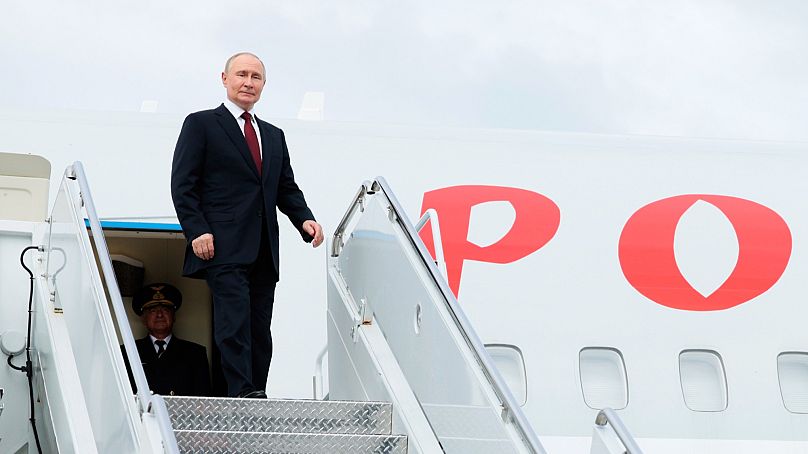
A prospective high-stakes summit between Russian President Vladimir Putin and former US President Donald Trump in Budapest has sent ripples across international capitals, aiming to discuss a possible end to the full-scale invasion of Ukraine. This potential meeting, stemming from a lengthy phone call between the two leaders, could mark Putin's first entry into European Union territory since early 2020, challenging Western efforts to isolate him and raising complex logistical and geopolitical questions.
One of the primary obstacles to Putin's travel to the EU is the bloc's extensive sanctions regime, implemented immediately after Russia's invasion of Ukraine. While the EU sanctioned hundreds of high-level Russian officials with travel bans and asset freezes, Putin himself was notably excluded from the travel prohibition, a decision made to maintain a minimum level of diplomatic contact. However, the EU has effectively closed its airspace to Russian planes, a sweeping measure applying to aircraft operated by Russian carriers, registered in Russia, or owned/chartered by Russian persons or entities. Exceptions exist for emergencies or humanitarian purposes, and member states can grant case-by-case derogations. The European Commission has welcomed any steps towards a just peace but has refrained from committing to facilitating the summit. Hungary's foreign minister, Péter Szijjártó, stated that Hungary is a sovereign country and will receive Putin, asserting that no consultation is needed.
Putin's travel would necessitate navigating this airspace ban. Last year, Foreign Minister Sergei Lavrov undertook a seven-hour detour to reach Malta for an OSCE meeting, having been granted permission to land due to diplomatic reasons. In contrast, his spokesperson, Maria Zakharova, who is under a travel ban, was denied an exemption. Putin could potentially undertake a similar long-winded detour through the Western Balkans, or seek derogations from EU members along a shorter route, such as Poland (which could prove tricky) and Slovakia (which would likely be easier). Another option could involve flying through the Black Sea and Romania, a staunch ally of Kyiv, though this remains an uncertain path.
Beyond EU sanctions, Putin faces an arrest warrant from the International Criminal Court (ICC), based in The Hague. The ICC accuses Putin and Maria Alekseyevna Lvova-Belova of war crimes, specifically the deportation and transfer of tens of thousands of Ukrainian children from occupied areas to Russia. While neither Russia nor the US recognizes the ICC's jurisdiction, all EU countries are signatories to the Rome Statute and are obligated to aid in enforcing its warrants. This presents a unique challenge for Hungary, which, like the US, has contested the arrest warrant for Israeli Prime Minister Benjamin Netanyahu and announced its intention to withdraw from the court, though this withdrawal will not take effect until June 2026. During this interim period, Hungary remains bound by the tribunal's obligations.
The ICC relies on the goodwill of individual governments for enforcement, as it lacks its own means. Cases like Mongolia hosting Putin without consequences or Hungary welcoming Netanyahu despite a warrant highlight this challenge. Hungary has, in fact, already promised safe passage for Putin. The complexity is further compounded by the issue of diplomatic immunity; while Article 27 of the Rome Statute states its rules apply without distinction based on official capacity, Article 98 allows countries to refrain from enforcing a warrant if it breaches obligations to respect the immunity of a non-party state. Hungary could invoke an argument similar to France's stance on Israel regarding Netanyahu, arguing its domestic laws preclude the arrest of a head of state, though this would typically require consultation with the ICC.
The announcement of the Budapest summit, which Dmitry Peskov indicated could happen within two weeks or later, has significant geopolitical ramifications. It notably overshadowed Ukrainian President Volodymyr Zelenskyy's visit to Washington to press for Tomahawk missiles. Donald Trump, after his call with Putin, appeared to row back on previous hints of supplying Tomahawks, expressing concern about depleting US stocks, while Putin reportedly urged him not to supply the missiles. This shift in Trump's tone, following a pattern seen in previous calls with Putin, left Ukrainian officials attempting to put a positive spin on the development, suggesting Putin's outreach demonstrated fear of new Ukrainian weapon supplies and the need for continued strength.
Hungarian Prime Minister Viktor Orbán, an outlier among European leaders due to his warm ties with both Trump and Putin, confirmed preparations for the USA-Russia peace summit. The meeting would represent a victory for Putin, breaking his isolation, and a daunting moment for the EU, given Hungary's consistent efforts to derail collective support for Ukraine. However, refusing Putin's travel could be exploited by the Kremlin to reinforce its narrative of the EU seeking confrontation rather than peace. While Trump expressed optimism for peace, US Vice-President JD Vance struck a more cautious note, suggesting a settlement would require much more work due to a