Future Shock: 76ers' 2026-27 NBA Season Preview Reveals 'Super-User' Puzzle!
The Philadelphia 76ers' acquisitions of Jaylen Brown and LeBron James create a roster with four 'super-users,' raising significant questions about shot distribution and team success. Historical data shows that while such star-laden teams can win championships, they also face a high probability of early playoff exits. The article delves into the challenges the 76ers must overcome, including player fit, shooting efficiency, and offensive sacrifices, to avoid the pitfalls of similar super-user teams in NBA history.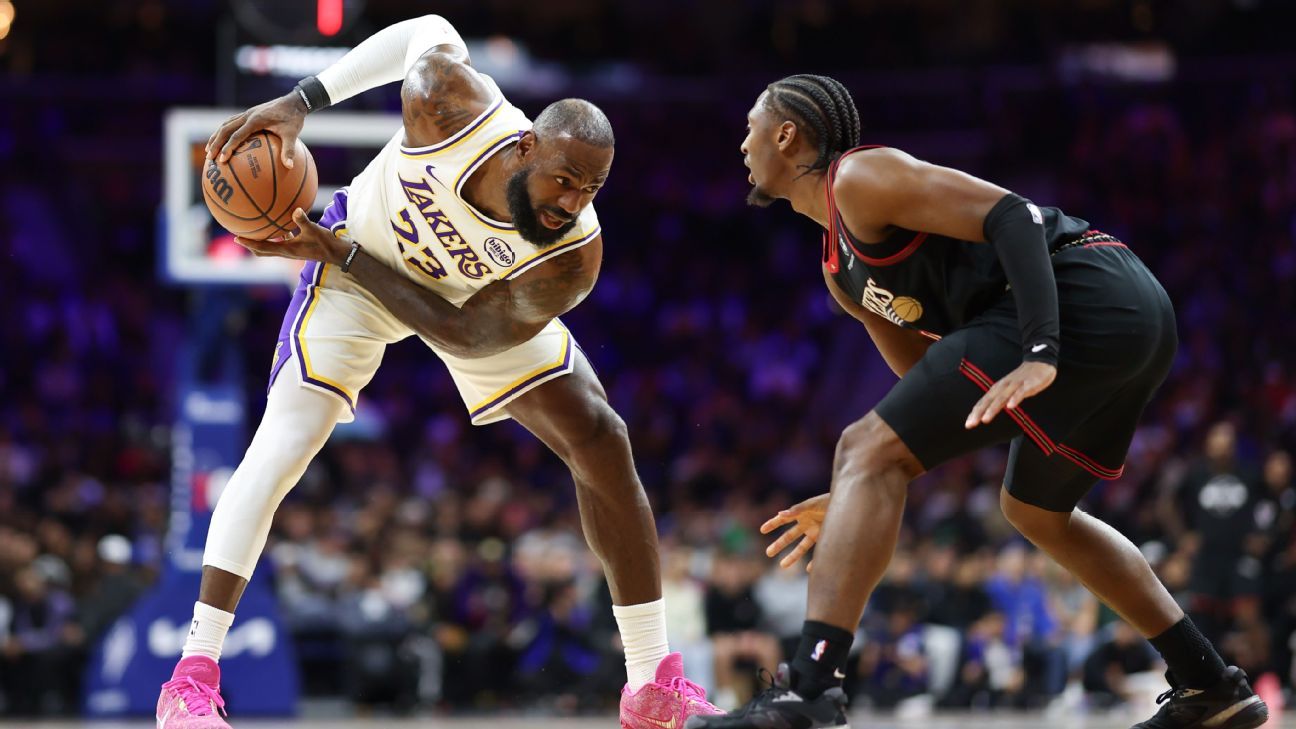
The Philadelphia 76ers have made blockbuster moves this offseason, acquiring Jaylen Brown via trade and signing LeBron James in free agency. These additions mean the Sixers will enter the 2026-27 season with four "super-users" – players with career usage rates over 25% – including incumbent stars Joel Embiid and Tyrese Maxey. This concentration of superstar talent immediately raised questions regarding shot distribution and overall team dynamics.
Despite these high-profile acquisitions, oddsmakers have shown only a modest improvement in Philadelphia's championship odds, moving from +2000 to +900, and their projected win total increased slightly from 48.5 to 50.5. This conservative outlook is partly attributed to the expectation of significant load management for Embiid during the regular season, but primarily stems from the inherent challenge of integrating multiple high-usage players into a cohesive system. The critical question for the 76ers is how quickly these four super-users can effectively co-exist and optimize their play.
To understand the potential trajectory of this 76ers squad, an examination of 30 previous NBA teams featuring a collection of high-usage stars provides valuable historical context. These teams, all projected to win at least 47 games, were ranked by the aggregate career usage rates of their top-five players. The 2021-22 Los Angeles Lakers, for instance, topped this list with an aggregate career usage rate of 146% from Russell Westbrook, James, Carmelo Anthony, Anthony Davis, and Malik Monk. While individual usage rates on the court would sum to 100%, this illustrates the challenge of managing multiple offensive focal points. That Lakers team, despite its star power, stumbled to a 33-49 record due to injuries and poor fit, with James leading their on-court usage at 31% and Westbrook at 21% in their limited shared minutes.
The historical data reveals a mixed bag for super-user teams. Of the 30 teams analyzed, only 10 managed to reach the NBA Finals, and a mere four ultimately won a championship. A significant number, 16 out of 30, failed to advance past the second round of the playoffs, indicating that teams laden with super-users face roughly a 50-50 chance of an early playoff exit by late April.
The current Philadelphia 76ers' top five players – James, Maxey, Brown, Embiid, and VJ Edgecombe – combine for a 134% career usage rate, a figure shared by two previous LeBron-led teams: the 2010-11 Miami Heat, who lost in the Finals, and the 2012-13 Heat, who secured a title. LeBron James's career is notably intertwined with the super-user formula; he has been a part of 13 of the 30 teams on this historical list and has won three of the four championships achieved by such rosters. However, his record also includes instances where super-user lineups failed to deliver a title, such as the 2021-22 Lakers, the 2009-10 Cavaliers, and his first Heat team in 2010-11.
Several concerns emerge for this Philadelphia team. One potential issue lies in player fit and offensive tendencies. James has historically struggled alongside guards like Russell Westbrook and Luka Doncic, partly because they are not known for setting screens. Similarly, James's new teammates – Maxey, Embiid, and Brown – are all below their positional average for screens set. Another critical factor for super-user success is individual shooting efficiency; among the 150 players on the 30 historical teams, nearly 80% boosted their shooting efficiency. However, last season, only Maxey (59%) exceeded the NBA's average effective field goal percentage off potential half-court assists (57%), with James (55%), Embiid (55%), Edgecombe (54%), and Brown (53%) all falling short. This contrasts sharply with the Golden State Warriors' success when Kevin Durant joined Stephen Curry and Klay Thompson, where all three stars shot better than 58% off potential assists the season prior to their integration.
The challenge of coaching such a star-studded lineup is also significant. Twelve of the 30 super-user teams on the historical list replaced their coach during or soon after the season, highlighting the difficulty in implementing a democratic offense. Furthermore, the question of who will sacrifice offensive usage for defensive consistency, similar to Lamar Odom's role with the championship-winning Lakers, remains crucial for the 76ers. While Jaylen Brown is considered a strong two-way player, there isn't a dramatic difference in perimeter defense among the other starters. In terms of offensive production, Embiid, Maxey, Brown, and James were all in the