Five Years On: EU-Taliban Tensions Explode Post-Afghanistan Takeover
Human rights advocates expressed disappointment over Taliban officials visiting Brussels for migration talks, five years after the group seized power in Afghanistan. This meeting sparked criticism regarding the EU's perceived double standard amidst a severe humanitarian crisis and extensive human rights violations, particularly against women and girls, in Afghanistan. The discussions focused on the complex challenges of migration and the return of Afghan nationals, highlighting the nuanced approach of international engagement with the de facto Afghan authorities.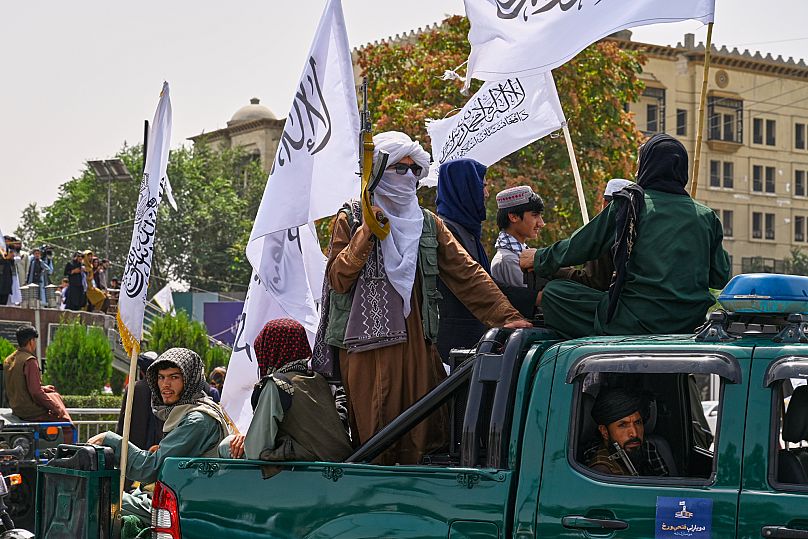
The news of members of the Taliban visiting Brussels in late June for migration discussions with European Union officials deeply disappointed human rights advocates, including Sami Samar, a former Afghan minister for women’s affairs and current human rights advocate living in exile in the United States.
Samar expressed her dismay, stating that she and others count on European countries to uphold human rights principles, viewing the meeting as an endorsement of the Taliban, even if at a lower rank.
These comments came just days before 15 August 2026, marking five years since the Taliban established itself as the de facto government of Afghanistan, a regime formally recognized only by Russia.
This date also signifies five years since the United States withdrew its troops after nearly two decades of presence in the South Asian country.
In the half-decade since, Afghanistan has plunged into a profound crisis, with the International Committee of the Red Cross identifying its humanitarian situation as among the most severe globally.
The United Nations Office for the Coordination of Humanitarian Affairs estimates that roughly 21.9 million people, or 45% of the total population, are projected to require humanitarian assistance in 2026 due to years of armed conflict, economic fragility, underinvestment in basic services, and a rapid attrition of rights.
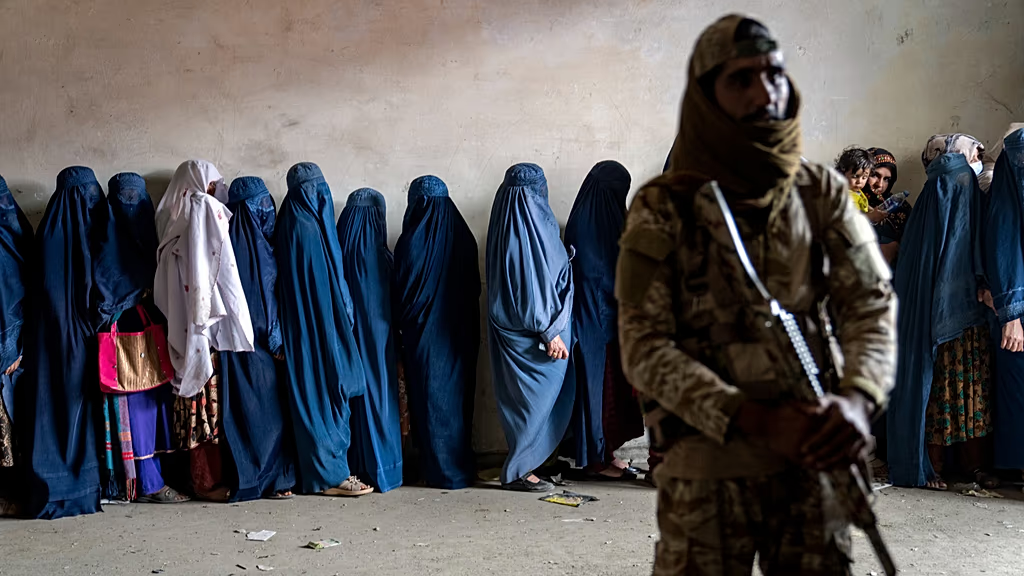
He highlighted that a drastic deterioration of life in Afghanistan as the Taliban’s control tightened, calling it a “human rights disaster.”
Women and girls have been particularly impacted, with over 160 decrees issued that severely restrict their lives.
These include bans on girls’ education beyond the sixth grade, exclusion of women from university and most workplaces, imposition of strict dress codes, and restrictions on women and girls traveling without a male guardian.
Human Rights Watch considers these policies to constitute crimes against humanity through gender persecution.
Samar lamented the escalating restrictions on women's freedom and movement, emphasizing the violation of their rights, even to the extent that their voices are suppressed.
In May, a majority of members of the European Parliament condemned the widespread restrictions on the rights of girls, women, and other minorities in Afghanistan, as well as public floggings and executions.
The MEPs also urged the European Commission and member states to maintain non-recognition and non-normalization of the Taliban regime, while simultaneously expressing regret over the decision to invite Taliban representatives to Brussels.
Despite this, European Commission spokesperson, Anitta Hipper reaffirmed the EU’s “grave concern” over systematic human rights violations five years after the Taliban’s takeover.
Hipper stated that the EU continues to call on the Afghan de facto authorities to respect, protect, and fulfill the human rights and freedoms of all Afghans and to adhere to Afghanistan's international obligations.
She explained that member states in 2021 mandated the EU executive to maintain “operational engagement” with the de facto Afghan authorities, clarifying that while such authorities are not recognized or legitimized, dialogue occurs on topics considered key values and interests.

These benchmarks include condemning human rights violations, such as gender-based discrimination, and readiness to adopt targeted restrictive measures against those responsible.
However, Samar, criticized that these comments, suggesting a “double standard” by the bloc, questioning how trust can be built when mild condemnations are followed by quiet delegations.
The closed-door migration talks, held on 23 June off official EU premises, involved officials from the European Commission and 15 member states, alongside a delegation of Taliban representatives.

The Taliban stated the technical talks concerned the return of Afghan nationals without a right to stay in Europe.
In contrast, the European Commission stressed the focus was on expediting returns of individuals convicted of serious crimes or considered security threats.
Despite the defined scope, the discussions drew fierce condemnation. UN High Commissioner for Human Rights, Volker Türk voiced concern about Afghan nationals being deported into situations where they might face torture.
However, Swedish Migration Minister, Johan Forssell emphasized that the critical importance of deporting individuals convicted of serious crimes, such as aggravated rape and drug trafficking, noting that approximately 200 Afghan nationals in Sweden were awaiting such deportations.
Amid criticism, Forssell argued that his government must negotiate with dictatorships in certain situations to protect Swedish interests.
Deportations have proven particularly challenging for Afghans, who were among the top nationalities served with return orders in 2025.
Eurostat data indicates that out of 14,270 Afghan nationals ordered to leave the EU in the first nine months of last year, only 340 were sent back, a mere 2% return rate.
Simultaneously, arrivals into Europe continue, with over 3,300 Afghans irregularly crossing EU borders in the first four months of 2026, primarily via the Eastern Mediterranean route.
Additionally, over 63,000 Afghan nationals sought asylum in the EU in 2025, constituting 10% of the total asylum seekers.
According to Samar, these individuals resort to illegal entry into the EU due to onerous legal visa pathways and the perilous conditions they face in Afghanistan.