FG's Controversial N70k Transport Allowance Sparks Labour Outcry, Demand for N500k Minimum Wage
The Federal Government and Nigeria Labour Congress have agreed to immediate minimum wage negotiations and a N70,000 transport intervention for workers. While the NLC, through JNPSNC, upholds its N500,000 minimum wage demand, the Trade Union Congress rejects the temporary allowance, advocating for sustainable salary increases and immediate implementation of health sector agreements. These differing stances underscore ongoing efforts to address workers' welfare amidst economic challenges.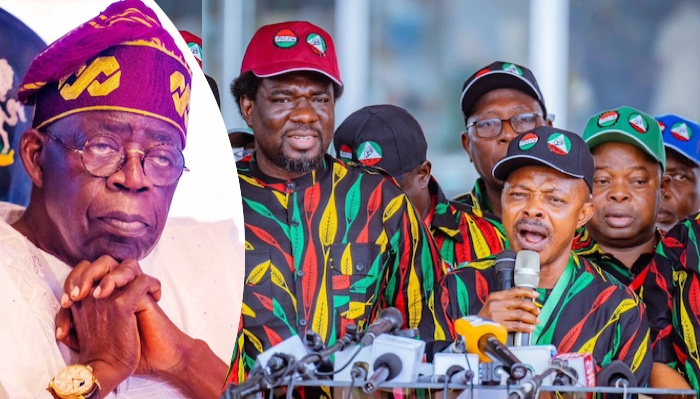
The Federal Government has formally agreed to commence minimum wage negotiations immediately and approved a N70,000 transport intervention for workers, to run for six months from November 2026. This agreement followed a conciliation meeting with the leadership of the Nigeria Labour Congress (NLC) in Abuja on Tuesday, October 27, 2026. The resolutions were a follow-up to an earlier meeting held on October 22, aimed at addressing the NLC's concerns over the deteriorating economic conditions faced by Nigerian workers, including demands for reduced petrol prices, improved wages, and tax relief.
Under the terms of the agreement, a Minimum Wage Negotiation Committee is to be constituted and begin meetings without delay. While both parties acknowledged this, they noted that an agreement on the effective date of implementation for a new minimum wage is yet to be reached. Beyond the transport intervention, the Federal Government also committed to paying arrears of peculiar allowances, which had been approved with effect from May 1, 2026. Payment of these outstanding amounts is slated to begin in November 2026, to be disbursed in three equal monthly installments.
Further commitments were made to public-sector workers, specifically health workers. The government agreed to redeem 19 months of outstanding allowances owed to health workers within three months, starting from December 2026. Regarding the long-standing demand for an adjustment of the Consolidated Health Salary Structure (CONHESS) for health-sector workers under the Joint Health Sector Unions (JOHESU), the National Salaries, Incomes and Wages Commission (NSIWC) undertook to complete an updated assessment of the cost implications within three weeks. This assessment is crucial for the Presidential Committee on Salaries to consider and decide on the adjustment. For agricultural workers seeking hazard allowances, the Federal Ministry of Agriculture and Food Security had submitted a list of beneficiaries and cost implications to NSIWC for verification, which is expected to be completed within two weeks, leading to an implementation template. The demand for tax relief for workers, however, remains unresolved, as the matter was referred to the National Executive Council (NEC) due to its statutory nature.
The Federal Government reaffirmed its respect for the NLC's right to advocate for improved working conditions and expressed its efforts to address issues through structured interventions. Both parties urged state and local governments to participate in the intervention process and encouraged unions to sustain efforts towards securing the implementation of the resolutions. They also agreed to reconvene after one month to assess the level of implementation. The reconciliation agreement was signed by representatives from the Federal Government, including the Minister of Labour and Employment, and by the NLC President and the National Secretary of the Joint National Public Service Negotiating Council (JNPSNC).
Despite the government's planned N70,000 monthly transport support, organised labour has reaffirmed its demand for a N500,000 minimum wage. Comrade Gbenga Olowoyo, National Secretary of the JNPSNC, stated that while labour remained committed to this demand, it was willing to negotiate to reach a mutually acceptable agreement. He welcomed the N70,000 transport support as a positive development and a sign of the government’s willingness to address workers’ concerns, describing it as temporary relief rather than a substitute for minimum wage negotiations. Olowoyo emphasized that the N500,000 template was informed by the comprehensive responsibilities workers face, including family provisions and essential household expenses. He expressed optimism that the agreement would pave the way for further discussions, particularly on establishing a tripartite committee for a new minimum wage, with the six-month transport support scheme (November 2026 to April 2027) serving as a bridge until a new wage is settled.
In contrast, the Trade Union Congress of Nigeria (TUC) has rejected the Federal Government’s proposed N70,000 wage award, demanding an immediate and sustainable salary increase instead of temporary relief measures. The TUC argued that previous wage awards, such as the N40,000 agreed upon in October 2023, were not fully implemented, with many workers receiving irregular payments or no benefits at all, particularly in states and the informal sector. The Congress called for the government to increase workers' salaries immediately, suggesting that the lowest-paid federal worker's salary could be raised to N300,000 with appropriate consequential adjustments, citing states that have already raised their minimum wages above N100,000 as precedent. The TUC insisted that a direct salary increase offers more dependable relief than inconsistent temporary payments.
The TUC also called for the immediate implementation of the outstanding Consolidated Health Salary Structure (CONHESS) adjustment for JOHESU members, accusing the Federal Government of failing to honor an agreement that led to the suspension of their prolonged industrial action. The Congress highlighted that the CONHESS adjustment remained unimplemented seven months after the agreement, which it deemed a violation of good faith. Beyond salary increases, the TUC urged all levels of government to introduce measurable interventions to reduce the cost of essential goods and services, ensure timely payment of salaries and pensions, protect jobs, and revitalize the productive sector. The TUC is awaiting the outcome of its scheduled meeting with the Federal Government before deciding on its next line of action, reiterating that workers' welfare is not a privilege and agreements must be honored.