Explosive SA Farm Attacks Controversy: US Slams 'Kill the Boer' Chant Amidst Racial Tensions
Tensions between the United States and South Africa are rising over violent farm attacks and rhetoric like 'Kill the Boer!' The US criticizes South Africa's response to brutal incidents like the attacks on Donovan Marx and Johanna van Zyl, while EFF leader Julius Malema's contradictory stance further complicates the issue.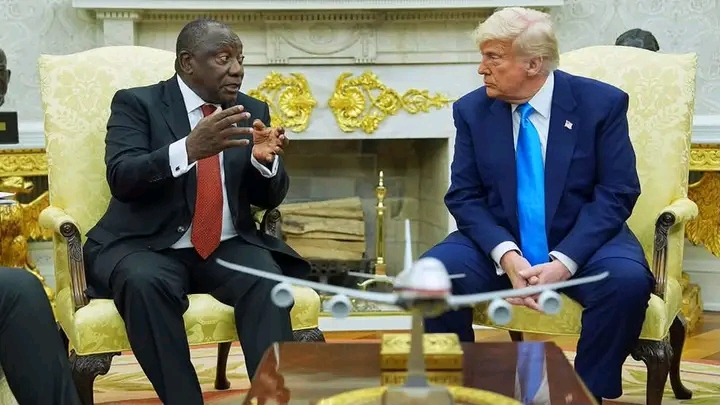
Tensions between the United States and South Africa have escalated over rural security, land policies, and public rhetoric, particularly concerning violent farm attacks targeting Afrikaners. In exclusive comments, a State Department spokesperson conveyed that “the lives and property of Afrikaners have been endangered by politicians who incite race-based violence against them,” amidst Washington's renewed pressure on Pretoria to address these issues and condemn specific incitement.
The severity of these attacks is underscored by recent brutal incidents. On October 28, 2026, 50-year-old cattle farmer Donovan Marx was viciously attacked on his Syferfontein farm between Ventersdorp and Potchefstroom. Three armed men, wearing balaclavas, first tied up a farmworker before shooting Marx in the upper body upon his arrival. They then dragged him inside, restrained him, stabbed and assaulted him, and shockingly cut off both his ears before fleeing in his red Isuzu bakkie with stolen firearms. Marx remains in serious but stable condition in intensive care, having undergone surgery to remove part of his large intestine after the bullet passed through a kidney, and surgeons were unable to reattach his ears. South African Agriculture Minister Willie Aucamp publicly condemned the “extreme cruelty” of the attack. Two suspects have since been arrested, and Marx’s stolen vehicle was recovered in Ikageng near Potchefstroom, with investigators pursuing outstanding suspects.
A separate, equally horrific incident occurred on October 5, 2026, near Ottosdal, where 55-year-old Johanna “Hannetjie” van Zyl was fatally attacked while opening a gate at Doornpan Farm. She was repeatedly struck over the head and neck with an iron bar. Her husband found her and rushed her to a hospital in Klerksdorp, where she tragically succumbed to her injuries. Two suspects, Martin Boitumelo Mosime (28) and Moleko Sekwaage (29), face murder and robbery charges and are in custody, while a third suspect remains at large. Ian Cameron, chair of South Africa’s parliamentary Portfolio Committee on Police, described both attacks as involving “extraordinary cruelty,” calling for experienced investigators and enhanced resources for rural communities.
The United States has explicitly demanded that senior South African officials condemn incitement to race-based violence, specifically highlighting the chanting of “Kill the Farmer! Kill the Boer!” at mass rallies. The Trump administration, through the State Department, expressed concern that President Cyril Ramaphosa has declined to condemn the chant, citing a court ruling that the lyrics do not constitute hate speech. This lack of a “meaningful response” has led the State Department to state that it “made clear that the South African government does not want a constructive relationship with the United States.” Washington also urged South Africa to classify rural crime as a priority crime and raised objections to its race-based economic policies, calling for alternatives to certain Black Economic Empowerment ownership requirements.
Adding complexity to the situation, EFF leader Julius Malema issued a public condemnation of the Donovan Marx farm attack, stating, “The killing on the farms of our own farmers must stop.” He questioned the brutality of the crime and urged police to bring the attackers to justice. Malema also rejected claims of a white genocide in South Africa but warned that continued farm killings fueled such narratives, asserting, “No white farmer must be killed. No black farmer must be killed. No woman must be killed.” However, shortly after these remarks, Malema sang the controversial ‘Kill the Boer, Kill the Farmer’ chant at a rally in Soweto. He defended the struggle song, insisting it did not encourage violence and instead blamed poor policing for attacks on farmers. Police, however, have not established any connection between the chant and the attack on Marx.
South African authorities generally characterize farm attacks as part of broader high crime rates rather than racially targeted campaigns, a framing disputed by opposition parties and farming groups. Despite the brutality and the US accusations, investigators have not established that the attack on Marx was racially motivated or directly linked to the controversial chant. Furthermore, the US State Department has indicated a program under which nearly 13,000 Afrikaner refugees fleeing race-based discrimination have been resettled in the United States this fiscal year, with another 17,500 expected next year, further highlighting the international dimension of these concerns. The South African government has not yet issued a response to these new accusations from Washington, leaving the international and domestic tensions unresolved.