2027 Showdown Begins: APC Declares Tinubu's Re-election a 'Done Deal' as NDC Gears Up
Nigerian political parties are already in high gear for the 2027 general elections, with the NDC inaugurating its secretariat and presidential campaign, while the APC focuses on re-electing President Tinubu. Amidst these preparations, a major legal tussle has seen Governor Hope Uzodimma replaced by Rochas Okorocha as the APC's Imo West senatorial candidate. The House of Representatives has also summoned the INEC Chairman to provide an update on election preparedness.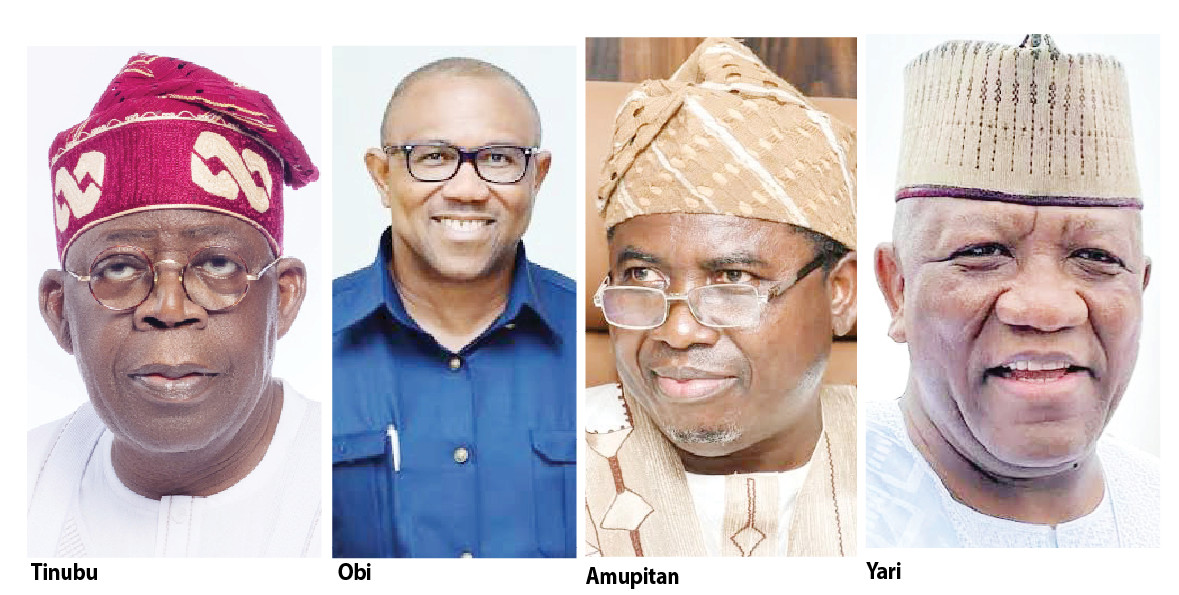
Political activities across Nigeria are intensifying as major parties, including the Nigeria Democratic Congress (NDC) and the All Progressives Congress (APC), ramp up preparations for the 2027 general elections. These strategic moves highlight the early commencement of campaigns and internal organizational structuring aimed at securing electoral victory across various levels of government.
The Nigeria Democratic Congress has significantly advanced its election machinery by inaugurating its new national secretariat in Abuja, alongside establishing its National Presidential Campaign Council. The party also presented certificates of return to its candidates, signaling a formal launch into the electoral race. These crucial events followed the party’s Third National Executive Committee (NEC) meeting, which concluded with a dinner where NDC's presidential candidate, Peter Obi, delivered a strong commitment to address critical national challenges. Obi pledged an uncompromising war against corruption, a robust strategy to tackle insecurity, and focused efforts to alleviate poverty, unemployment, and the rising cost of living. He assured Nigerians of tangible improvements in governance from the very first day of an NDC administration, stressing the urgent need for fundamental changes in leadership and public resource management, with a government focused on problem-solving rather than blaming past administrations or political rivals. Adding to this, the National Chairman of NDC, Senator Moses Cleopas, urged all party candidates to view their nominations as a profound responsibility to the electorate, emphasizing that the party would not condone unfulfilled promises. The NDC National Leader, Senator Seriake Dickson, symbolically referred to the newly unveiled secretariat as the party’s “Noah’s Ark,” positioning it as a vital unifying center in their journey towards the 2027 elections.
Meanwhile, the All Progressives Congress Presidential Campaign Council (APC-PCC) has unequivocally declared its intention to convince Nigerians to re-elect President Bola Tinubu in the upcoming January 2027 Presidential election. Senator Abdulaziz Yari, the Director-General of the APC-PCC, made this announcement while speaking to journalists in Mecca, Saudi Arabia, where he was performing the Muslim lesser Hajj, Umrah, alongside President Tinubu and other prominent Nigerians. The former Zamfara state governor reiterated the APC-PCC's unwavering commitment to garnering the support of the Nigerian electorate for President Tinubu’s second-term aspiration. Yari expressed confidence that President Tinubu’s strong faith in God, his demonstrable record of performance, and the robust capacity of the campaign organizations would collectively swing votes in his favor and ultimately secure his victory.
In a related development, the APC further expanded its campaign structure by releasing a supplementary list of leadership and membership for the President Bola Ahmed Tinubu/APC 2027 Presidential Campaign Council (PCC). This expansion aims to bolster the Council's composition ahead of the 2027 general election. According to Felix Morka, APC National Publicity Secretary, the supplementary list includes additional appointments of leaders and members across various directorates, sectoral groups, mobilization structures, and operational units of the council. Notable appointments include former Nasarawa State Governor, Tanko Al-Makura, and two former governors of Jigawa State, Ali Sa’ad and Saminu Turaki, who were named Advisers to the Chairman of the PCC, President Tinubu. Former Governor Yahaya Bello of Kogi State was appointed Director I, Directorate of Contact and Mobilisation. The Directorate of Security and Intelligence saw the appointment of several high-profile individuals, including former Chief of Army Staff, Tukur Buratai, former Inspector General of Police, Mike Okiro, along with ex-military governor of Katsina State, Maj. Gen. Laurence Onoja (Rtd), Maj. Gen. Lawrence Fejokwu (Rtd), General Ahmed Jibrin (Rtd), Deputy Inspector General of Police Bala Chiroma (Rtd), and Commodore Folusho Daniel (Rtd). Furthermore, the Minister of Aviation and Aerospace Development, Festus Keyamo, was appointed Director, Directorate of Air Transport Mobilisation of the council.
A significant legal challenge has also emerged concerning the Imo West senatorial candidacy for the 2027 general election. The Federal High Court in Abuja ruled to sack Imo State Governor, Hope Uzodimma, as the APC candidate for the district, replacing him with former Governor Rochas Okorocha. Presiding Judge Obiora Egwuatu ordered the Independent National Electoral Commission (INEC) to publish the name of Okorocha, who previously represented the district in the Senate, as the validly nominated candidate of the APC for next year’s senatorial election. Okorocha enthusiastically welcomed the judgment, stating that justice had finally been served and expressing deep satisfaction with the outcome. He alleged that the process which initially produced Uzodimma as the party’s candidate was marred by manipulation, similar to an election where results are tampered with. The former governor lauded the Nigerian judiciary, emphasizing that the judgment powerfully demonstrated the crucial role of courts in resolving disputes related to electoral processes and political party nominations.
However, the APC in Imo State has refused to concede, maintaining that Governor Uzodimma remains its candidate for the Imo West Senatorial District seat in the 2027 general elections, despite the Federal High Court ruling. The party conveyed its stance through a statement issued by its State Publicity Secretary, Onwuasoanya FCC Jones, in response to reports of the court's decision. The Imo APC firmly insisted that Uzodimma secured the nomination with the legitimate support of the majority of party members who participated in the primary election.
In a broader move concerning national election preparedness, the House of Representatives has invited the Chairman of INEC, Prof. Joash Amupitto, to appear before its Committee on Electoral Matters within the next seven legislative days. The purpose of this invitation is to brief the panel on the commission’s readiness for the 2027 general election. The comprehensive briefing is expected to cover critical aspects such as Continuous Voter Registration (PVC) management, election logistics, technology deployment (including Band and IReV), personnel training, electoral security measures, risk assessment strategies, and budget implementation. Additionally, insights from the Ekiti State governorship election will be reviewed to inform future operations. Prof. Amupitto is also mandated to provide a detailed status report regarding national election readiness, encompassing the progress of continuous voter registration, the current status of Permanent Voter Card (PVC) production and distribution, and the overall readiness of election technology and logistics. Furthermore, he is to provide lawmakers with specifics on the mapping of challenging areas, the recruitment and training status of election officials, as well as budgetary appropriations, funds released, outstanding releases, and the implications of any potential funding gaps on the implementation timeline. These resolutions were adopted following an amendment to a motion jointly sponsored by the Minority Whip, Hon. Mansur Manu Soro (APM, Bauchi), and Deputy Minority Leader, Hon. Abdussamad Dasuki (ADC, Sokoto). Presenting the motion, Hon. Soro expressed significant concern that any delay in addressing existing operational gaps in voter registration, logistics, technology deployment, and funding could adversely affect public confidence in the electoral process and potentially compromise the peaceful conduct of the election.