African Leaders Clash: Khama Labels Hichilema 'Newest Dictator,' Sparking Regional Controversy
Zambia faces significant democratic challenges, highlighted by international criticism and domestic concerns over executive overreach, electoral integrity, and judicial autonomy. Simultaneously, citizens are experiencing fuel price hikes due to global factors and a weaker Kwacha. Political discussions also revolve around contentious constitutional amendments and internal opposition dynamics, as the UPND plans a nationwide tour to consolidate support.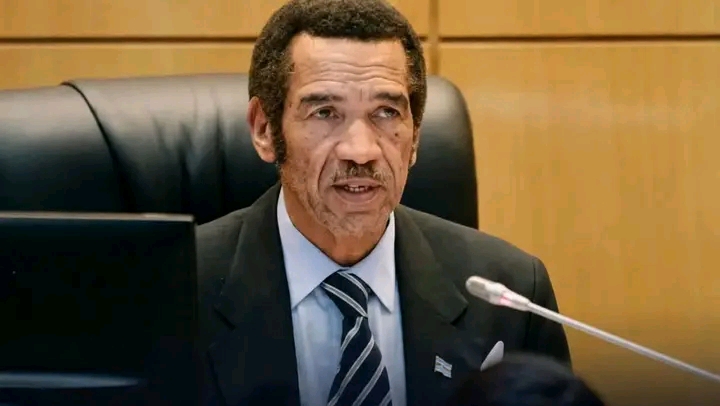
Zambia is currently facing a complex interplay of democratic challenges and economic pressures, drawing both domestic and international scrutiny. The Socialist Party has consistently highlighted a systematic regression in the nation's democratic infrastructure, a concern echoed by former Botswana President General Khama, whose observations, though diplomatically sensitive, serve as external validation of a deeply concerning domestic reality. This regression is characterized by executive overreach, the weaponization of the criminal justice system, and routine violations of constitutional boundaries. A key example is the prolonged and arbitrary detention of opposition leaders and critics beyond the legally permissible 24-hour window without formal charges or court appearances. The state's handling of political figures under broad charges of treason and sedition, without efficient and fair prosecution, fundamentally violates due process, signaling an intent to insulate power by neutralizing legitimate political competition rather than fostering a robust democracy.
This democratic contraction has significantly impacted the independence and functionality of core institutions. The Electoral Commission of Zambia (ECZ) has seen its integrity challenged by unprecedented administrative decisions, including the controversial nationwide suspension of vote counting and result announcements during the August electoral cycle. It is crucial for the ECZ to operate as an impartial and transparent referee, ensuring its constitutional mandates are not compromised or weaponized to destabilize public confidence in the electoral system. Furthermore, concerns regarding judicial autonomy have been raised by the Law Association of Zambia (LAZ), specifically citing post-election security maneuvers such as the physical sealing and barricading of court premises. LAZ rightly emphasized that security measures must remain lawful, proportionate, and designed to preserve, not obstruct, judicial independence and citizens’ fundamental access to legal remedies.
Amidst these political developments, Zambia is also grappling with economic adjustments. The Energy Regulation Board (ERB) announced significant increases in petroleum pump prices for November. Petrol rose by K1.60 to K33.06 per litre, diesel by K1.18 to K34.45, kerosene to K32.08, and Jet A-1 to K34.51 per litre. These revised prices took effect at midnight following the Saturday announcement. ERB Board Chairperson James Banda attributed these increases to rising international petroleum prices and a weaker Kwacha, which depreciated by over 3% against the United States Dollar. Geopolitical tensions in the Middle East also contributed to higher international oil prices, with petrol increasing from US$121.58 to US$125.84 per barrel. These adjustments follow substantial fuel-price increases in October, indicating a continuing trend of rising energy costs.
The political landscape has also been shaped by critical discussions surrounding the 2025 constitutional amendment, commonly known as Bill 7. Former Justice Minister and Patriotic Front acting president Given Lubinda criticized the amendment, arguing that its consequences are evident in the Mandevu parliamentary by-election. Three opposition and independent candidates withdrew from the race, leaving the UPND candidate Adrian Banda without an opponent. Lubinda contended that the amended Article 52(6), which allows elections to proceed despite candidate withdrawals, deprives political parties and voters of meaningful electoral alternatives, questioning the value of such an election. He called for a national examination of this constitutional provision while encouraging Mandevu residents to participate in the electoral process.
These issues are further illuminated by remarks from Vice-President Mutale Nalumango, who suggested that the UPND could already consider the 2031 elections won if opposition parties continued demonstrating what she described as political indiscipline. Citizens First president Harry Kalaba concurred with this assessment, accusing fellow opposition leaders of prioritizing personal ambitions and political gain over the interests of Zambians. Kalaba candidly stated that the opposition, in its current form, lacks the unity and credibility needed to present a convincing alternative government, urging leaders to reform themselves and restore public confidence. This internal critique within the opposition underscores the challenges facing multi-party democracy in Zambia.
The diplomatic friction involving former Botswana President Ian Khama also gained renewed attention following his recent attacks against President Hichilema, including a reported description of the Zambian leader as “Africa’s newest dictator.” These remarks, purportedly made in a circulating social media video, prompted strong reactions from the ruling UPND. UPND Media Director Mark Simuuwe challenged the characterization, questioning its basis in Zambia’s democratic and constitutional record. Former Vice-President Enock Kavindele also weighed in, urging Khama to respect Zambia’s sovereignty and substantiate serious allegations against its leadership with credible evidence. Kavindele cited Zambia’s history of peaceful transfers of power, democratic institutions, and legislative reforms under Hichilema’s administration, including the abolition of the death penalty and the enactment of the Access to Information Act. He emphasized the importance of not undermining longstanding diplomatic and economic cooperation, such as through the Kazungula Bridge, due to political disagreements.
In a related development, the UPND Alliance has announced plans for a nationwide tour to express gratitude to Zambians for their support during the August 13 general elections. Alliance spokesperson Leslie Chikuse stated that this program would complement efforts to advance the government’s “Grow Zambia” agenda and strengthen cooperation between alliance partners and government institutions. This announcement followed a meeting with Vice-President Nalumango at Government House, attended by various political leaders. As November begins, these political developments, government decisions, and their impacts on communities across Zambia continue to be closely monitored by newsrooms.