Do You Know the Word "Okada" Came From an Airline In Edo State?
Millions of Nigerians say “okada” every day, but few know the word once belonged to one of the country’s biggest private airlines.
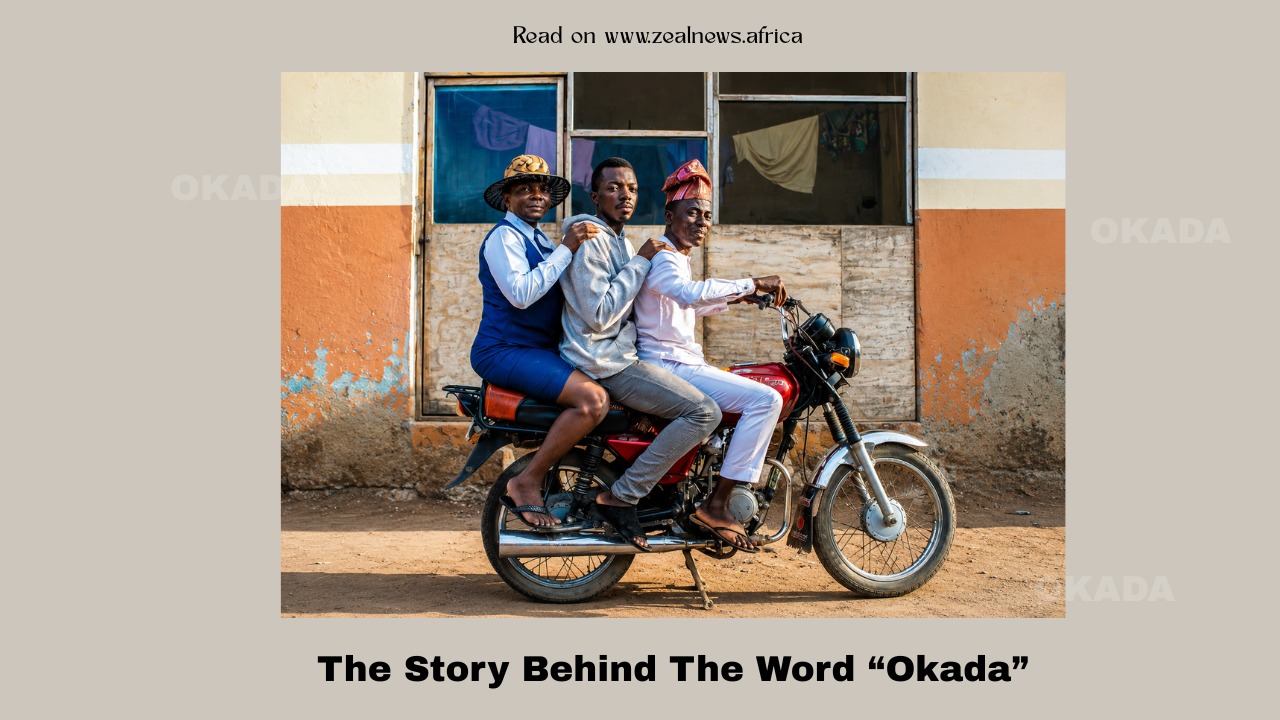
There are some words Nigerians use so often that nobody ever thinks to question them.
Danfo, Suya, NEPA, Okada.
They're part of everyday conversation, passed from one generation to the next without much thought about where they came from. Ask someone to explain what an okada is and the answer comes instantly: a commercial motorcycle. Ask why it's called that, and the room usually goes quiet.
Long before okada became the name for the two-wheelers weaving through Lagos traffic or carrying passengers across villages and cities, it belonged to an airline. And before it belonged to an airline, it was simply the name of a quiet town in Edo State.
It's one of those pieces of Nigerian history hiding in plain sight. Millions of people say the word every day without realising they're repeating the name of a company that disappeared nearly three decades ago.
The Airline That Carried the Name of a Small Edo Town
The story begins with Gabriel Osawaru Igbinedion, born on September 11, 1934, in Okada, a town in present-day Ovia North-East Local Government Area of Edo State.
Like many of Nigeria's prominent businessmen, Igbinedion didn't begin with aviation. He built his fortune gradually through trading, dealing in soft drinks, groceries and textiles before expanding into transportation, banking, education, hospitality and several other industries.
His success earned him national recognition. In 1974, at the age of 40, he was conferred with the traditional title of Esama of Benin Kingdom, becoming one of the youngest people ever to receive the honour.
By the early 1980s, he had set his sights on aviation.
In 1981, he acquired his first private aircraft. Two years later, in September 1983, he launched Okada Air, Nigeria's first privately owned airline, also named after his hometown, Okada
The name wasn't a marketing strategy; it was a tribute to his hometown.
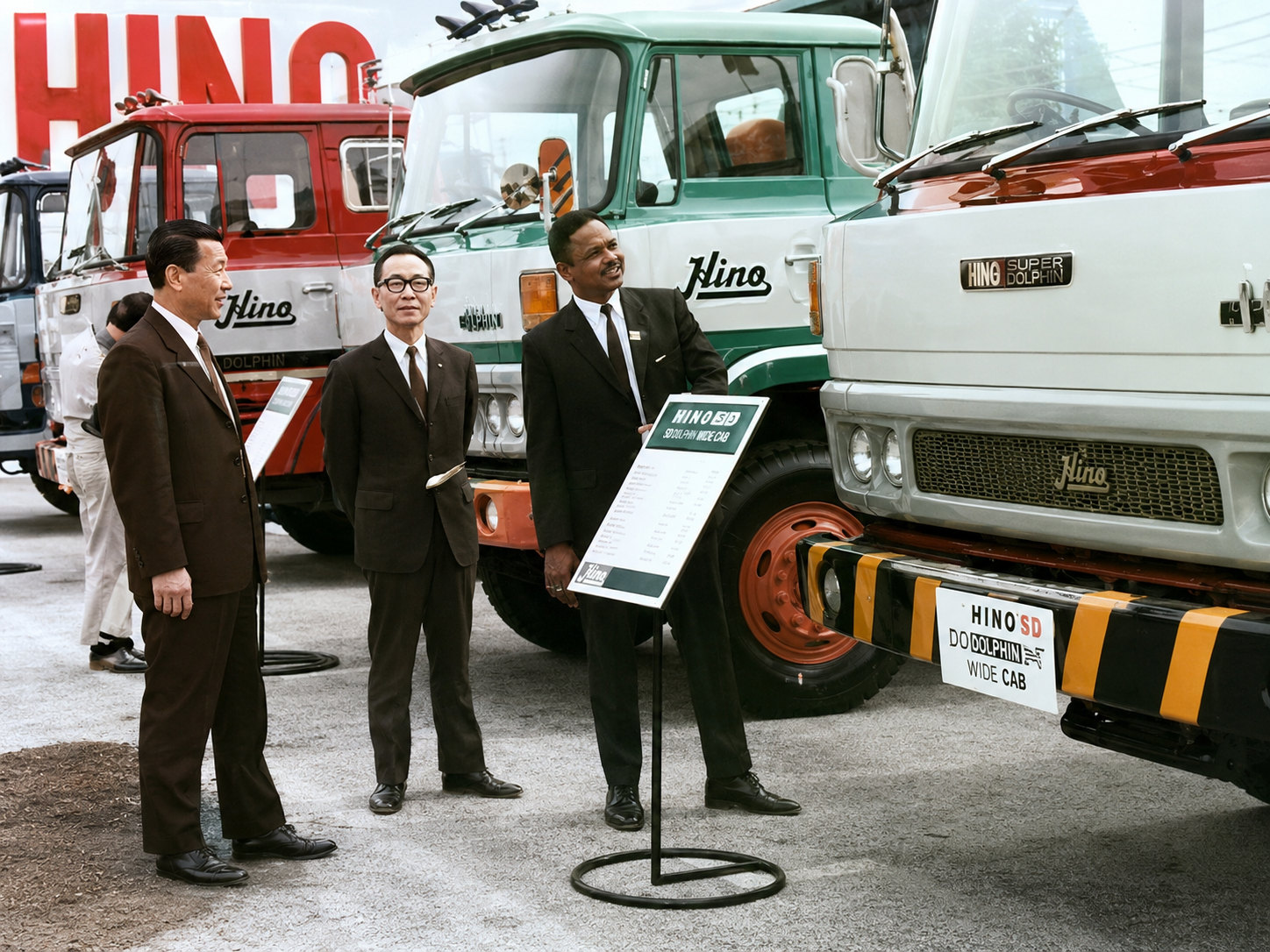
What followed was one of the most remarkable expansions in Nigeria's aviation industry.
Okada Air began as a charter service but quickly expanded into scheduled domestic and international operations. At its peak, the airline operated more than 40 aircraft and helicopters, making it one of the largest privately owned aviation fleets in the country's history.
Its growth reflected a changing aviation sector, one where private Nigerian companies were beginning to compete in an industry that had long been dominated by government-owned carriers.
Social Insight
Navigate the Rhythms of African Communities
Bold Conversations. Real Impact. True Narratives.
The airline's influence became even more evident in 1992, when the military government delegated then Vice President Admiral Augustus Aikhomu to commission Okada Air's newly acquired Boeing 747. It was a significant moment, not only for the airline but also for Nigerian private enterprise.
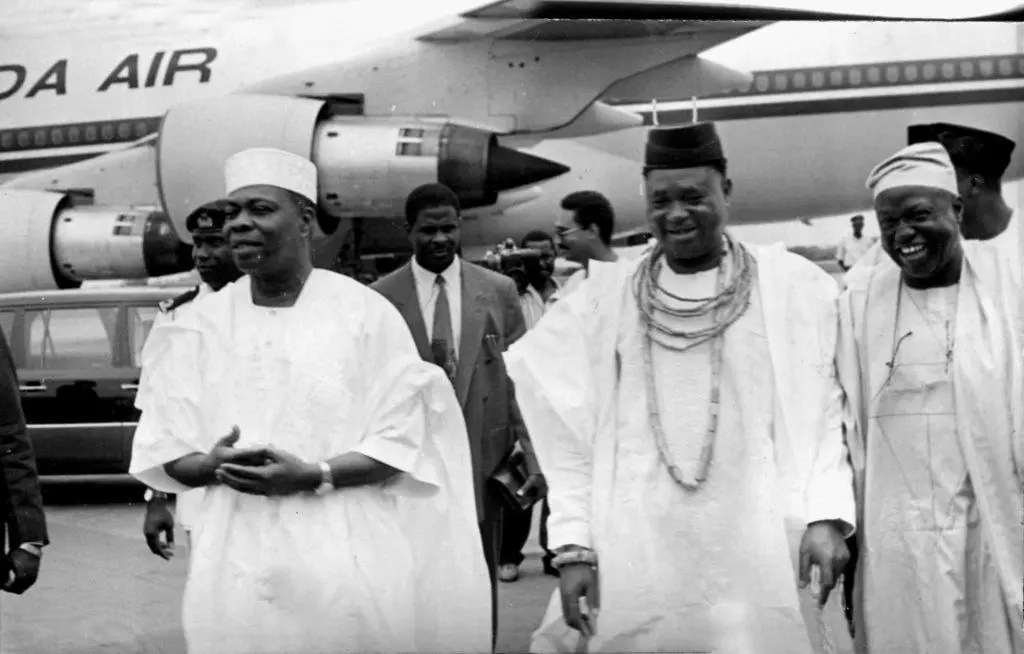
A businessman from a farming town in Edo State had built an aviation company large enough to command national attention.
No one could have guessed that the airline's most enduring legacy would eventually have very little to do with flying.
How an Airline Became the Name of a Motorcycle Taxi
While Okada Air was expanding its fleet, Nigeria was going through one of the most difficult periods in its economic history.
In 1986, the military government of General Ibrahim Babangida introduced the Structural Adjustment Programme (SAP). The reforms reshaped the economy, devalued the naira, removed subsidies and increased the cost of living. Jobs became harder to find, and public transport struggled to keep up with rapidly growing cities.

Lagos was already developing a reputation for traffic that could keep commuters on the road for hours.
Motorcycle taxis weren't entirely new. They had appeared in parts of Nigeria, including Cross River State, as early as the 1970s, where they were commonly known as achaba. By the late 1970s, they had also reached Lagos.
The economic realities of the late 1980s, however, changed everything.
Motorcycles were relatively affordable, consumed less fuel than larger vehicles and could manoeuvre through traffic that left buses and taxis at a standstill. For thousands of unemployed young men, they became a source of income. For commuters, they became the quickest way to reach destinations that could otherwise take hours.
Somewhere during that period, the comparison that would change the word forever began to circulate.
The exact moment the nickname emerged isn't documented, but the explanation most widely accepted by historians and linguists is straightforward. Okada Air had become one of Nigeria's best-known airlines, recognised for getting passengers to their destinations quickly.
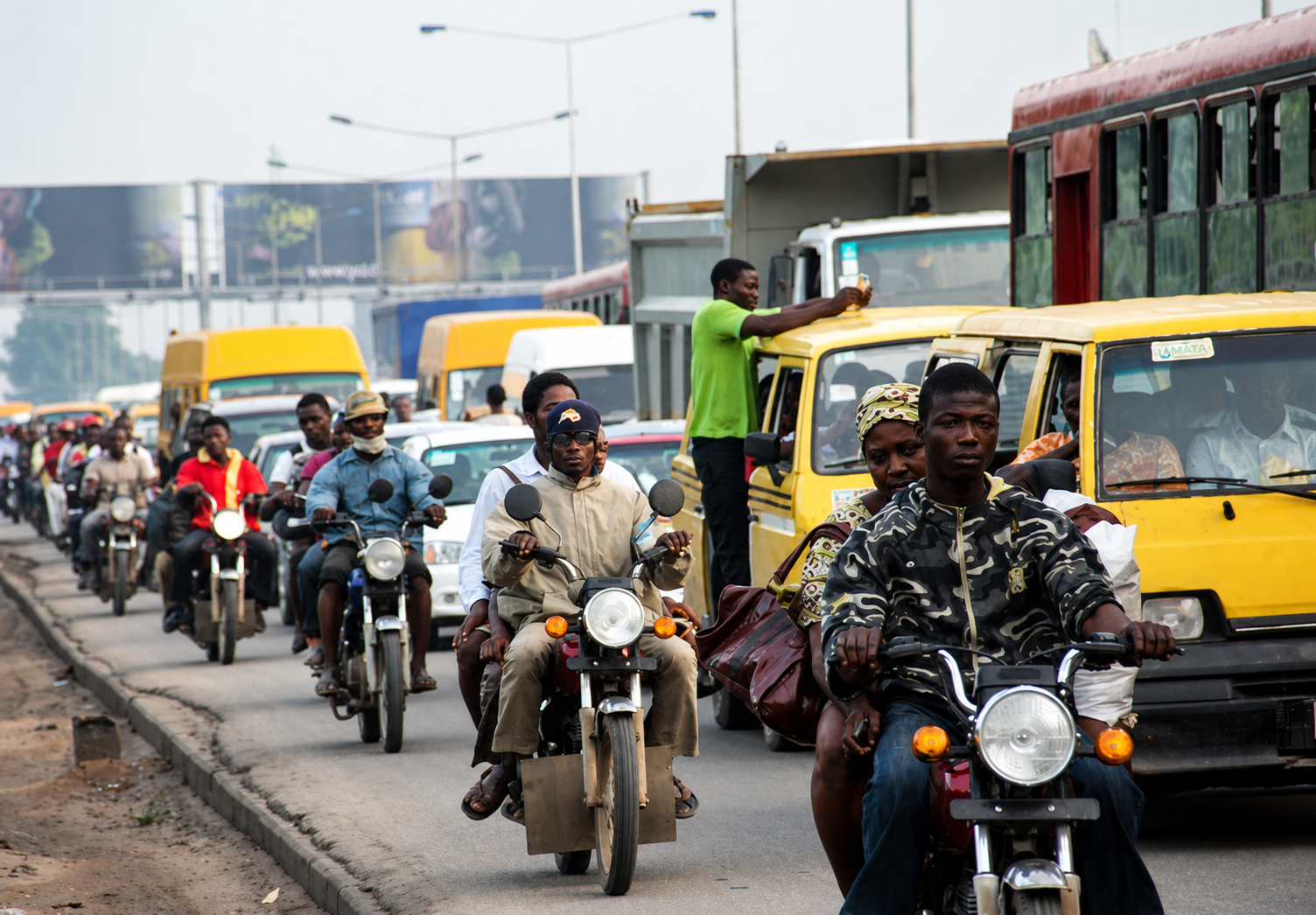
Motorcycle riders, weaving through impossible gaps in traffic and getting passengers across the city at remarkable speed, reminded people of the airline.
The comparison was humorous, easy to understand and impossible to forget.
People began referring to motorcycles as "Okada."
The nickname spread rapidly through Lagos before finding its way into other cities across the country. Over time, it stopped sounding like a comparison altogether. It simply became the name.
Social Insight
Navigate the Rhythms of African Communities
Bold Conversations. Real Impact. True Narratives.
By the time Okada Air ceased operations in 1997 following financial difficulties, the word had already taken on a life of its own.
The airline disappeared, but the name stayed.
When a Brand Becomes Part of a Nation's Vocabulary
Words often outlive the events that created them.
Today, millions of Nigerians use the word okada without ever connecting it to aviation or to Gabriel Igbinedion. For younger generations especially, it has always meant one thing: a commercial motorcycle.
Its journey didn't stop at Nigeria's borders.
In Ghana, okada is also widely used to describe commercial motorcycle taxis, a reflection of how Nigerian expressions often travel across West Africa. Other countries have their own names for similar services.
In Benin Republic, they're known as zémidjans, while Togo uses oléyia. Yet it was the Nigerian term that gained the widest international recognition.
In January 2020, the Oxford English Dictionary officially added "okada" to its collection of Nigerian English words alongside 28 other local expressions. The inclusion acknowledged what everyday speech had already settled decades earlier: the word had become part of the English language as spoken in Nigeria.
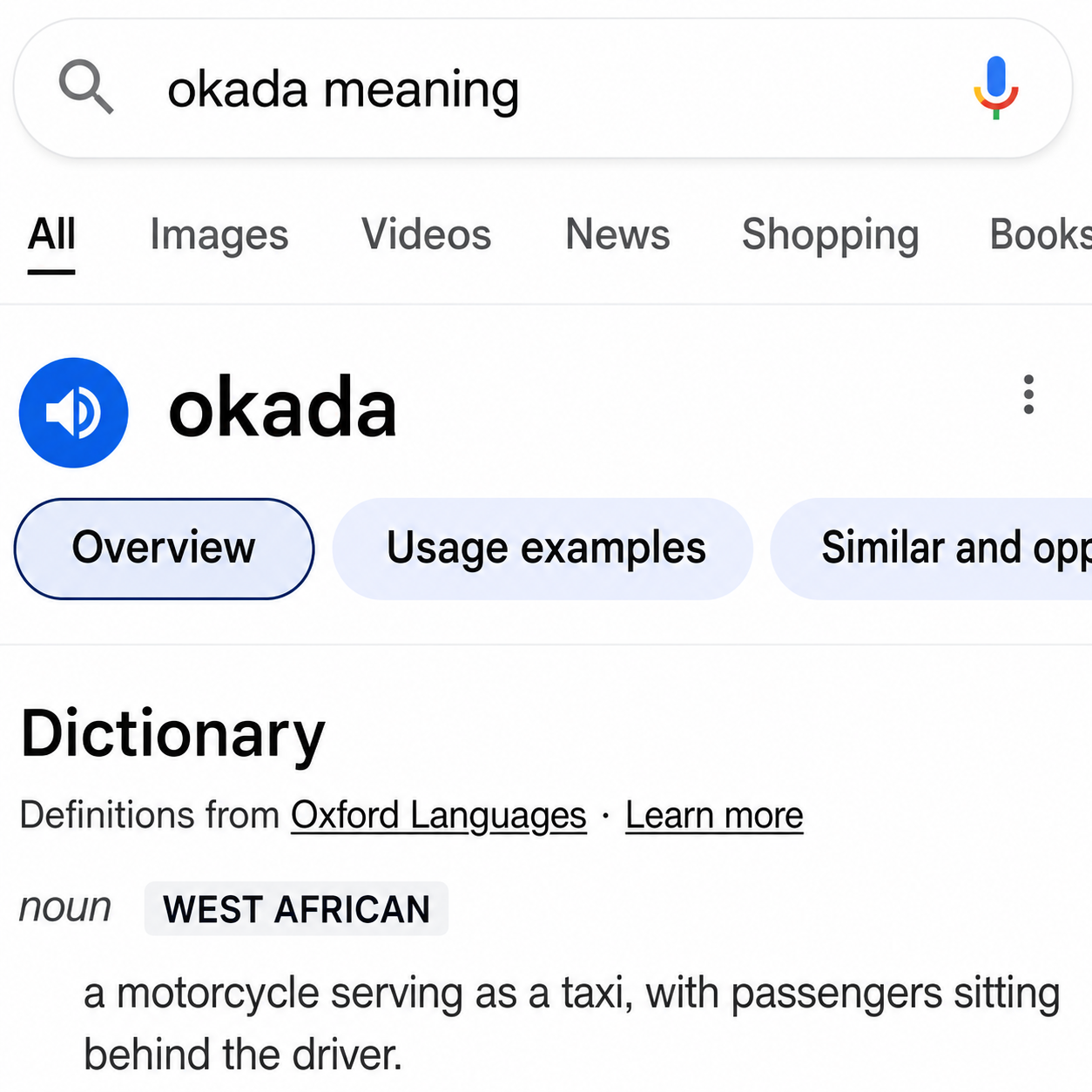
The motorcycles themselves remain an essential part of daily life across much of the country. Despite restrictions and outright bans in some states over safety and security concerns, they continue to fill transport gaps that buses and taxis often cannot, particularly in rural communities and densely populated urban areas.
That ongoing debate carries an interesting irony.
The word that began as the name of an airline associated with speed is now attached to a mode of transport that continues to generate conversations about speed, safety and regulation.
Okada Air, meanwhile, exists only in records, photographs and the memories of those who watched it grow. Its aircraft no longer fly, but its name never left.
Every day, in cities, towns and villages across Nigeria, someone waves down a motorcycle and calls it an okada. Most people never stop to think about the word they're using or where it came from. They don't have to.
That's how language works.
A businessman named an airline after the town where he was born. Economic hardship, Lagos traffic and everyday street humour transformed that brand into the name of an entirely different form of transport.
Social Insight
Navigate the Rhythms of African Communities
Bold Conversations. Real Impact. True Narratives.
Over the years, the nickname travelled farther than the airline ever could, crossing borders, entering dictionaries and becoming part of everyday speech.
Most companies hope their names will be remembered. Very few become part of a nation's vocabulary.
Okada Air may have stopped flying in 1997, but every time someone in Nigeria says, "I'll take an okada," a small piece of that history quietly lives on.