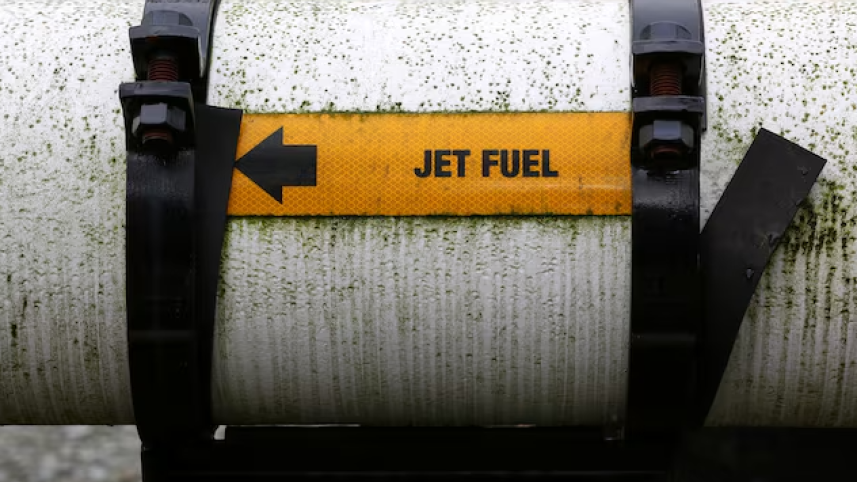
Dangote Refinery Ramps Up Output, Dominating Nigeria's Fuel Supply
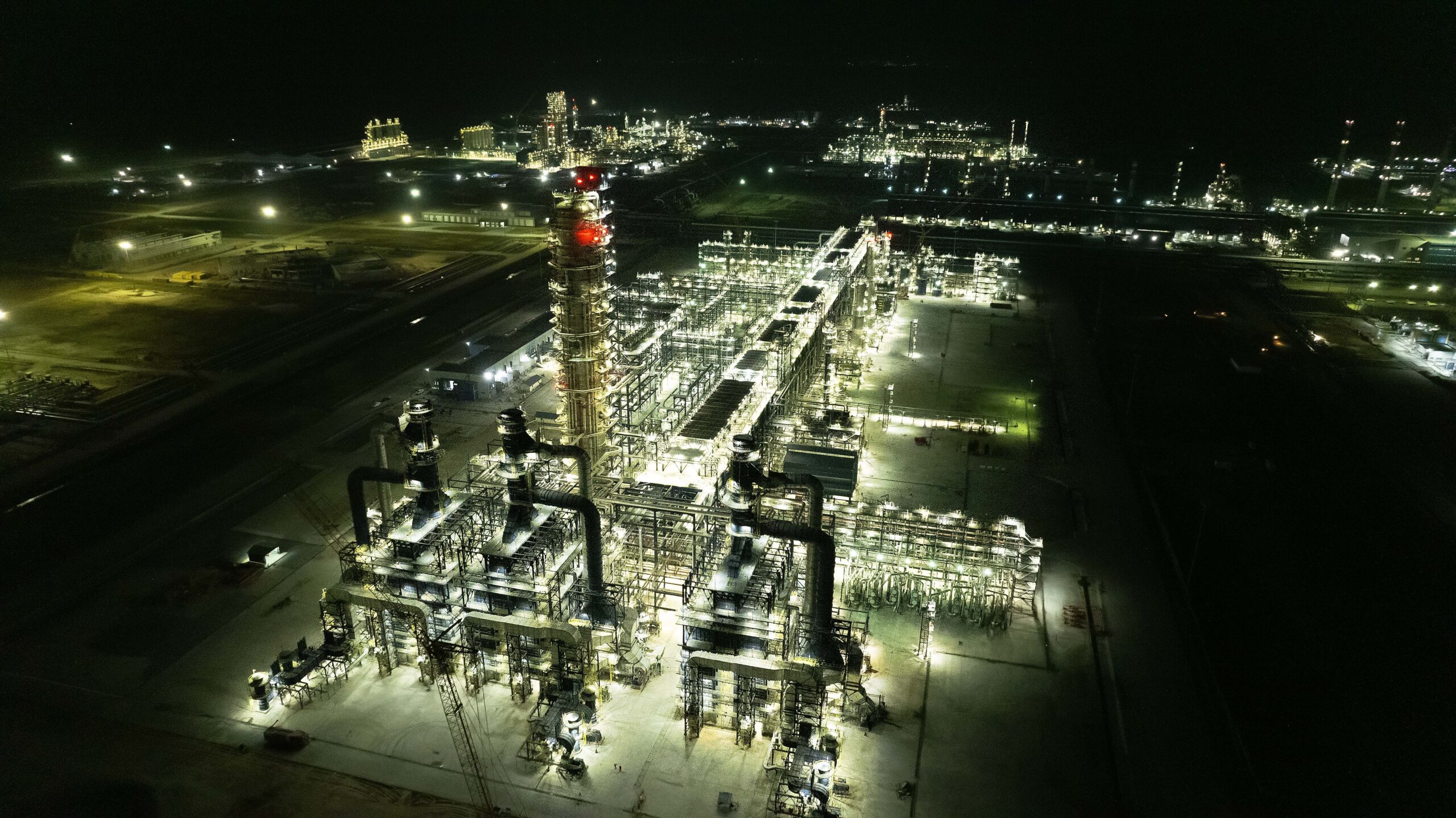
Nigeria's downstream petroleum sector experienced a significant transformation in April 2026, primarily driven by the escalating output from the Dangote Petroleum Refinery. A report from the Nigerian Midstream and Downstream Petroleum Regulatory Authority (NMDPRA) highlighted a substantial increase in local fuel supply, coupled with a sharp decline in imports and a pivotal shift towards sourcing crude oil domestically.
The Dangote Petroleum Refinery, with its 650,000 barrels-per-day capacity, demonstrated remarkable performance, increasing its petrol supply to the domestic market by 19 percent in April, reaching an average of 40.7 million litres per day. This was a notable rise from 34.2 million litres per day recorded in March. During this period, the refinery achieved an impressive 99.12 percent capacity utilisation, even reaching 100 percent utilisation on most days in April. The facility produced an average of 53.6 million litres of Premium Motor Spirit (PMS) daily, alongside 23.6 million litres of Automotive Gas Oil (AGO), commonly known as diesel, and 22.9 million litres of Dual-Purpose Kerosene/Aviation Turbine Kerosene (DPK/ATK).
This surge in local production had a direct impact on Nigeria's fuel import dependency. Combined petrol supply from the Dangote refinery and imports rose by 10.7 percent to 44.4 million litres daily in April. However, petrol imports alone dropped by a substantial 37.3 percent, falling to 3.7 million litres per day from 5.9 million litres per day in the preceding month. This indicates a clear trend of locally refined petrol displacing imported fuel in the Nigerian market. The Dangote refinery alone accounted for a dominant 79.64 percent of Nigeria's total petrol consumption, which stood at an average of 51.1 million litres per day in April 2026.
Furthermore, the country witnessed a major shift in its crude oil supply strategy for local refining. Crude oil supplied from Nigerian upstream companies to domestic refineries, including Dangote, rose significantly by 56 percent to 17.99 million barrels in April, up from 11.48 million barrels in March. Between January and April 2026, this local crude supply to domestic refineries surged by over 103 percent, moving from 8.83 million barrels to 17.96 million barrels. In stark contrast, imported crude oil and feedstock supplied to refineries plummeted by approximately 95.6 percent, decreasing from 9.43 million barrels in March to just 0.41 million barrels in April. This underscored improved collaboration among upstream producers, regulators, and refiners, addressing previous concerns over inadequate crude supply for local processing.
Despite the increase in local refining, consumers faced multiple petrol price adjustments by the refinery between March and April, influenced by fluctuations in global crude oil prices. For instance, the gantry price increased to about N1,275 per litre from N1,200 per litre in early April, with reports indicating at least five price adjustments within weeks. The NMDPRA report showed average retail pump prices for petrol at N1,271.50 per litre in Lagos, N1,326 in Abuja, N1,340 in Kano, and N1,371.50 in Maiduguri. Maximum retail prices even reached N1,400 per litre in Sokoto and N1,413 per litre in Maiduguri. Despite these price hikes and elevated global crude prices (Dated Brent crude averaged $120.55 per barrel), petrol demand remained resilient, with average daily truck-out slightly exceeding the agency's benchmark of 50 million litres per day.
While the private sector refinery thrived, government-owned refineries, including the Port Harcourt Refining Company (PHRC), Warri Refining and Petrochemical Company (WRPC), and Kaduna Refining and Petrochemical Company (KRPC), remained entirely inactive throughout April. Data revealed PHRC evacuated zero Automotive Gas Oil during the month, a stark contrast to previous periods.
In the modular refinery segment, Edo Refinery recorded the highest average capacity utilisation at 79.2 percent, producing 0.086 million litres of diesel daily. WalterSmith Refinery followed with 56.14 percent utilisation and an output of 0.250 million litres of diesel per day, while Aradel Refinery operated at 33.95 percent utilisation, producing 0.181 million litres of diesel daily. Collectively, these active modular refineries supplied an average of 0.559 million litres of fuel, primarily diesel, daily. However, OPAC and Duport refineries remained inactive.
Nigeria's fuel reserve position remained stable, with national PMS sufficiency at 18 days, diesel at 39 days, and aviation fuel at 70 days in April. The gas sector also showed significant activity: average cooking gas (LPG) supply was 4,545 metric tonnes per day, with consumption estimated at 4,818 metric tonnes per day. Total average gas supply stood at 5.142 billion standard cubic feet per day (Bscf/d), with 2.012 Bscf/d allocated to the domestic market. Supply to the power sector was 0.549 Bscf/d, and industries received 0.468 Bscf/d. Retail LPG prices ranged between N1,100 and N1,450 per kilogramme.
The performance of the Dangote Refinery in April 2026 marks a crucial step towards Nigeria's energy independence, significantly bolstering local production and reducing reliance on foreign imports across key petroleum products, despite the continued inactivity of state-owned facilities and fluctuating global oil prices.
You may also like...
The New Human Advantage: The 5 Skills AI Can’t Replace

As artificial intelligence becomes capable of writing, analyzing, and producing work at scale, the question shifts from ...
A Smartphone Tax in One of Africa's Most Connected Countries, What Could Go Wrong?

Kenya's Finance Bill 2026 proposes a 25% excise duty on smartphones, applied at the point of activation. With 48.7 milli...
Why Your Brain Might Prefer EPUBs to Paperbacks Now

Your brain didn't abandon books, it was trained away from them. Here is the science behind why physical reading feels ha...
Tunisia Just Eliminated a Disease Most People Have Never Heard Of

Tunisia just became the 31st country globally to eliminate trachoma, a bacterial eye infection that has blinded nearly t...
Rising Star Carrick Eyes Premier League Manager of the Season Honors!

Manchester United's Michael Carrick is among six nominees for Premier League Manager of the Season, celebrated for guidi...
Premier League Giants Battle for Player of the Season Crown!

Ghana international Antoine Semenyo has been nominated for the Premier League Player of the Season 2025/26 award after a...
Bond 26 Shakes Things Up: Iconic Franchise Reboot Taps 'Game of Thrones' Alum

The hunt for the next James Bond is officially underway, with renowned casting director Nina Gold leading the search. De...
Batman Returns! Matt Reeves' Sequel Lands Two Blockbuster Stars

Production for Matt Reeves' highly anticipated sequel, The Batman: Part II, has officially begun, targeting an October 1...