Dangote Refinery Becomes Africa's Oil Anchor Amidst Middle East Turmoil, Ghana & SA Lead Demand Surge
The escalating Middle East conflict is driving unprecedented demand for refined petroleum products in Africa, placing Nigeria's Dangote Refinery at the center of the global energy shift. Meanwhile, Donald Trump signaled a potential winding down of US military operations against Iran, urging allies to secure the Strait of Hormuz while criticizing NATO for its lack of support, even as the UK authorizes the use of its bases for strikes.
The escalating geopolitical conflict involving Iran, Israel, and the United States has triggered an unprecedented surge in demand for refined petroleum products across Africa, positioning the Dangote Refinery at the forefront of a rapidly evolving global energy landscape.
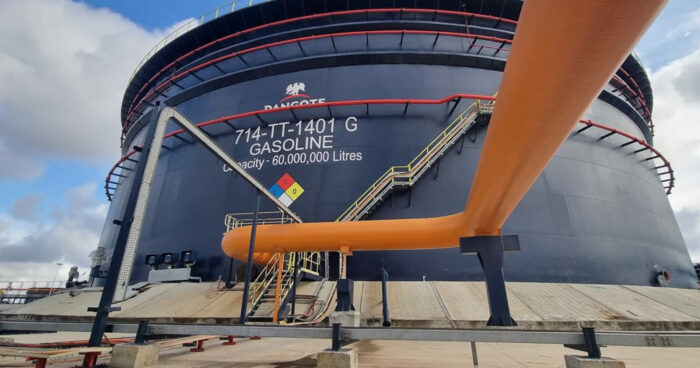
Amidst these tensions, the Dangote Petroleum Refinery has adjusted its ex-depot (gantry) price from N1,175 to N1,245 per litre, with the coastal price increasing from N1,512,648 to N1,606,518 per metric tonne, and this pricing adjustment, effective March 21, 2026, is attributed to the rising global geopolitical tensions and increasing crude oil costs, according to the company.
Aliko Dangote, President of the Dangote Group, described the global situation as "a crazy situation right now," with crude oil prices soaring to nearly $120 per barrel following developments in the Gulf.
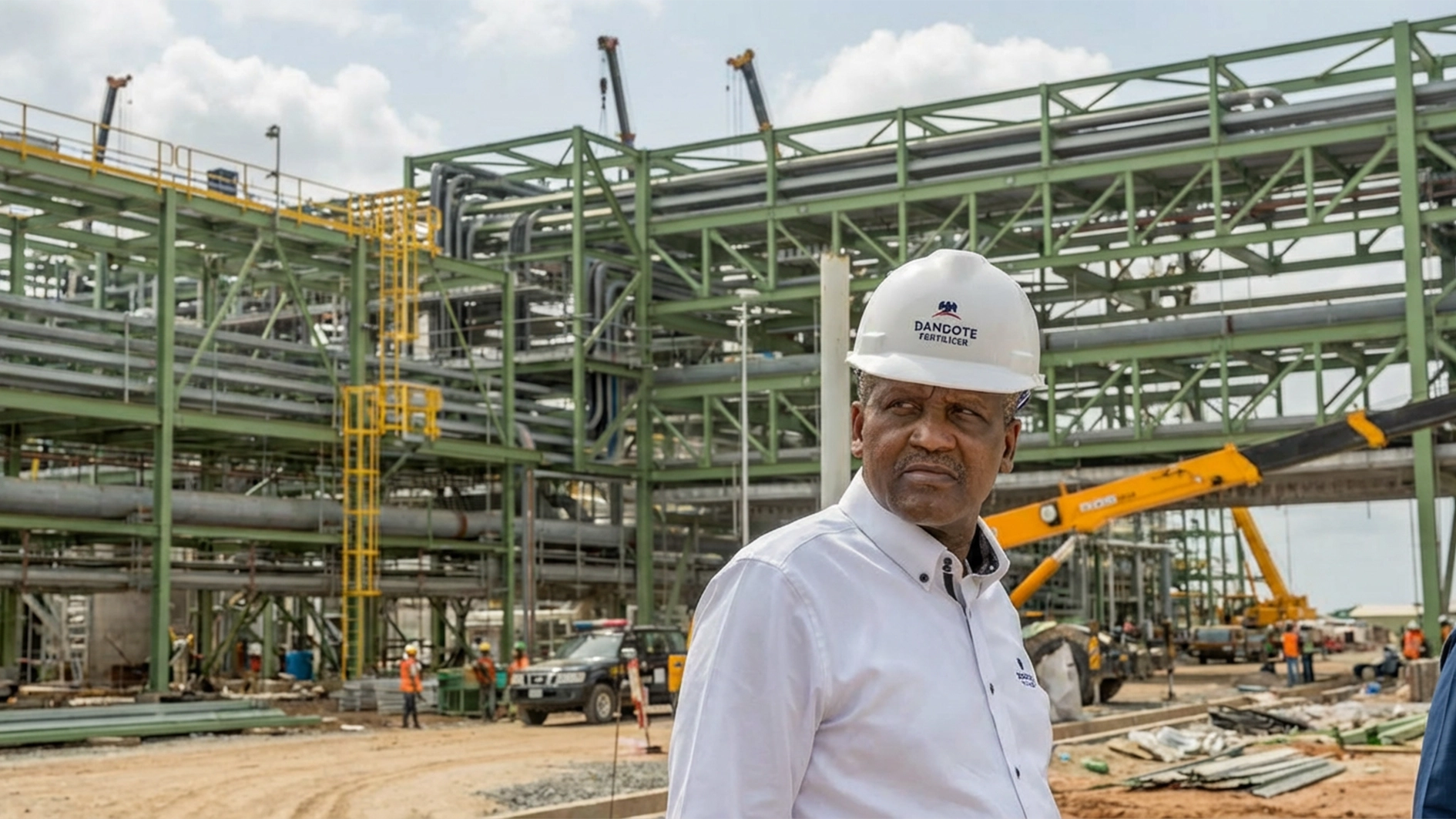
He anticipates this volatility will persist, signaling prolonged instability in global energy markets.
The refinery, located near Lagos, stands as Africa's largest, boasting a processing capacity of 650,000 barrels per day.
With tightening supply chains due to geopolitical disruptions, demand from across the continent has surged dramatically, leading Dangote to observe that "People are ready to pay anything now," highlighting the intense competition for fuel supplies.
Beyond immediate market pressures, Dangote views the refinery as a strategic asset crucial for Africa's long-term economic independence.
He emphasized the necessity of homegrown investment in critical infrastructure, stating, "If we Africans don't lead in the industrialisation of Africa, Africa will never industrialise."
The facility is already demonstrating significant macroeconomic impact, with Dangote noting, "Nigeria would have been at a standstill now without the refinery," underscoring its role in reducing the nation's reliance on imported petroleum products and alleviating pressure on foreign exchange reserves.
Built on a massive industrial complex featuring extensive storage capacity and dedicated port infrastructure, the refinery represents one of the most ambitious private-sector investments on the continent.
Its scale is remarkable, as Dangote highlighted, "Actually we are building a runway there. Nobody believes something like this exists in Africa. We can fly in people to come and have a look."
The refinery's importance has been further amplified by disruptions to global trade routes, particularly the Strait of Hormuz, a vital channel for energy and fertilizer shipments, elevating Dangote's position as a critical supplier of fuel, petrochemicals, and fertilizer inputs across Africa.
Looking ahead, Dangote has signaled broader ambitions, including plans to expand refining capacity and list part of the business on the capital market, potentially on the Nigerian Exchange Limited and the London Stock Exchange.
He stressed the urgency of African-led investment, cautioning, "We know that if we don't invest, there's nobody that will come and invest in our continent."
Despite criticisms regarding reliance on foreign technical expertise, Dangote defended his operations, affirming, "We are very, very innovative," pointing to advanced automation in both refining and cement production.
The Dangote Group also plans to use the complex's gas production to power nearby manufacturers and has ambitious expansion plans in other African countries, including a $2.5 billion joint venture in Ethiopia for a fertilizer plant, and investments in cement and power projects in Zimbabwe, potash and phosphate mining, copper processing in Zambia, cocoa processing in Ghana and Ivory Coast, and a petroleum pipeline from Namibia to central Africa.
African countries that have historically depended on large refineries in the Persian Gulf are increasingly turning to Dangote Refinery asan alternative source.
Ghana, South Africa, and Kenya, among others, are actively seeking to purchase petroleum products from the refinery due to supply disruptions triggered by the Middle East conflict.
While Nigeria is expected to consume approximately three-quarters of the refinery's output, the remaining volume is crucial for export to other African markets.

This shift signifies an end to Nigeria's long-standing practice of exporting crude oil for refining and then re-importing it at significantly higher costs.
The tightening supply situation has prompted contingency measures in some nations, with Ethiopia urging fuel conservation and prioritizing public transport, and South African coal miner Exxaro taking steps to ensure operational power.
Despite recent increases in petrol prices driven by geopolitical tensions, Nigeria has maintained one of the lowest petrol prices globally, with industry data pointing to the stabilizing role of the Dangote Petroleum Refinery in cushioning the domestic market.
According to GlobalPetrolPrices.com, Nigerian petrol averages $0.88 (N1,191.39) per litre, significantly below the global average of $1.32 (N1,787.08) per litre.
This favorable pricing contrasts sharply with higher prices in the United States ($1.075), India ($1.095), South Africa ($1.189), and much higher rates in advanced economies like the UK ($1.874), France ($2.152), and Germany ($2.343), and exceptionally high prices in Hong Kong ($3.967).
Nigeria also compares favorably within West Africa, where prices are higher in Togo ($1.192), Benin ($1.218), Ghana ($1.240), and Cameroon ($1.478) per litre.
A key insight is that few countries globally sell petrol below $1 per litre without state intervention such as subsidies or price controls.
Nigeria, despite operating a fully deregulated downstream market since subsidy removal in 2023, has seen its domestic petrol prices rise by a comparatively lower 35-40 percent since the crisis began, unlike other markets that experienced hikes over 49% or even 67%, underscoring the refinery's buffering effect on the economy.
In related developments, US President Donald Trump announced that the United States was "very close" to achieving its objectives in the conflict against Iran and signaled a potential winding down of military operations in the Middle East.
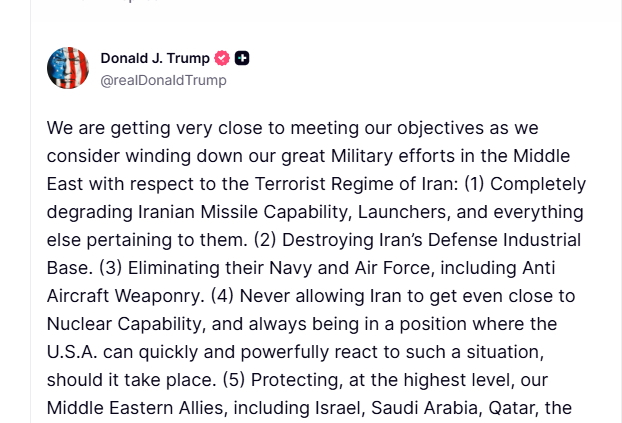
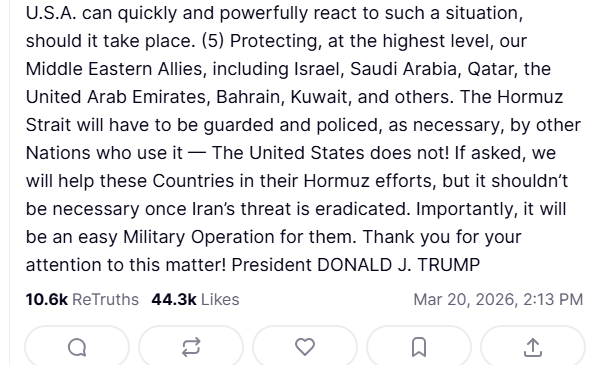
He urged other nations to take responsibility for securing the Strait of Hormuz, outlining what he described as major military gains against Iran, including dismantling its missile capabilities, destroying its defense industrial base, and eliminating its Navy and Air Force, while ensuring Iran never develops nuclear weapons.
Trump also asserted the protection of US Middle Eastern allies, calling on countries reliant on the Strait of Hormuz to assume its security, stating, "The Hormuz Strait will have to be guarded and policed, as necessary, by other Nations who use it — The United States does not!"
He suggested that while the US could assist, it shouldn't be necessary once Iran's threat is eradicated.
Simultaneously, Trump assailed NATO allies for their perceived lack of support in the conflict against Iran, labeling members of the group "cowards."
He argued that without the USA, NATO is "A Paper Tiger!" and criticized NATO countries for complaining about high oil prices while being unwilling to help open the Strait of Hormuz.
In response to the regional tensions, the British government authorized the United States to use military bases in Britain to carry out strikes on Iranian missile sites that are attacking ships in the Strait of Hormuz.
This authorization falls under the agreement for the US to use UK bases for collective self-defense in the region, including defensive operations to degrade missile sites and capabilities used to attack ships in the vital waterway.