China's Economic Grip Tightens: Dangote Warns of Dominance in Africa
Aliko Dangote, Africa's richest man, asserts that China dominates business across the continent due to its willingness to provide long-term financing and credit support for large industrial projects, a critical factor often lacking from Western nations. He notes a renewed interest from the U.S. in African infrastructure financing, highlighting the growing competition for influence. Dangote also shared his group's ambitious $45 billion expansion plans.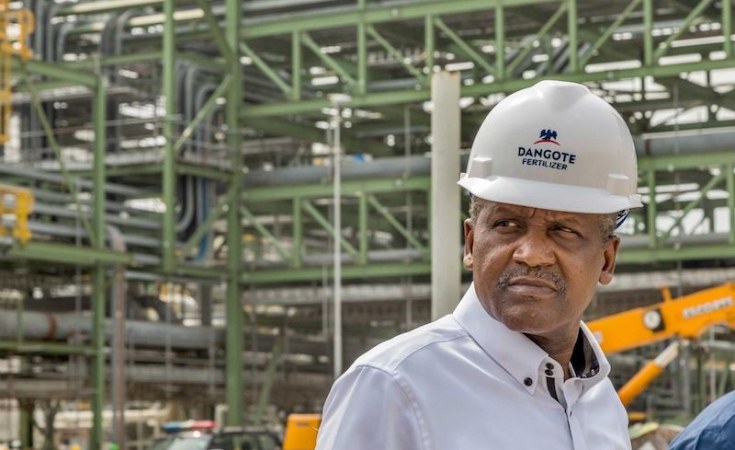
Aliko Dangote, Africa's wealthiest individual, has provided a candid assessment of the continent's business relationships with global powers, asserting that China has emerged as Africa's primary business partner. This dominance, he explains, stems from Western countries' consistent failure to offer the necessary financing support for large-scale industrial and infrastructure projects, compelling African businesses and governments to increasingly rely on Chinese firms.
During an interview with Nicolai Tangen, CEO of the Norwegian Sovereign Wealth Fund, Mr. Dangote explicitly stated that China's willingness to provide long-term financing and credit support for major ventures is a decisive factor. He attributed China's pervasive influence across Africa to the 'absence of the others' – referring to the United States and Europe. Chinese companies, he noted, benefit from robust state-supported financing structures, which significantly ease the execution of large projects for African investors and governments.
A key reason behind China's lead, as articulated by Mr. Dangote, is that Chinese suppliers frequently provide equipment on credit, backed by export insurance institutions. This arrangement allows African businesses to amortize payments over several years, rather than demanding substantial upfront capital. He illustrated this using his cement business as an example, where Chinese firms supply equipment and extend credit facilities supported by China's export credit insurance agency, enabling project financing over four or five years. This structured financing provides Chinese companies a substantial competitive edge over their European counterparts. He posed a hypothetical scenario: if an Italian firm demands a $500 million upfront payment for a power plant, while a Chinese firm requests only 20 percent down and finances the remainder over five years, the choice is unequivocally the Chinese option. Such financing mechanisms are crucial for businesses, allowing them to preserve cash flow, expand more rapidly, and avoid tying up significant capital in single projects.
Mr. Dangote also revealed his group's ambitious expansion plans, targeting approximately $45 billion in spending between 2026 and 2030. He emphasized that achieving such large-scale industrial growth necessitates strategic leverage rather than an over-reliance on direct cash payments to facilitate expansion.
Despite highlighting China's pivotal role, Mr. Dangote acknowledged a burgeoning interest from the United States in Africa's infrastructure financing landscape. He cited recent positive engagements with the U.S. International Development Finance Corporation (DFC), observing that the agency has become more proactive and 'hungry' for infrastructure and industrial projects, expressing a readiness to lend. This shift, he believes, could pave the way for stronger U.S.-Africa business partnerships.
Furthermore, Mr. Dangote conveyed a stern message to a visiting Japanese delegation, warning that Japan risked missing out on major investment opportunities in Africa unless it adapted its approach. He stressed that foreign partners seeking to invest in Africa must arrive with tangible financing capacity, rather than just proposals. His remarks underscore the intensifying competition among global powers for influence in Africa's industrial and infrastructure sectors, where the terms of financing often outweigh technological considerations alone.