Beyond the Pitch: DR Congo's Historic World Cup Goal Ignites Hope Amidst Ebola Crisis
The Democratic Republic of Congo celebrated a historic milestone as its national football team secured its first-ever FIFA World Cup point and goal. This rare moment of joy brought temporary relief and unity to residents of Bunia, the epicenter of the country's 17th Ebola outbreak, despite ongoing public health challenges and violence.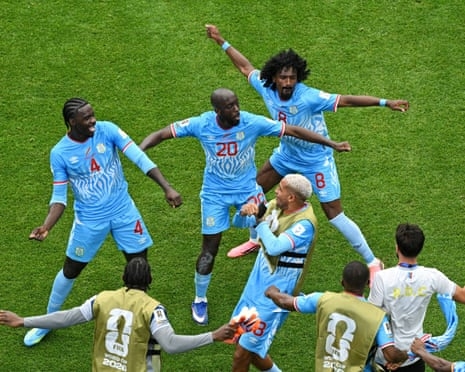
The Democratic Republic of Congo experienced a profound moment of national joy and unity, a rare occurrence amidst the severe public health crisis of its 17th Ebola outbreak. This elation stemmed from the nation's football team securing its historic first FIFA World Cup point, a landmark achievement that also delivered DR Congo's inaugural goal on football's biggest stage.
The pivotal moment unfolded in Houston, where Yoane Wissa netted the equalizer against Portugal, creating an instant sensation across the country. Head coach Sébastien Desabre expressed immense pride in his players, acknowledging that this significant milestone was a testament to the entire nation's spirit and determination.
The celebrations held particular resonance in Bunia, the capital of Ituri Province, which stands as the epicenter of the ongoing Ebola epidemic. This region, alongside parts of Uganda, has grappled with the devastating impact of the outbreak, with the World Health Organisation reporting over 1,100 Ebola cases and 279 deaths across both countries, a significant portion of which are attributed to Bunia.
Despite the critical public health crisis and existing restrictions on large public gatherings, the allure of the historic match proved irresistible. Football supporters enthusiastically congregated at local bars and viewing centers, eagerly anticipating the game. The moment Wissa, a player from the English Premier League, found the back of the net, Bunia erupted into a spontaneous display of jubilant festivities. Fans danced exuberantly in the streets, celebrated joyously on motorbikes, and packed into bars, largely setting aside concerns about social distancing in the fervor of the moment.
Amidst the widespread euphoria, supporters like Antoinette Makasi voiced their honor in backing their country, though she admitted to lingering worries about the risk of infection and planned to disinfect herself upon returning home. Another fan, Héritier Kimbimbi, articulated the profound need for such moments, stating, “We need moments which bring us a little happiness and allow us to forget, even briefly, the loss of our brothers and sisters,” underscoring the deep emotional impact of the football success.
This historic accomplishment also served as a powerful antidote to past disappointments, particularly erasing the painful memories of Zaire's (DR Congo's former name) ill-fated 1974 World Cup campaign, where the team exited the tournament without a single point after conceding a staggering 14 goals. The current team's performance offered a welcome contrast, uniting the nation in pride.
However, the article underscores that beyond this fleeting triumph on the football field, Bunia and the broader Ituri Province continue to face formidable challenges. The relentless grip of the Ebola epidemic persists, compounded by ongoing violence perpetrated by various armed groups operating throughout the region, reminding residents of the harsh realities that underpin their daily lives.
Initial frustrations, such as the failure of a giant public viewing screen before kick-off, temporarily forced hundreds of fans to seek alternative venues. Yet, this inconvenience quickly faded into insignificance as DR Congo delivered a result that not only unified the country but also instilled a much-needed sense of hope during one of its most trying periods.