Alarm Bells Ring: MiCA 2026 Threatens Crypto's Future in Europe!
The European Union's landmark Markets in Crypto-Assets Regulation (MiCA) is now fully enforceable across all 27 member states as of July 1, 2026, marking a new era of comprehensive oversight for the digital asset industry. This unified framework aims to enhance consumer protection, promote legal certainty, and reshape the European crypto landscape through a single licensing regime. Its implementation has led to significant industry consolidation, with major exchanges securing licenses while many others exit the market.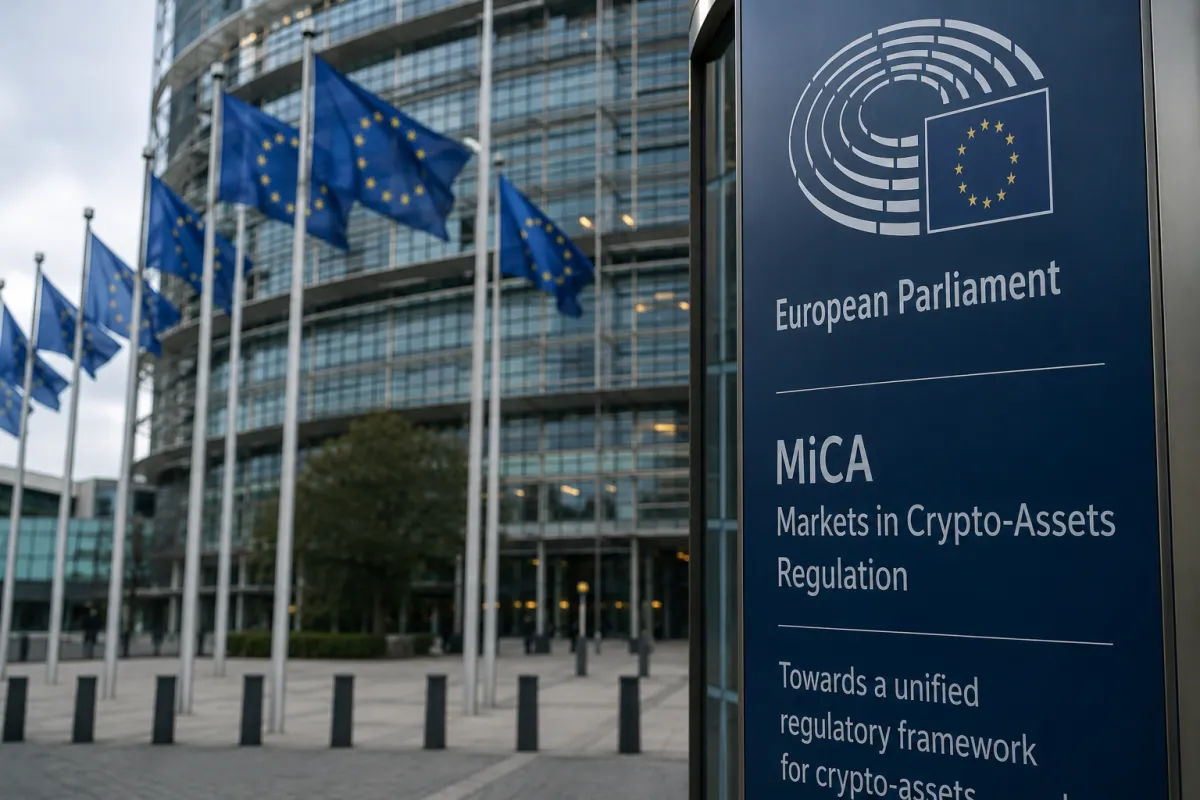
The European Union's landmark Markets in Crypto-Assets Regulation (MiCA) has officially concluded its transition period and is now fully enforceable across all 27 member states as of July 1, 2026. This pivotal moment marks the end of a lengthy implementation process and heralds a new era of extensive regulatory oversight for the digital asset industry. Recognized globally as the first comprehensive crypto regulatory framework, MiCA establishes a unified set of rules for crypto-assets, stablecoins, and crypto service providers throughout the EU, replacing previously fragmented national frameworks with a harmonized licensing regime.
Formally known as Regulation (EU) 2023/1114, MiCA was meticulously designed to foster consistent standards across the European bloc, bolster consumer protection, and provide greater legal certainty for businesses operating within the crypto sector. Instead of navigating disparate national regulations, companies can now secure a single authorization from one national regulator, leveraging MiCA's 'passporting mechanism' to offer their services across the entire European Union. The framework’s scope is broad, regulating both crypto-asset issuers and Crypto-Asset Service Providers (CASPs), including entities such as exchanges, brokers, custodians, trading platforms, and portfolio managers, as well as firms facilitating crypto transfer services. Furthermore, MiCA introduces stringent rules governing market conduct, encompassing measures designed to prevent market abuse, enhance transparency, safeguard customer assets, and reinforce operational resilience.
MiCA's implementation has been a phased process since its entry into force in June 2023. Rules specifically addressing stablecoins became applicable in June 2024, followed by provisions for crypto service providers in December 2024. The final critical milestone was reached on July 1, 2026, when the maximum transitional period expired. This means that firms previously operating under varied national crypto registration regimes can no longer legally serve EU customers without obtaining the requisite MiCA authorization.
The conclusion of this transition period has profoundly reshaped Europe's crypto landscape. Financial Times reports indicate that by late June 2026, only 244 crypto firms had successfully secured MiCA authorization. In stark contrast, over 1,700 businesses operating under older national registrations were anticipated to cease services for EU customers post-deadline. This dramatic shift is expected to trigger significant industry consolidation, empowering fully licensed firms with a stronger competitive stance as non-compliant operators exit the market.
A defining characteristic of MiCA is its detailed approach to stablecoins, differentiating between asset-referenced tokens and e-money tokens. Issuers of these digital assets are now mandated to maintain adequate reserves, provide clear redemption rights to holders, adhere to robust governance standards, and comply with strict disclosure obligations. The oversight of the largest stablecoin issuers has been assigned to the European Banking Authority (EBA), reflecting regulatory concerns about their potential systemic importance within the financial system.
While MiCA's reach is extensive, it specifically does not directly regulate decentralized cryptocurrencies like Bitcoin or Ethereum as blockchain networks. Similarly, fully decentralized finance (DeFi) protocols are largely excluded, although European policymakers continue to deliberate on whether future regulations might be necessary for decentralized applications. Genuinely unique Non-Fungible Tokens (NFTs) also typically fall outside MiCA's scope, though certain large-scale NFT collections might be subject to the regulation depending on their structural characteristics.
Several of the world's leading crypto exchanges have proactively navigated the licensing process, enabling them to continue providing services across the EU under a single authorization. Major platforms such as Coinbase, Kraken, OKX, and Bitpanda have successfully obtained MiCA licenses through national regulators, granting them passporting rights to the entire European market. However, other firms face ongoing delays or are still in the process of securing regulatory approval. Notably, Binance, after 18 months of pursuing a license through Greece's Hellenic Capital Market Commission (HCMC), withdrew its MiCA license application on June 24, 2026, thus missing the July 1 deadline. Without a valid MiCA license, Binance is unauthorized to operate as a crypto-asset service provider across the EU after this date.
The European Securities and Markets Authority (ESMA) has also expanded its supervisory remit as MiCA transitions from implementation to active enforcement. Throughout 2025 and 2026, ESMA has been instrumental in publishing technical guidance aimed at harmonizing licensing standards across member states and preventing regulatory arbitrage. ESMA's responsibilities further include maintaining a public register of authorized crypto service providers and coordinating supervisory efforts among national authorities.
For crypto businesses, MiCA presents both significant opportunities and new compliance burdens. The ability to operate seamlessly across the European Union with a single license offers substantial advantages for companies aiming for international expansion. Moreover, the establishment of clear regulatory standards is anticipated to encourage greater institutional participation in digital assets. Conversely, firms are now required to adhere to more stringent governance requirements, capital obligations, consumer protection rules, and ongoing regulatory supervision, inevitably increasing the cost of doing business within the EU. Some major players like Ripple have successfully secured preliminary regulatory approval, with Ripple obtaining a Crypto Asset Service Provider (CASP) license from Luxembourg’s CSSF. Out of the more than 1,200 crypto businesses that previously operated under national registration regimes, only approximately 230 licenses have been issued under MiCA. Germany leads with 56 approved licenses, followed by the Netherlands with 26, and France with 21.
For consumers, MiCA is designed to deliver stronger protections through enhanced disclosures, improved safeguards for customer assets, and more consistent standards across the European market. However, some users might observe a reduction in available crypto products or services if providers opt against pursuing MiCA authorization or if certain digital assets fail to meet the regulation's requirements. While MiCA is now fully operational, the landscape of European crypto regulation is far from settled. Policymakers are expected to continue refining technical standards, and regulators are likely to intensify enforcement against firms serving EU customers without proper authorization. Future policy discussions are also slated to address decentralized finance, tokenized real-world assets, and the evolving role of stablecoins within the broader financial ecosystem. With MiCA now fully in force, the European Union has firmly established itself as one of the world's most comprehensively regulated crypto markets, and its success in balancing innovation with investor protection will likely serve as a crucial benchmark for other jurisdictions globally.