Air Tanzania Expands International Network With Daily Mumbai Flights and New Seychelles Route
Air Tanzania launches daily Mumbai flights and expands to Seychelles as it strengthens international connectivity and targets 47 destinations.
Air Tanzania is significantly enhancing its international reach, particularly by upgrading its Dar es Salaam to Mumbai service to a full daily operation. This strategic move directly addresses a substantial surge in passenger demand, with the route having transported nearly 70,000 travelers in 2025 alone.
This development is crucial for African travel professionals, signaling robust intercontinental connectivity between East Africa and the Indian subcontinent. The daily schedule, a notable increase from the previous four weekly flights, provides greater flexibility for passengers, facilitating smoother onward connections and enabling travel sellers to construct more predictable packaged itineraries.
The Mumbai route holds considerable importance for various travel segments, including business, medical tourism, education and leisure, all of which are experiencing rapid growth as economic ties between Africa and India strengthen.
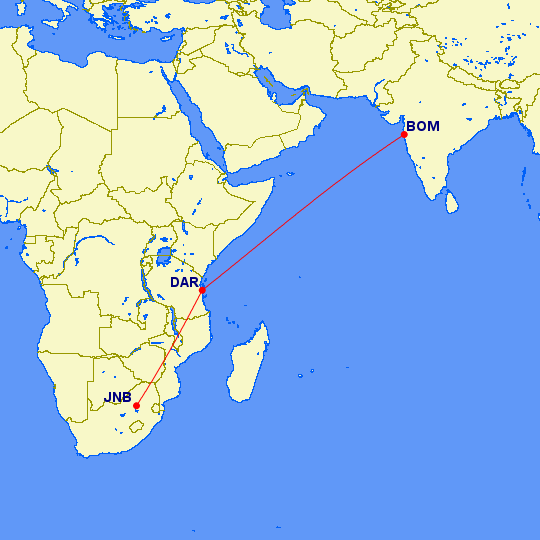
Flights are conveniently scheduled to depart Dar es Salaam at 20:20, arriving in Mumbai the following morning at 04:20. Beyond the Mumbai expansion, Air Tanzania is also broadening its footprint in the lucrative Indian Ocean leisure corridorwith the introduction of new services to the Seychelles.
This aligns with a wider trend of African carriers connecting island destinations with mainland hubs, fostering richer multi-destination packages for both inbound tourists and the emerging African middle class seeking regional getaways.
Air Tanzania's ambitions extend far beyond these recent additions. Its current international network already encompasses nearby African cities, long-haul services to Mumbai and Guangzhou, and the airline is actively pursuing direct services to additional major business centers across the continent.
This expansion strategy is characterized by a measured approach, first establishing strong connectivity with neighboring nations before progressively building links to larger commercial capitals. Such a strategy promises more options for travel businesses across sub-Saharan Africa, potentially allowing them to bypass traditional connecting hubs outside the continent.
The carrier is targeting an ambitious destination portfolio, with plans to grow to 47 destinations and achieve a revenue target of TZS 1.09 trillion, reflecting the scale of its operational aspirations.
Central to this strategy is the reinforcement of Tanzania's primary aviation hubs which includes Julius Nyerere International Airport in Dar es Salaam, Abeid Amani Karume International Airport in Zanzibar and Kilimanjaro International Airport. For travelers, this translates into more direct flight options, enhanced scheduling flexibility, and improved connections through Tanzania's key gateways.
Domestically, Air Tanzania is committed to deepening connectivity through expanded frequencies and the introduction of new routes. This effort is designed not only to facilitate passenger movement but also to actively support trade, tourism, and investment flows into historically underserved regions of Tanzania.
Having served over 1.1 million passengers in 2024, the airline continues to prioritize fleet comfort upgrades and service quality enhancements, firmly establishing itself as a credible regional aviation player.
Air Tanzania's ongoing transformation offers valuable insights for the broader African travel trade. The success attributed to a combination of government-backed investment, disciplined route management, and demand-driven scheduling stands out in a market where many national carriers have encountered difficulties.
For tour operators, corporate travel managers, and trade partners across Africa, this signals expanding opportunities to craft new itineraries via Dar es Salaam, Zanzibar, and Kilimanjaro, with those who strategically position their products early poised to capitalize on East Africa's evolving aviation landscape.