A Taste of History: Unearthing the Surprising Menus of Medieval Tavern Patrons
Medieval dining presented a stark contrast to modern culinary experiences, with food availability highly dependent on location, season, and social standing. This article explores the distinct roles of medieval alehouses, taverns, and inns, detailing their varied food offerings, from simple pottage to elaborate roast meats, and how these establishments evolved to shape the dining culture of the era.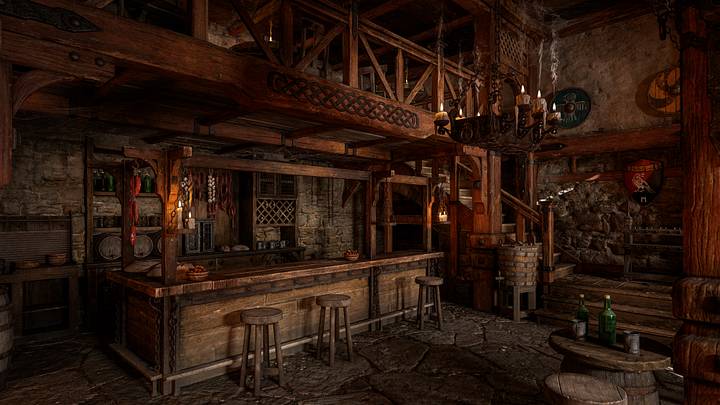
The culinary landscape of everyday life has undergone a profound transformation over centuries. In contemporary times, individuals benefit from a vast global selection of foods and cuisines, readily accessible through extensive networks of stores and restaurants. However, a journey back a few centuries reveals a drastically different scenario. Before the advent of easy importation from overseas, year-round cultivation, and commercial or industrial scale production, the food offerings at local establishments were considerably restricted. During the medieval period, available fare was heavily dictated by geographical location, season, personal wealth, and the specific type of eating establishment chosen.
Understanding the medieval dining scene requires differentiating between taverns, alehouses, and inns, as these terms, though seemingly interchangeable today, denoted distinct businesses with varied food and drink services. Alehouses, as their name implies, were rudimentary establishments, often someone’s private residence – typically that of an “alewife” – where domestically brewed ale was sold. This practice laid the foundation for the terms “public house” and eventually “pub.” These venues generally did not offer food, their sole purpose being the sale of surplus homemade ale.
Taverns were more substantial and formal enterprises, typically managed by a wine merchant or a guild vintner. They offered a broader selection of alcoholic beverages, including wines, ciders, perries, meads (fermented fruit and honey drinks), alongside the more common and affordable ales. In terms of food, taverns occupied a middle ground between alehouses and inns. They provided lighter, quicker, and cheaper meals than inns, often at a fixed price and served at set times daily, but a more comprehensive menu than alehouses.
Inns were primarily lodging houses, strategically located near city gates, crossroads, or along highways, providing travelers with a convenient place to stable their horses and find overnight accommodation. Given their clientele of travelers, inns typically offered full meals, allowing weary journeyers to sate their hunger before continuing their travels. Unlike alehouses, inns were designed to cater to the complete needs of their guests.
The food available in medieval taverns, particularly in earlier periods and smaller establishments, was often basic. Common offerings included plates of bread and cheese, beans, cabbage, other greens, or bowls of thin soup or broth. Larger taverns might provide more substantial options. A popular and economical meal was pottage, a hearty medieval stew made from pulses and vegetables. Pottage was easy to prepare, inexpensive, and could be kept warm over a fire for extended periods with minimal effort. As taverns were concentrated in large towns and cities (London alone had 50 in the 1420s), their menus were constrained by local availability, seasonality, and the output of nearby farmers and markets. Coastal taverns, for instance, might feature more fish and seafood, while those in rural areas could offer more game. Urban taverns, however, relied on non-perishable goods that could be easily transported into town, as well as produce from local farms.
Inns, serving as vital stop-off points on lengthy journeys, often attracted a more affluent clientele, including wealthy merchants, court officials, military personnel, and tradesmen – individuals who could afford the necessary transportation for long-distance travel. Consequently, innkeepers were motivated to provide more impressive spreads than simpler taverns and alehouses, as their customers could afford higher-quality fare. Roast meats were a common staple in many medieval inns, a luxury considering that a basic laborer or peasant might consume meat only once a week, if at all.
Over time, inner-city taverns began to gain popularity among the monied upper classes, evolving into crucial social hubs where people could meet, conduct trade, gamble, play games, and exchange ideas. Astute tavernkeepers adapted their menus to this shifting clientele, increasingly offering meals more akin to those found in inns. This evolution cemented taverns as the direct precursors to the modern-day restaurant.
Perhaps one of the most unusual items on a medieval tavern table was the trencher. This large, hard, stale piece of bread, typically circular or rectangular, served as a plate on which meat was cut or food was served. The juices and liquids from the food would gradually soak into the bread, softening it. If particularly hungry, diners might consume the trencher themselves. More frequently, however, used trenchers were collected and distributed to the poor, serving a practical and charitable purpose.