7 Political Terms You Should Understand Before Nigeria’s 2027 Election
Ahead of the 2027 elections, these seven political terms reveal what is really happening behind Nigeria’s political drama. Some of these words could explain the headlines you keep seeing.

Nigerian politics has a language of its own. Politicians argue about zoning, governors face accusations of godfatherism, and lawmakers defect to other parties.
As election season approaches, words such as BVAS, IReV and vote buying begin appearing everywhere. They shape conversations about elections, voter protection and fairness.
You do not need a political science degree to follow what is happening. Here are seven terms worth knowing ahead of Nigeria’s 2027 general election.
1. Stomach Infrastructure

If a politician visits a community with rice, cash or gifts, you may hear people call it stomach infrastructure.
It describes a political approach focused on meeting voters’ immediate needs instead of persuading them through policies or long-term development. The phrase is often used critically when gifts appear close to an election.
Consider a community asking for better roads, electricity and clean water. A politician arrives with food packages just before voting. Residents may welcome the help, but it does not answer what happens to those long-standing needs after election day.
Stomach infrastructure is a popular expression, not a formal legal category. It often becomes a talking point when politicians distribute relief materials while communities continue to demand public services.
Assistance is not automatically an electoral offence; offering benefits to influence votes can amount to vote buying.
2. Zoning

When politicians insist that it is the South’s turn to produce the president, they are usually talking about zoning.
Zoning is an arrangement in which a party shares important positions among regions or groups. In Nigeria, the best-known example is the informal expectation that the presidency should rotate between the North and the South.
Supporters say zoning encourages inclusion and gives different groups a chance to hold influential positions. Critics argue that it can limit competition or make a candidate’s region more important than their experience and plans.

But zoning is a political agreement, not a constitutional requirement. The Constitution does not say that Nigeria’s presidency must rotate between the North and South.
A party may zone its ticket, but constitutional qualifications and the electoral process still apply.
3. Godfatherism

Some politicians have a powerful sponsor who provides campaign money, connections and support to win an election. This relationship is often called godfatherism.
It describes an influential sponsor helping someone secure office while expecting influence over that person’s decisions.
The elected politician is called the godson or goddaughter; the sponsor is the godfather. One brings resources and connections, the other ambition and a public profile.
Not every political endorsement is godfatherism; the defining issue is the sponsor’s expectation of control after the election.
Conflict can begin when a governor rejects the sponsor’s preferred appointments or tries to make independent decisions.
Such disputes can involve party structures, lawmakers and government appointments. They raise a basic question: is the elected official governing independently, or answering to the person who helped them win?
4. Party Defection

When a politician leaves one party for another, it is called party defection, decamping or cross-carpeting.
Reasons include leadership disputes, disagreements over candidate selection, personal ambition or the belief that another party offers better opportunities.
For voters, it can be confusing when a candidate campaigns on one party’s manifesto and switches allegiance after winning. Defection can also change the balance of power in a legislature.
It does not automatically mean the politician has changed their beliefs, but it gives voters a reason to ask why the move happened.
The Constitution sets specific rules for lawmakers who defect while serving. A lawmaker may lose their seat in certain circumstances, although exceptions include a division in the original party or a merger involving parties.
Consequences depend on the office held and the circumstances.
5. BVAS
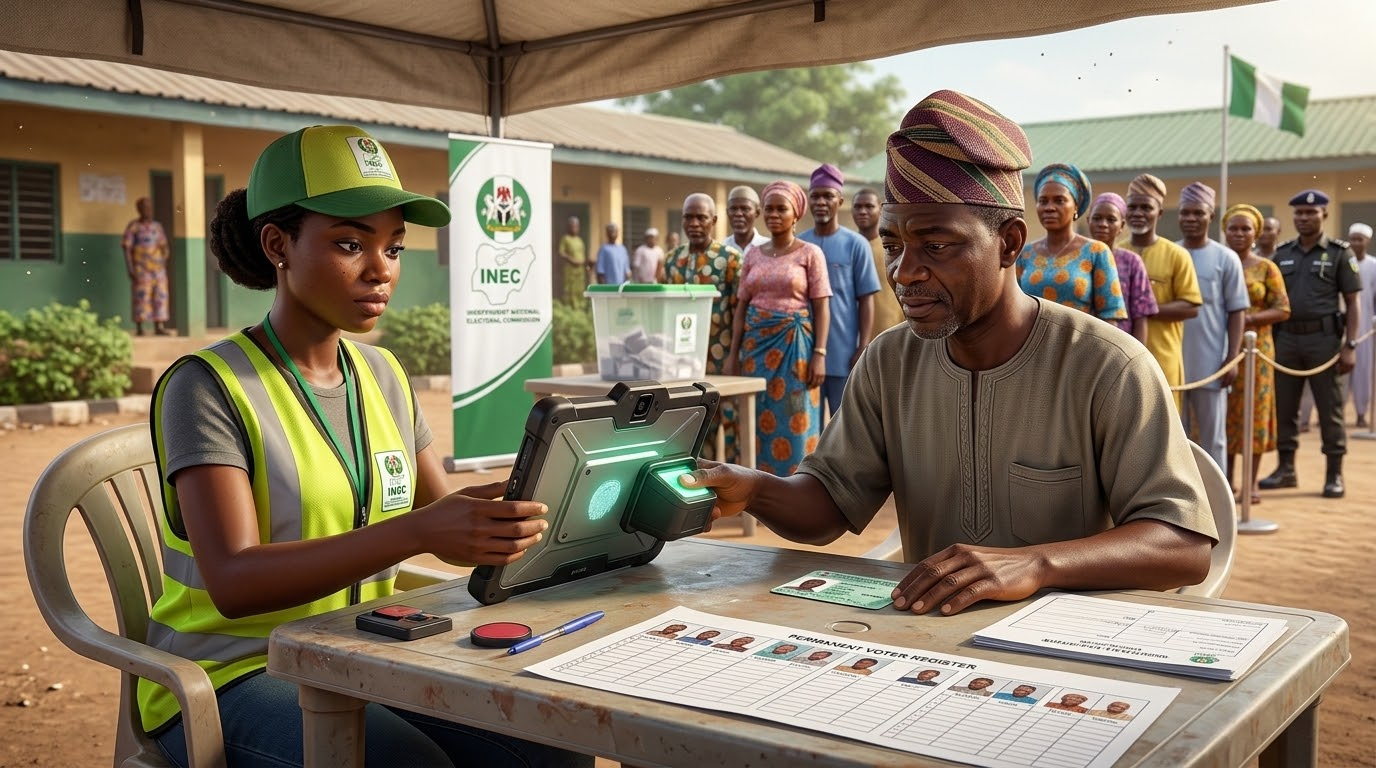
At a polling unit, voters may have their fingerprints or faces checked using INEC’s Bimodal Voter Accreditation System, known as BVAS.
It uses fingerprint and facial recognition to verify registered voters and make impersonation harder.
BVAS does not count votes or decide the winner. It verifies voters before they cast ballots; counting and collation happen through other steps. It is one part of the election process, not a guarantee that every other stage will be free of problems.
BVAS checks voter identity. It is neither the result sheet nor the public portal for viewing polling-unit results.
6. IReV and Form EC8A

After voting, results are recorded at each polling unit on an official document called Form EC8A. It lists each candidate’s votes and other polling-unit details.
The presiding officer completes it, and party agents present may sign. It records the result declared at that polling unit. Keeping the document matters because it allows the recorded figures to be checked against results announced later in the collation process.
IReV, the INEC Result Viewing Portal, is where polling-unit result sheets can be uploaded for public viewing.
Put simply, Form EC8A is the result document; IReV is the portal where uploaded copies can be viewed. Neither should be confused with BVAS, which is mainly used for voter accreditation.
7. Vote Buying
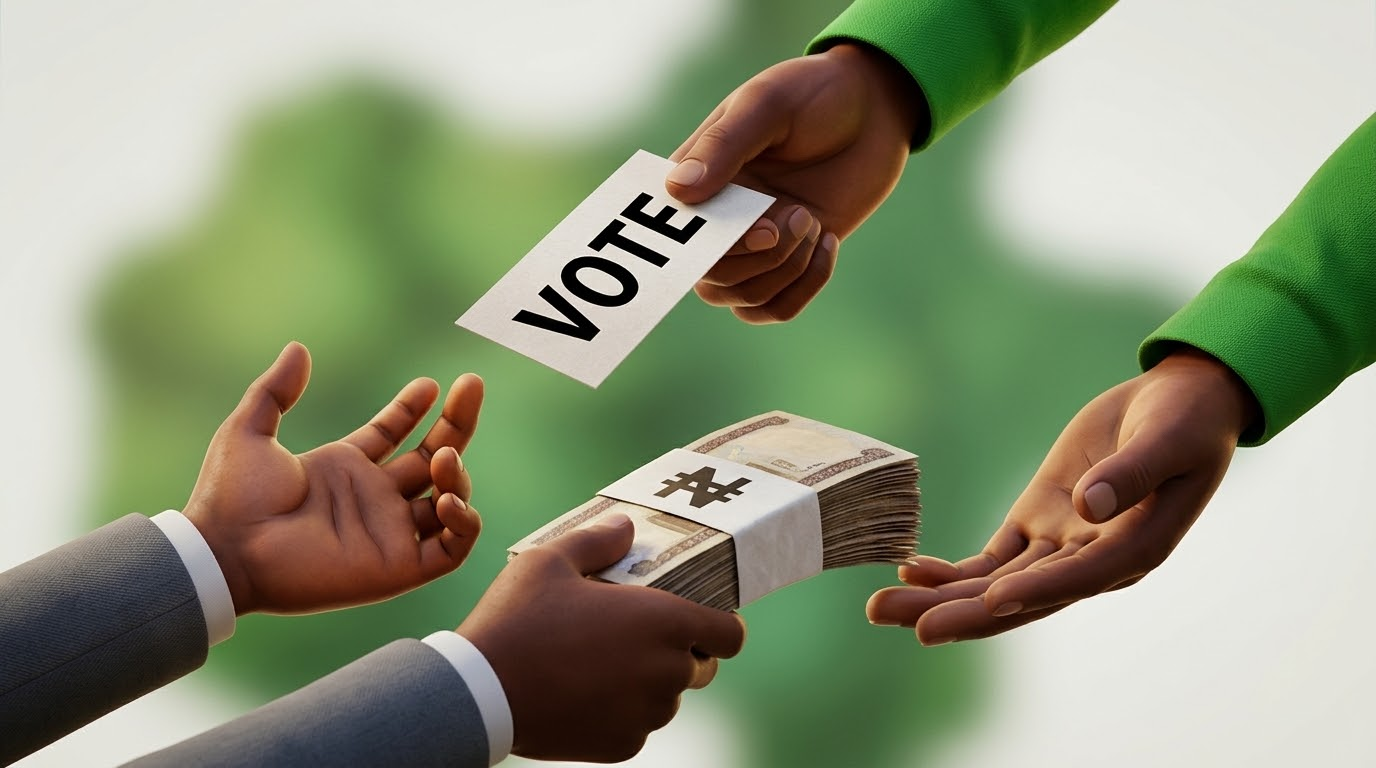
Offering voters money or gifts in exchange for their votes is vote buying.
Cash, food, clothing or other benefits may be offered during campaigns or on election day, openly or through an intermediary.
It weakens voters’ freedom to choose based on candidates’ records and policies, turning an election into a transaction where immediate rewards influence a decision affecting the community.
Vote selling is the other side: a voter accepts a benefit in return for voting a particular way. Nigeria’s electoral laws prohibit offering or accepting gratification to influence voting.
The details of any alleged offence still need to be established through the proper legal process.
These terms will keep appearing in political speeches, news reports and online arguments ahead of 2027. Understanding them will help you question confusing claims and follow the electoral process more clearly.