Will Financial Technology be the end of the Banking Hall?
Financial technology is redefining the banking system, arguably at the expense of the physical banking hall. However, time will be the judge of whether financial technology will complement the traditional banking hall or completely render it obsolete.

In past decades, the Banking Hall has stood as a gateway that has granted access to financial services — a place that, timely or not, represented trust, stability and security.
For years, the long queues of customers defined Africa's banking system, where access to any sort of financial service meant hours of waiting. The once-crowded halls are giving way to quicker visits and fewer lines, as technology reshapes how people interact with their banks.
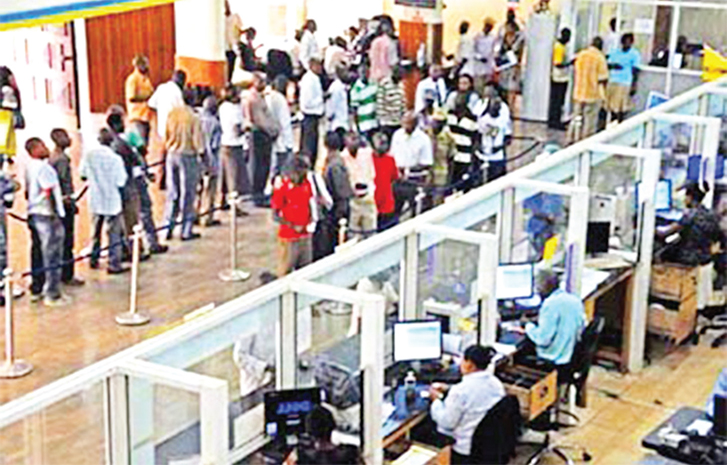
Today, going to the bank can be just a plan or one box to tick on your to-do list, rather than the plan for the day.
From 2018 to 2024, the number of financial technology Startups rose from 12,131 to 29,955. This growing number can be attributed to the trust that fintech has garnered over the years, thus, reflecting a steady shift in consumer trust from physical banking halls to digital financial solutions.
People over time, are getting more comfortable entrusting their savings, investments and pensions into fintech banks. Many are getting more comfortable using fintech applications to make financial transactions because what once required physical presence and paper work can now be simply done through an app from the comfort of one's home.
This quiet but quick transformation from traditional means of making financial transactions to relying on innovative methods via fintech apps has raised concerns about the Financial Technology companies rising at the expense of the traditional model. This transformation has undoubtedly challenged the relevance of the physical bank branch, raising questions about whether digital finance might one day replace it entirely.
Yet, so many do not understand or are even aware of the presence of such innovation, particularly the older generation.
A report from AARP shows that seven in ten adults 50-plus report use FinTech platforms, but most are engaged in basic tasks like checking bank balances (77 percent), paying bills (62 percent), and transferring money between accounts (61 percent).
This generational gap shows that even though fintech adoption is increasing by the day, the banking hall still holds symbolic importance for a significant portion of society.

This has raised lots of questions, all pointing to ascertain what the cause is — Security, Ignorance, or the desire to just leave it simple?
WHAT FINANCIAL TECHNOLOGY IS
Financial technology commonly referred to as fintech refers to the use of innovative technologies for products and services in the financial industry. This concept, though broad, represents a wide array of technological advancements in financial services, including mobile banking, online lending platforms, digital payment systems, and Blockchain-based applications such as cryptocurrencies — all working to simplify the financial experience.
Among them all, digital banking remains the top-used fintech service, with 89% of users engaging with mobile or online banking in 2025. At it's core, fintech is about removing the barriers that have long defined traditional banking.
The usual waiting in line to make local transactions has been easily replaced with mobile banking from traditional banks as well as fintech banks. Loans can now be gotten without leaving the house, thanks to the innovation that comes with financial technology.
HOW FINTECH IS DRIVING THE CHANGE
The idea that a couple of clicks on the screen is enough to make a transfer, pay a bill, buy stocks is one that cannot be ignored or waived off, or expected to fade after time. When fintech systems broke into the global financial space, many believed it was simply a trend that would fade as quickly as it came, and the traditional banking system would remain but that hasn't been the case.
This shift in perspective has redefined what banking means in today’s world. Financial technology has not only proven to ease man's life, it has proven to be secure, reliable and trustworthy. These fintech systems have perfected the idea of making the bank come to you — a sell way too irresistible for the convenience it brings.
It is pertinent to however understand that the argument isn't against the traditional banking system, but rather the banking halls, because traditional banks have also explored financial technology in making their services more accessible. Therefore, it is safe to say this isn't a Fintech bank V. Traditional bank kind of war, but Financial Technology itself against the banking hall.
This is reinforced in a statement made by Bill gates that “Banking is essential, but Banks are not” and this statement has served as a mantra for the first wave of financial technology offering banking services.
This trend is just as present in Africa, with McKinsey reporting that "African fintechs have already made significant inroads into the market, with estimated revenues of around $4 billion to $6 billion in 2020 and average penetration levels of between 3 and 5 percent (excluding South Africa)."
The Fintech banking system offers a variety of features, ranging from Instant credit scoring to smart savings and automated investments. The Financial technology system has also been able to create some sort of personalised understanding of their customers needs and offer tailored solutions.
Furthermore, the rise of fintech banking platforms — mobile money services like M-Pesa, Opay and Palmpay has created financial inclusion thus bridging the gap between those who could easily access the traditional banking system to those who couldn't especially the rural dwellers. Basically, Fintech didn't just bring banking access to the unbanked and underbanked, it's filling the gaps that the traditional Banking system never could.
THE CHALLENGES: WHY THE BANKING HALL STILL MATTERS
Fintech is the future of the banking system, and this will remains undisputed for time to come. But on no account does it suggest that financial technology has been perfected. Fintech despite its growing popularity and customers, it still faces some problems — problems that the traditional banking system can not relate to.
A report from McKinsey suggests "fintech start-ups in Africa are facing four key challenges on the road to sustainability: reaching scale and profitability, navigating an uncertain regulatory environment, managing scarcity, and building robust corporate governance foundations".
However, the existence of the banking hall will not be dependent on the failures of the fintech system but rather its own success — its own way of proving its need to the community.
A 2025 report from trainingcred paints a picture of what the role of the banking hall will be in a digital future. It presents 5 key roles;
First, banking branches will mostly be converted to advisory hubs where Customers can visit for guidance on mortgages, investments, and retirement planning, with experienced advisors providing in-depth consultations.
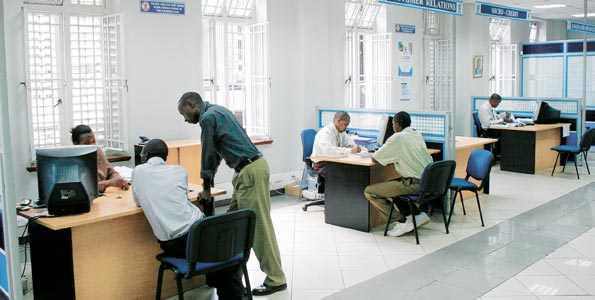
Secondly, banking halls will be used as community spaces where workshops on financial literacy or business networking events can be hosted.
Also, the branches could adopt some sort of hybrid banking experiences that will integrate technology with the human touch.
Additionally, physical branches will exist to reinforce a brand's identity and presence. In an increasingly digital world, having a tangible space where customers can interact face-to-face builds trust and loyalty.
Lastly — and perhaps most importantly — physical branches can provide human connection that digital tools can’t during uncertain times. A typical example was the cashless policy era in Nigeria. The non existence of physical banks in such times can spark unfathomable chaos — so this physical branches will exist to provide the reassurance and empathy that only face-to-face banking could provide.
Ultimately, this future while possible and unfolding in various parts of the globe — Financial technology still has a long way to go especially in Africa where it hasn't been fully accepted.